In most homes a stack of identical cloths sits under the sink, and nobody remembers which one was used where yesterday. That is exactly where colour coded cleaning cloths come in: giving every zone its own shade is the simplest way to stop the cloth from the toilet seat ending up on the kitchen table.
Cleaning companies have worked this way for decades because the system runs without thinking, even when the team changes. At home, four colours, a small basket and one rule everybody knows are enough.
Why one cloth for everything is a problem
A damp cloth picks up dirt – and with the dirt, micro-organisms. While it stays damp and warm, they keep multiplying in it. Wipe the next surface and you hand some of them straight back. The Federal Food Safety and Veterinary Office states plainly that germs spread via hands, chopping boards, utensils and cloths and advises cleaning worktops and utensils with hot water and soap after every step.
There is a second problem: you use different products in the bathroom and toilet than in the kitchen. Traces of an acidic sanitary cleaner have no business on the worktop where bread will be cut later. The Federal Office of Public Health stresses that good home hygiene matters more than the best product and that surfaces should be wiped with a damp cloth regularly – which assumes the cloth itself is clean.
Colour coded cleaning cloths: the system at a glance
Professional maintenance cleaning has settled on a four-colour split. It is not prescribed by law, but it is widely used:
| Colour | Zone | Typical surfaces |
|---|---|---|
| Red | Toilet and urinal | seat, cistern, flush button, tiles behind the pan |
| Yellow | Bathroom and sanitary | basin, taps, shower, bath, mirror, tiles |
| Blue | Furniture, desks, glass | tables, shelves, doors, window sills, screens |
| Green | Kitchen and food areas | worktop, fridge, cupboards, dining table |
The logic is simple: red marks the area with the heaviest germ load, green the area where food is prepared. Those two must never meet.
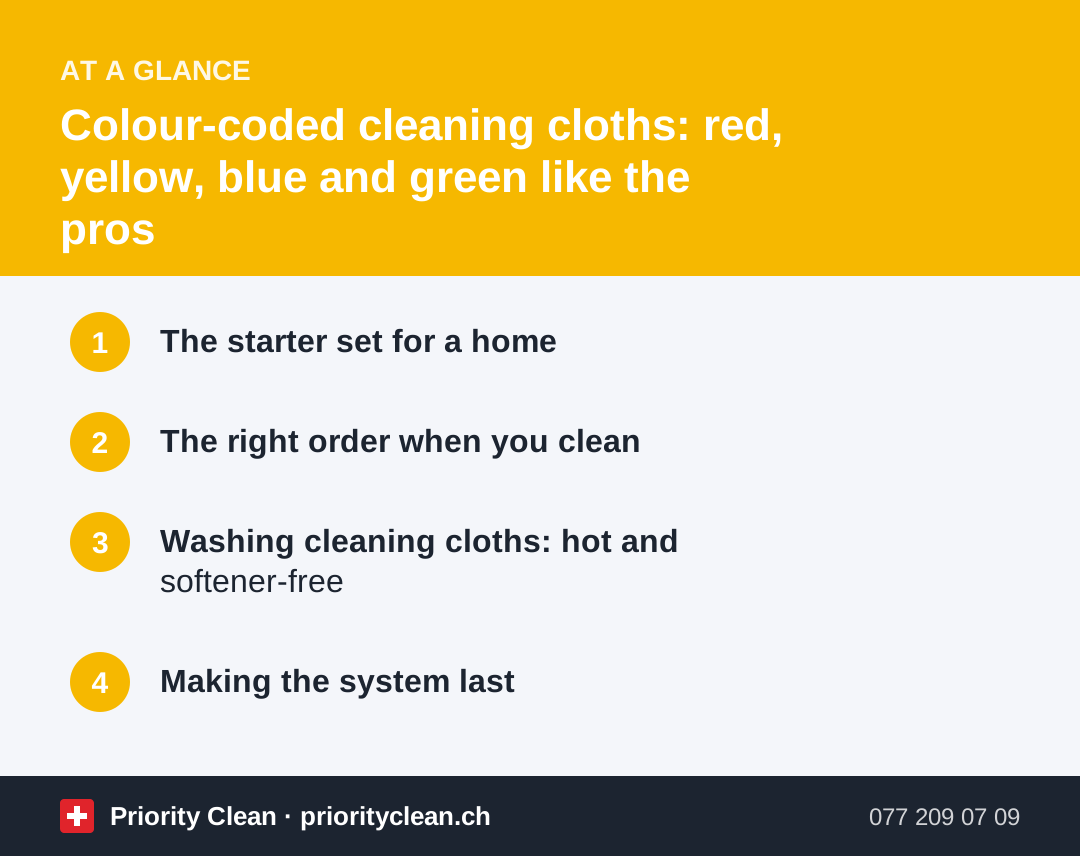
1. The starter set for a home
For a two- to four-room flat a modest stock is plenty:
- two or three microfibre cloths in each colour: red, yellow, blue, green;
- one floor cloth per zone, at minimum separate ones for bathroom and kitchen;
- a dedicated toilet brush that is used nowhere else;
- a laundry bag or bucket for used cloths.
Do not want to buy new cloths? Mark the ones you already own with a few stitches of coloured thread or a fabric pen in one corner. The system works just as well.
2. The right order when you clean
Colours achieve little if the order is wrong. Professionals work from clean to dirty and from top to bottom:
- Blue: furniture, door handles, light switches and glass – dust, then wipe damp.
- Green: kitchen – cupboards and worktop first, the area around the bin last.
- Yellow: bathroom – mirror, basin, taps, shower.
- Red: toilet right at the end, working from the outside in.
- Floors: last of all, again with separate cloths for kitchen and bathroom.
After each zone, change the cloth, wash your hands and refill the bucket. When disinfecting is worth adding on top is covered in our guide on whether to disinfect or clean.
3. Washing cleaning cloths: hot and softener-free
For the system to hold up, the cloths have to get properly clean again:
- Wash separately, never with clothes or towels.
- Wash hot, usually at 60 °C; the care label has the final word.
- No fabric softener: it coats the microfibres and destroys their absorbency.
- Rinse coarse residue out first, especially greasy kitchen cloths.
- Dry fully before putting them away – folded damp, they smell musty within hours.
Temperatures, dosing and service life are covered in our guide on washing microfibre cloths; kitchen sponges need a routine of their own, see cleaning a sponge.
4. Making the system last
A colour code rarely fails in theory; it fails on day three. What helps:
- One basket per colour, or a trolley with compartments, so the split stays visible.
- A laminated card in the cleaning caddy – especially useful in a shared flat or when a cleaner comes in.
- A fixed wash day for the cloths, Saturday for example.
- Spares in the cupboard: if the green cloth is missing, people reach for the red one.
Common mistakes
- Colour without the rule: four bright cloths achieve nothing if they all land in the same bucket.
- Using a cloth for too long: saturated and grey, it only pushes dirt around.
- Softener or a hot tumble dryer: both cost microfibre cloths their absorbency.
- Forgetting the floors: without separate floor cloths for kitchen and bathroom the system has a hole in it.
- Storing them damp: cloths folded away wet smell stale within hours.
Frequently asked questions
Which colour is for which area?
The common split is red for the toilet, yellow for the bathroom and basin, blue for furniture, desks and glass, and green for the kitchen. It is an industry convention rather than a requirement, and variants exist. What matters is that everyone in the household follows the same one.
Do I really need four different cloths at home?
Four colours are comfortable; two are the minimum: one for toilet and bathroom, one for kitchen and living areas. Anything beats a single cloth for the whole flat, which carries germs and product residue from room to room.
At what temperature should cleaning cloths be washed?
Usually at 60 °C, without fabric softener and separately from the rest of the laundry. The care label remains decisive: some microfibres only tolerate 40 °C or no tumble drying. Rinse coarse residue out before washing.
How often should I replace a cleaning cloth?
As soon as it stays grey after washing, pulls threads, no longer absorbs or smells. With regular use a good microfibre cloth survives many washes; a kitchen cloth that often meets grease ages noticeably faster.
Thanks for your feedback! Feel free to share the guide.
Thanks! What was missing? Drop us a line – we will improve the guide. WhatsApp