In any Swiss pharmacy it sits in a brown bottle and costs very little: the 3 per cent solution many people use to bring grey grout and yellowed laundry back to life. Before you reach for hydrogen peroxide to clean with, though, it helps to know that it is not a cleaner but a bleaching agent – and it needs to be used accordingly.
It dissolves neither limescale nor grease. It removes colour from whatever is coloured: stains, discolouration and, unfortunately, your favourite T-shirt if a drop lands off target. These five uses show when the brown bottle earns its place – and when something else is the better answer.
What hydrogen peroxide does – and what it does not
Hydrogen peroxide breaks down into water and oxygen. That oxygen attacks dyes and lightens them, exactly as the oxygen-based bleach in a universal laundry powder does. What does not happen: the dirt does not disappear by itself. The discolouration fades, but the deposit stays put until you brush it off and rinse.
Hence the order of work: clean first, brighten afterwards. On limescale, grease and soap residue, hydrogen peroxide performs poorly, simply because it never reaches the discolouration underneath.
| Sensible | Not suitable |
|---|---|
| Pale cement and silicone grout | Coloured grout and textiles |
| White cotton and linen | Wool, silk, down |
| Plastic chopping boards | Natural stone and polished marble |
| Small, surface discolouration | Limescale, grease, baked-on residue |
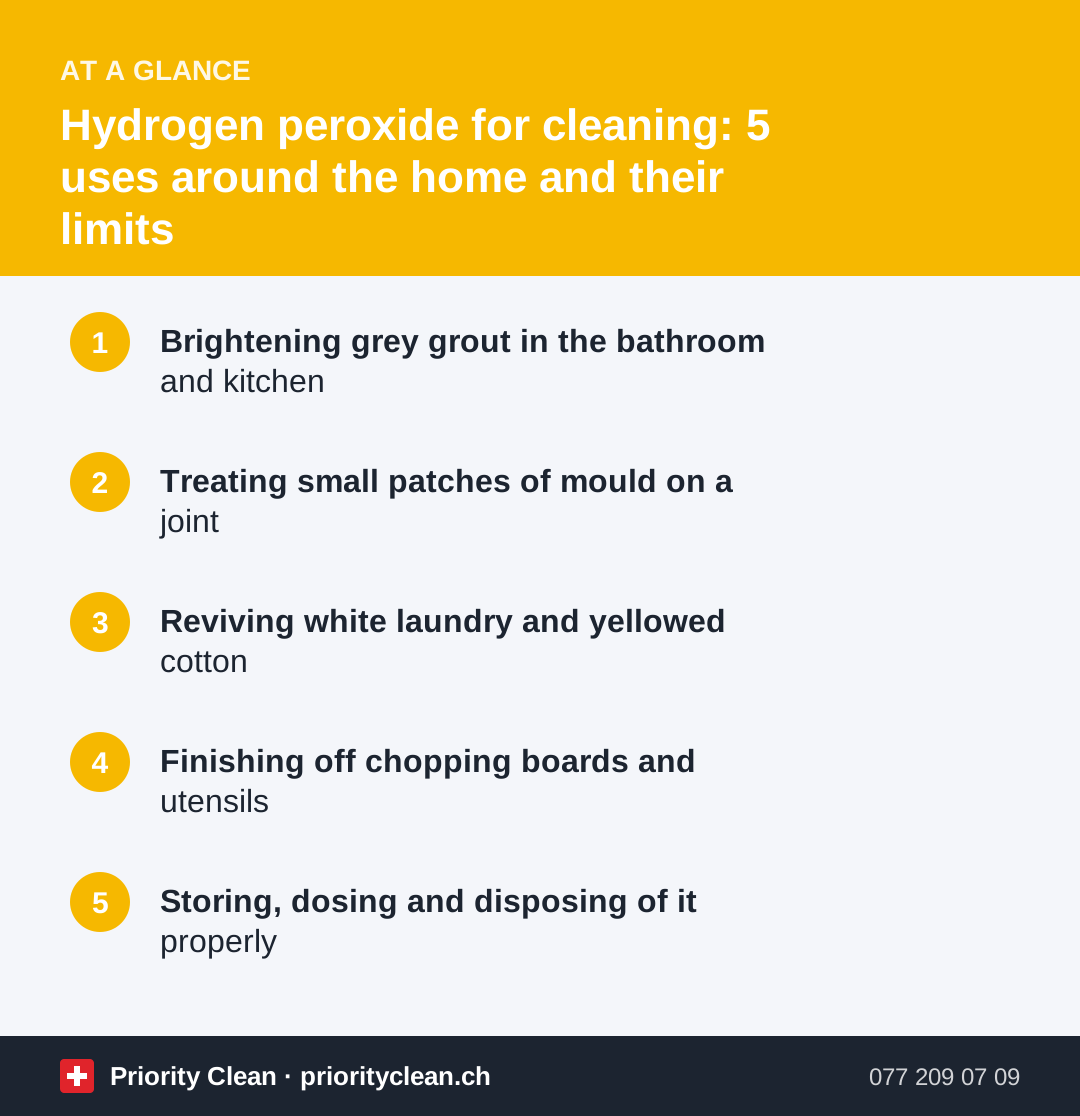
1. Brightening grey grout in the bathroom and kitchen
Clean the joint first with your usual bathroom cleaner and a brush, rinse well and let the surface dry. Then apply the 3 per cent solution with a small brush or a cotton pad, leave it for a few minutes and rinse off with clean water.
Only pale joints tolerate this. Coloured grout and dark silicone can end up patchy, so test in a hidden spot behind the washing machine or under the basin. More methods for stubborn cases are in our guide on how to clean grout.
2. Treating small patches of mould on a joint
On a small, surface patch about the size of a palm, hydrogen peroxide can lighten the dark deposit on a silicone joint. Ventilate while you work and wear gloves.
That changes nothing about the cause, however. The Federal Office of Public Health states that mould is bad for your health, must be removed quickly and that the cause of the moisture always has to be found and fixed. If the deposit comes back within a few weeks, lightening it is the wrong answer: the real issue is then your airing routine, a building defect or a joint that no longer seals. In a rented flat, report larger or recurring patches to the property management. The full approach for a shower joint is in black mould on shower silicone.
3. Reviving white laundry and yellowed cotton
White cotton, linen and towels can be freshened up with a soak. How much solution goes into how much water, and for how long, is stated on the product – follow it rather than guessing. Afterwards, wash as usual.
Off limits are wool, silk, down and anything coloured. For blends and for whites with coloured stitching, test on an inside seam first. Gentler routes to white textiles are described in how to whiten socks.
4. Finishing off chopping boards and utensils
The decisive step comes first: the Federal Food Safety Office recommends cleaning worktops and utensils with hot water and soap after each step, because germs travel via hands, chopping boards, utensils and cloths.
Only after that can a plastic board be treated with the 3 per cent solution: leave it briefly, rinse thoroughly with drinking water and let it dry. Wooden boards absorb the liquid and can lighten, so ordinary care suits them better – see clean a wooden chopping board.
5. Storing, dosing and disposing of it properly
Hydrogen peroxide does not like light. That is why it is sold in dark bottles and belongs closed, cool and in the dark – not on the bathroom windowsill. Open the bottle only when you use it and close it again straight away.
The most common mistakes
- Treating it as an all-purpose cleaner: hydrogen peroxide bleaches, it does not clean. Without pre-cleaning, very little happens.
- Combining it with vinegar: the mixture forms an aggressive acid. Why products should never be combined is covered in mixing cleaning products.
- Decanting it into a spray bottle: the mist reaches eyes and airways and settles on fabrics you never meant to bleach.
- Applying it to anything coloured: one drop on a dark bath mat leaves a pale mark that stays.
- Only lightening mould: without finding the cause, the deposit returns and keeps growing under the lightened surface.
Frequently asked questions
Which strength of hydrogen peroxide is right for the home?
The 3 per cent solution from a pharmacy or drugstore is enough for every use described here. More concentrated products are corrosive, belong in professional hands and have no place in a flat.
Does hydrogen peroxide work against mould?
It lightens the dark deposit on small, smooth patches. What matters, according to the Federal Office of Public Health, is finding and fixing the cause of the moisture. Larger areas and recurring growth belong with the property management or a specialist.
Can I use hydrogen peroxide and vinegar together?
No. The combination produces an aggressive acid that irritates skin and airways. Cleaning products and home remedies should never be mixed – at most used one after the other, with a thorough rinse in between.
Why does my bottle no longer seem to work?
Hydrogen peroxide decomposes over time, and light and warmth speed that up. A bottle that has been open a long time or stored in bright light holds very little active ingredient. Buy small quantities and store them closed, cool and dark.
Thanks for your feedback! Feel free to share the guide.
Thanks! What was missing? Drop us a line – we will improve the guide. WhatsApp