Few household products leave glass as clear as methylated spirits from the drugstore. The advantage is simple: the liquid dissolves grease and many adhesives, then evaporates almost without residue – so there is nothing left to smear.
That very quality has a downside. Meths catches fire easily, so do its vapours, and it permanently damages lacquer, acrylic glass and many plastics. These five uses show where the bottle genuinely earns its place – and which rules are not up for negotiation.
Why methylated spirits clean so well
Methylated spirits are ethanol made undrinkable with additives – hence the term denatured alcohol. Alcohol dissolves fats and many glues, mixes readily with water and evaporates quickly. On a smooth surface, no film is left behind to scatter the light. That is the whole trick behind a streak-free pane.
What it cannot do: dissolve limescale, which needs an acid. And against thick, baked-on grease an alkaline solution works better. Meths is a specialist, not an all-purpose cleaner.
| Well suited | Better avoided |
|---|---|
| Window glass, mirrors, glass tables | Lacquered furniture and doors |
| Chrome taps, stainless steel | Acrylic glass, Plexiglas, polycarbonate |
| Smooth tiles, ceramic hobs | Soft plastics, coated displays |
| Adhesive residue on glass and metal | Leather, faux leather, oiled or waxed wood |
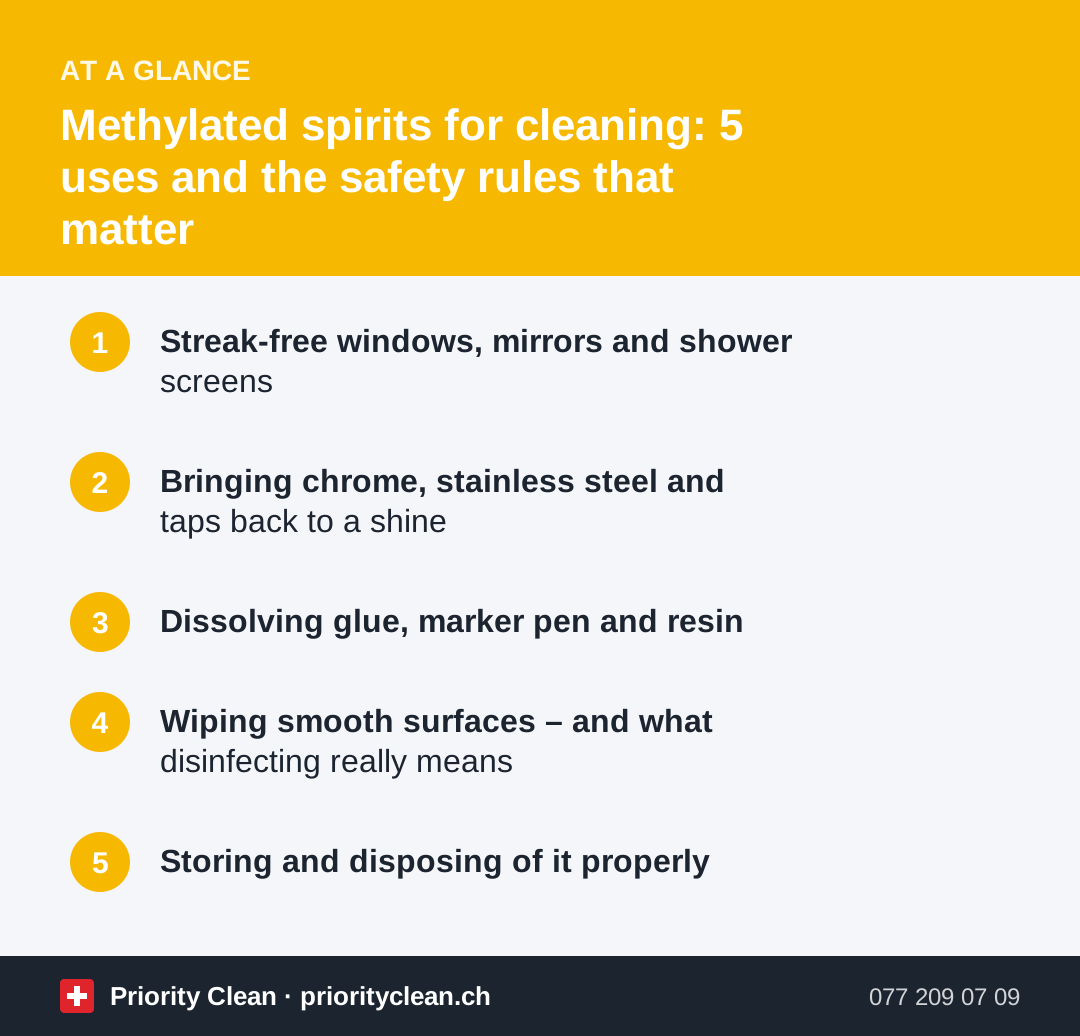
1. Streak-free windows, mirrors and shower screens
Add a small amount of methylated spirits to cold cleaning water – the bottle states how much, and more does not clean better. Wash the pane with a sponge, pull the water off in even strips with a squeegee, then dry the edges with a cloth.
Never clean in direct sunshine: the pane dries too fast. On coated shower screens and on double glazing with a damaged seal, follow the manufacturer's instructions. More tricks are in our guide on how to clean windows without streaks.
2. Bringing chrome, stainless steel and taps back to a shine
After descaling, taps are often left with a dull film of soap residue. Put a little methylated spirits on a soft cloth, wipe the dry tap and buff with a second cloth. The result is a shine with no water marks.
On brushed stainless steel, work along the grain. Keep clear of the plastic parts of a mixer tap and of coloured finishes such as matt black or gold.
3. Dissolving glue, marker pen and resin
Labels on jars, price stickers on a picture frame, tape on a window frame: methylated spirits soften many adhesive residues. Soak a cotton pad, lay it on briefly, then push the softened glue away with a plastic scraper.
Test on a hidden spot first – on lacquered frames, films and plastics the alcohol can attack the surface. Which method suits which material is covered in remove sticky residue.
4. Wiping smooth surfaces – and what disinfecting really means
Alcohol is often recommended for wiping door handles, light switches or chopping boards. On a smooth, clean surface it does work; on a porous or dirty one, far less so. And it is no substitute for professional surface disinfection.
The Federal Office of Public Health points out that good home hygiene matters more than the best cleaning product: remove dust regularly, wipe surfaces with a damp cloth and clear away food residue quickly. In an ordinary household of healthy people, disinfecting cleaners are not needed.
Many people also reach for alcohol against mould on smooth silicone. It lightens the stain, but changes nothing about the cause – see the comparison remove mould with alcohol, hydrogen peroxide or bleach.
5. Storing and disposing of it properly
Meths belongs to the household chemicals that deserve attention. Cheminfo, the federal chemicals portal, advises you to read the safety advice before use and store products out of children's reach – ideally locked away and higher than 160 centimetres.
The most common mistakes
- Decanting it into a spray bottle: the fine mist spreads flammable vapour around the room and straight into your airways.
- Using it on lacquer and acrylic: lacquered doors go dull, Plexiglas develops fine cracks, and neither can be repaired.
- Working without ventilation: in a closed bathroom the vapours build up, bringing headaches and dizziness.
- Using it against limescale: alcohol does not dissolve scale. That needs an acidic product – but never at the same time.
- Leaving the bottle open: the liquid evaporates, and an open bottle is a real danger to a child.
Frequently asked questions
Are methylated spirits the same as surgical or rubbing alcohol?
Not quite. All of them are alcohol-based, but the type of alcohol, the concentration and the additives differ. Methylated spirits are ethanol made undrinkable with additives. Read the label, which states the concentration, the hazard advice and the intended uses.
How much methylated spirits should go into the cleaning water?
Follow the instructions on your bottle. A higher concentration does not clean better: it evaporates faster, smells stronger and needlessly increases the fire risk.
Can I clean a screen with methylated spirits?
Better not. Many displays and spectacle lenses carry coatings that alcohol attacks. Use a slightly damp microfibre cloth or the product recommended by the manufacturer.
Can methylated spirits be mixed with other cleaning products?
No. As a rule, never mix two cleaning products, and never combine alcohol with a chlorine-based product such as bleach. Use them one after the other and rinse well with water in between.
Thanks for your feedback! Feel free to share the guide.
Thanks! What was missing? Drop us a line – we will improve the guide. WhatsApp