Since the pandemic years, a bottle of disinfectant has stood next to the all-purpose cleaner in many Swiss homes. Whether you should disinfect or clean, however, is not a matter of feeling but of the situation – and in the everyday life of a healthy household, careful cleaning is almost always the better choice.
There are still moments when disinfecting genuinely makes sense: after a stomach bug, for instance, or when handling raw meat. Five points show where the line runs and how to go about it when it really is needed.
Disinfect or clean: the difference
When you clean, water, detergent and above all the mechanical movement of the cloth lift the dirt off the surface. Germs live in that film of dirt: wipe it away and rinse it out, and most micro-organisms go with it.
Disinfecting, by contrast, means killing or inactivating the germs that remain. That only works under two conditions: the surface must already be clean, because grease and dirt shield the germs, and the product must stay wet long enough. Spraying a greasy worktop and wiping it dry straight away neither cleans nor disinfects.
| Cleaning | Disinfecting | |
|---|---|---|
| Aim | remove dirt, grease and germs | kill the germs left behind |
| Action | mechanical and chemical | chemical, on a clean surface only |
| Time | wipe, rinse, done | plus the contact time |
| Everyday use | yes, daily | no, targeted and time-limited |
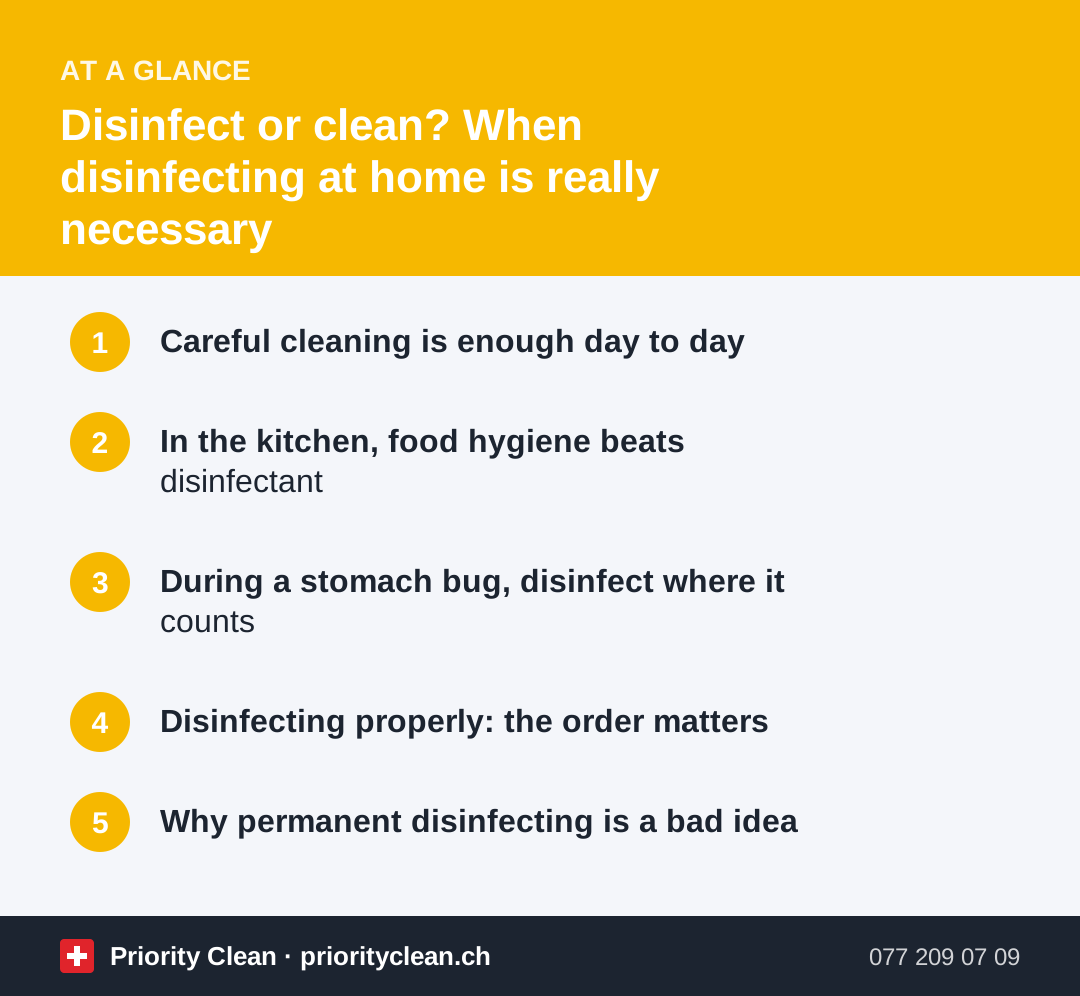
1. Careful cleaning is enough day to day
For healthy households the advice is clear: the Federal Office of Public Health regards disinfecting cleaners as unnecessary in an average home and stresses that good home hygiene matters more than the best cleaning product – remove dust regularly, wipe surfaces with a damp cloth and clear food residue quickly. The same source notes that cleaning agents, room fragrances and sprays add to indoor air pollution: liquid products are gentlest on the airways, and pump sprays are preferable to propellant sprays.
In practice, an all-purpose cleaner, a limescale remover, washing-up liquid and clean cloths cover most of a flat. Which product combinations are dangerous is explained in our guide on mixing cleaning products.
2. In the kitchen, food hygiene beats disinfectant
In the kitchen, germs travel mainly along the route from the raw ingredient to the finished plate. The Federal Food Safety and Veterinary Office points out that germs spread via hands, chopping boards, utensils and cloths and advises cleaning worktops and utensils with hot water and soap after every step. Meat, poultry and fish belong in the fridge below 5 °C, and chilled goods go back in as soon as you are home from the shops.
If you consistently wash board, knife and hands after cutting chicken, you do not need a disinfectant spray. Two separate boards – one for raw, one for ready-to-eat – do more than any chemical. To keep cloths and sponges hygienic, see our guides on the colour-coded cleaning cloth system and cleaning a sponge.
3. During a stomach bug, disinfect where it counts
Things change when norovirus goes round the family. The Federal Office of Public Health describes noroviruses as highly infectious: they spread via hands, contaminated objects such as door handles, droplets after vomiting and food, and they stay infectious on surfaces for more than twelve days. The most important measure remains thorough hand washing with soap, especially after every visit to the toilet. Objects and surfaces that have been in contact with stool or vomit should, according to the office, first be cleaned and then disinfected, for example with bleach diluted to 0.1 %. People who are ill should not prepare meals.
During that period it is worth treating door handles, the flush button, light switches and taps daily – and then going back to normal cleaning. The same principle applies to nursing at home or when someone in the household has a weakened immune system: targeted, time-limited and agreed with the doctor or care service. This guide is not medical advice.
4. Disinfecting properly: the order matters
If you do disinfect, do it properly – otherwise the effort is wasted:
- Put on gloves and open the window.
- Clean first: remove dirt, grease and food residue with cleaner and cloth, then rinse.
- Apply generously, so that the surface is visibly wet.
- Keep to the contact time stated on the label, often a few minutes. Wiping dry early cancels the effect.
- Rinse anywhere food or children's hands go: worktops, tables, toys.
- Bin the cloth or wash it at 60 °C, so you do not carry the germs into the next room.
5. Why permanent disinfecting is a bad idea
In a private home, disinfecting everything all the time brings very little benefit but several drawbacks. The products attack surfaces such as natural stone, wood and coated furniture, add to indoor air and waste water pollution, and can irritate skin and airways – particularly in children and people with asthma or allergies. On top of that, disinfectants are biocides, and their broad, unnecessary use is regarded as a driver of resistance.
The spray bottle also tempts you to cut the wiping short, and a surface that has been quickly misted but never properly cleaned is less hygienic than one wiped thoroughly with a damp cloth.
Common mistakes
- Spraying instead of wiping: without mechanical cleaning the film of dirt stays put and the product never reaches the germs.
- Ignoring the contact time: wiping dry immediately just spreads liquid around.
- The wrong surface: natural stone, untreated wood and many plastics react badly to disinfectants – when in doubt, follow the manufacturer's instructions.
- Combining products: two products together do not clean better, but can release dangerous gases.
- One cloth for everything: the toilet cloth never belongs on the kitchen table.
Frequently asked questions
Do I need to disinfect at home at all?
In an average household with healthy people, the Federal Office of Public Health considers disinfecting cleaners unnecessary. Regular damp cleaning, clean cloths and hand washing cover everyday life. Disinfecting becomes worthwhile in a targeted way during infectious stomach and bowel illnesses, for nursing at home and after contact with raw meat.
How long does a disinfectant need to work?
As long as the label says, usually a few minutes during which the surface must stay visibly wet. Follow the manufacturer's instructions on concentration and contact time: shorter does not mean less effect, it means no effect.
Is vinegar enough to disinfect?
No. Vinegar and citric acid dissolve limescale and clean well, but they are not approved disinfectants. That is no problem day to day, because good cleaning is enough; during a stomach bug you need a product approved for that purpose.
What should I disinfect first during a stomach bug?
Everything many hands touch or that has been in contact with stool or vomit: the toilet, flush button, taps, door handles and light switches. According to the Federal Office of Public Health, such surfaces are cleaned first and disinfected afterwards. Thorough hand washing with soap remains just as important.
Thanks for your feedback! Feel free to share the guide.
Thanks! What was missing? Drop us a line – we will improve the guide. WhatsApp