In many Swiss households a bottle has sat in the cleaning cupboard for decades. Chlorine bleach – known here as Javel water, a solution of sodium hypochlorite – whitens, removes colour from stains and acts against germs. It is also the product that, combined with the wrong thing, leads to emergency calls again and again.
The reason is simple: when bleach meets an acid, toxic chlorine gas is released. And acid is in a great many cleaning products – in descalers, in toilet cleaners, in vinegar-based cleaners. Using it calls for fewer clever tricks than for clear rules.
What chlorine bleach does – and what it does not
Chlorine bleach is an aqueous solution of sodium hypochlorite. It destroys dyes and acts on micro-organisms. What it does not do is lift dirt. Grease stays grease, limescale stays limescale and soap residue stays put – at most it turns paler.
Hence the correct order: clean with an ordinary product first and rinse well, then – if it is genuinely needed – use the bleach. On a greasy surface the effect is lost anyway.
| Chlorine bleach can | Chlorine bleach cannot |
|---|---|
| Lighten discolouration | Dissolve grease |
| Act against germs | Remove limescale |
| Whiten white cotton | Lift soap residue |
| Take the smell out of a bin | Fix the cause of mould |
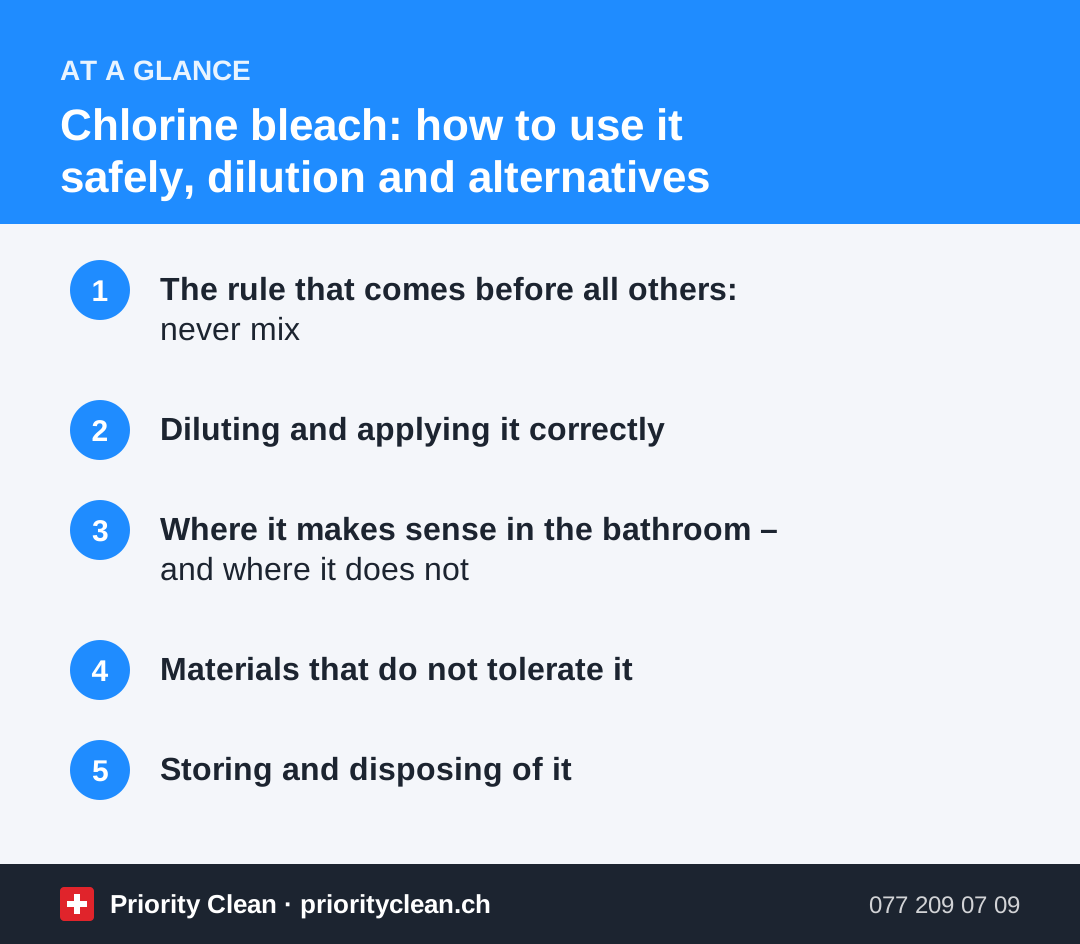
1. The rule that comes before all others: never mix
The Federal Office of Public Health is unambiguous: bleach must never be mixed with acids or acidic cleaners such as descalers, nor with ammonia, because toxic chlorine gas forms. Tox Info Suisse adds, for the home, that products containing Javel should not be used together with other cleaning products.
The danger does not only come from pouring two things together on purpose. These everyday situations are enough:
- Toilet cleaner (usually acidic) in the bowl, then bleach after it.
- Descaler in the shower tray, a quick rinse, then bleach.
- A vinegar cleaner and bleach in the same bucket.
- Two products in one spray bottle "just to try".
Which combinations are dangerous around the house is set out in mixing cleaning products.
2. Diluting and applying it correctly
Chlorine bleach is used diluted. How much goes into how much water is on your bottle and varies by product and purpose, so follow that rather than guessing. A stronger mix does not work better, it only irritates more.
Work through it like this:
- Put on gloves, open a window, switch on the bathroom extractor.
- Clean the surface normally first and rinse it thoroughly with water.
- Dilute the bleach as the pack states, in cold water and never in hot.
- Apply it with a cloth rather than spraying, so you do not inhale droplets.
- Leave it as long as the label says, then rinse off with plenty of clean water.
- Rinse cloth and gloves separately and wash your hands.
3. Where it makes sense in the bathroom – and where it does not
It can be justified in specific spots: on white ceramic, in the toilet bowl, on pale plastics or on dark discolouration in white grout. For everyday cleaning, an ordinary bathroom cleaner plus some elbow grease is usually enough – see how to clean under the toilet rim.
On mould along a silicone joint, bleach lightens the deposit but does not remove the cause. While the moisture stays, the mould comes back. How to proceed, and when the joint needs replacing, is in black mould on shower silicone.
4. Materials that do not tolerate it
| Material | What happens |
|---|---|
| Coloured textiles, rugs | Permanent pale marks |
| Stainless steel | Corrosion and pitting possible |
| Aluminium | Attacked, turns dark |
| Natural stone, marble | The surface can lose its shine |
| Bare wood, leather | Fibres and surface are damaged |
| Coloured grout, silicone | Patchy discolouration, silicone turns brittle |
When in doubt, test on a hidden spot, and never leave bleach standing on a surface overnight.
5. Storing and disposing of it
Bleach belongs closed, upright, cool and dark – and kept physically apart from descalers and other acidic products, so that a leak cannot mix anything. Keep it in its original packaging and out of children's reach and never decant it into a drinks bottle.
Leftovers do not belong in household waste. The Federal Office for the Environment lists bleaching agents, acids, alkalis and descalers among the chemicals to be returned as hazardous waste to specialist retailers, collection points or the commune's special collection days. How to organise the cupboard as a whole is covered in store and dispose of cleaning products safely.
Alternatives that are usually enough
- Bathroom cleaner and a brush: they lift soap and dirt, which bleach does not touch.
- An acidic descaler for limescale: effective where bleach achieves nothing – but never at the same time, and always with a thorough rinse in between.
- Oxygen bleach for laundry: a universal detergent with oxygen bleach is gentler on textiles than chlorine.
- Ventilating and drying: against recurring dark patches in the bathroom, more effective than any bleaching agent.
The most common mistakes
- Using it neat: needlessly aggressive, irritating to eyes and airways and damaging to surfaces.
- Decanting it into a spray bottle: fine droplets go straight into your airways.
- Pouring it in after toilet cleaner: the classic chlorine gas situation, even with minutes in between.
- Skipping the rinse: residue keeps bleaching and attacks the material.
- Working without ventilation: in a small bathroom the concentration rises quickly.
Frequently asked questions
How much should chlorine bleach be diluted?
The figure is on your product's label and depends on its strength and the intended use. Follow it rather than dosing by feel. Neat bleach brings no advantage but irritates considerably more.
What happens if bleach comes into contact with vinegar?
Toxic chlorine gas is released, which irritates the eyes and airways. Leave the room at once, ventilate from outside and call Tox Info Suisse on 145, or 144 if there is breathlessness. The same applies to citric acid, descalers and many toilet cleaners.
Does chlorine bleach solve mould in the bathroom?
It lightens the dark deposit. Without removing the cause of the moisture, the mould returns. Review how you air the room, check for building defects and report larger patches to the property management if you rent.
Where do old bleach leftovers go?
Chemicals such as bleaching agents count as hazardous waste. Take the remainder in its original bottle to the shop, a collection point or your commune's collection day – never down the drain and never in the rubbish.
Thanks for your feedback! Feel free to share the guide.
Thanks! What was missing? Drop us a line – we will improve the guide. WhatsApp