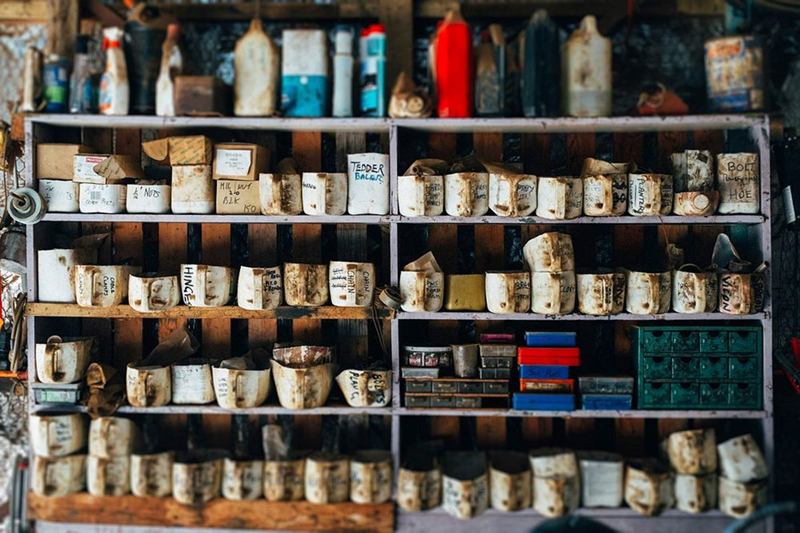
Most homes have more cleaning products than they realise: descaler under the bathroom sink, oven spray in the kitchen, bleach in the laundry corner, half-empty bottles from the previous tenant in the cellar. For families with small children, this is one of the main household safety topics. Storing them correctly is the first step, and knowing how to dispose of cleaning products you no longer need is the second.
This guide gives you five rules, with Swiss-specific advice on hazardous waste and what to do in an emergency.
Why cleaning products need special care
Many everyday cleaners are harmless when used as intended but dangerous if swallowed, splashed in the eyes or mixed. Oven cleaners and drain cleaners can be corrosive, descalers are acidic, and bleach-based products react with other chemicals. Children are especially at risk because colourful bottles and pleasant scents look like drinks or sweets.
Tox Info Suisse, the Swiss poison information centre, gives clear advice on preventing poisoning with cleaning products at home. The rules below build on it.
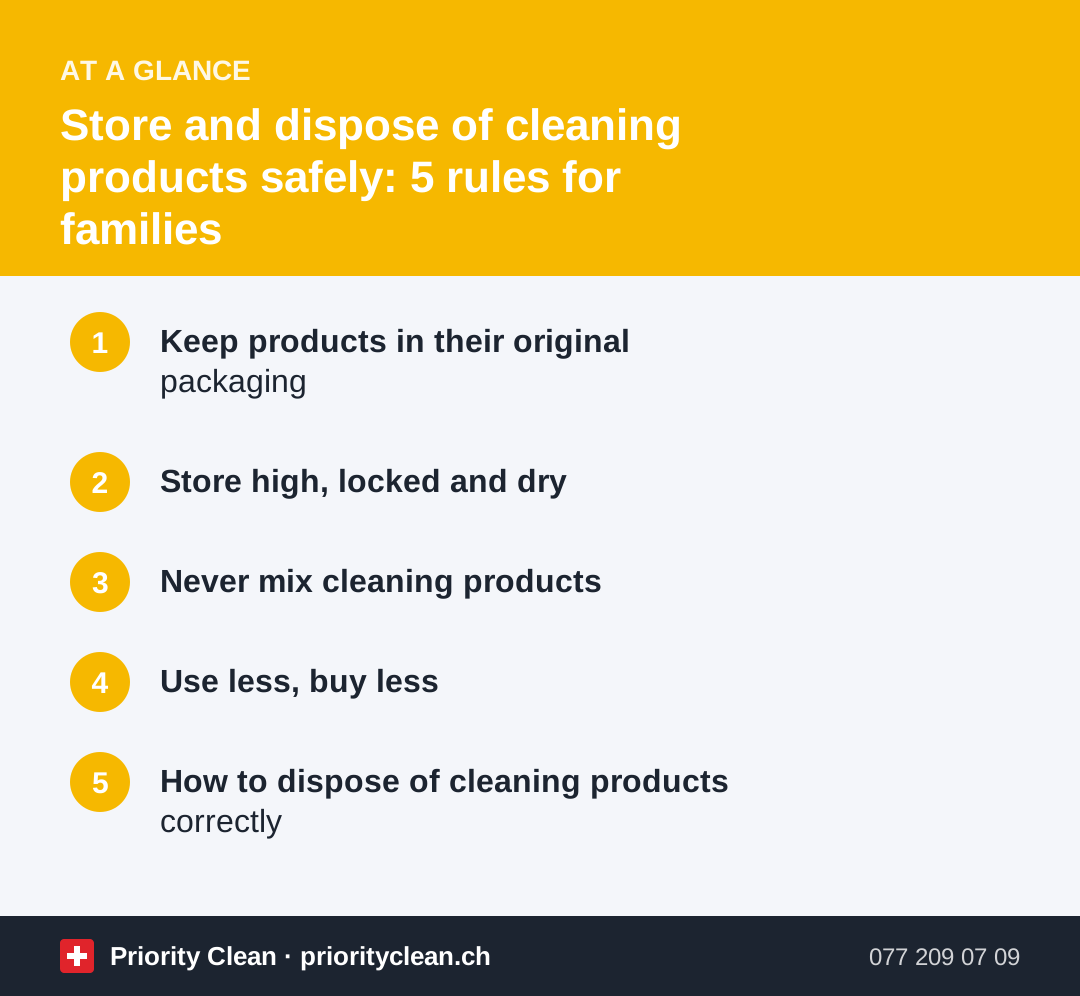
1. Keep products in their original packaging
- Never decant into drink bottles, jars or cups. Someone may mistake the contents for a drink.
- Keep labels readable: They contain hazard symbols, instructions and first-aid information.
- Use child-resistant caps as supplied, and close them properly after every use.
- Self-made cleaners (for example citric acid solution in a spray bottle) should be clearly labelled with content and date.
2. Store high, locked and dry
The federal chemicals information platform recommends storing chemical products out of children's reach, higher than 160 cm and locked.
- Move products from under the sink to a high cupboard, or fit a child lock.
- Separate acids and bleach-based products so they can't react if a bottle leaks.
- Keep them away from food, pet food and medicines.
- Choose a dry, cool place: Heat and frost can damage packaging.
- Dishwasher and washing machine tablets count too: to small children, colourful tabs and pods can look like sweets.
3. Never mix cleaning products
This rule applies to everyone, not just families.
- Bleach + acids (descaler, vinegar, citric acid, some toilet cleaners): releases toxic chlorine gas.
- Bleach + ammonia-containing cleaners: also releases harmful gases.
- Drain cleaner + other products: can react violently.
The Federal Office of Public Health warns explicitly that bleach must never be mixed with acids or ammonia. Use one product at a time, rinse thoroughly in between, and air the room well.
4. Use less, buy less
The best way to reduce risk is fewer products in the home.
- A few basics cover most jobs: washing-up liquid, an all-purpose cleaner, a descaler such as citric acid, and a scouring agent. Our guide to homemade cleaning products shows what simple ingredients can do.
- Buy small packs of rarely used special products.
- Check before you buy: Do you already have something suitable?
- Read hazard symbols in the shop: Choose the least hazardous product that does the job.
5. How to dispose of cleaning products correctly
Leftover chemicals are not ordinary household waste. According to the Federal Office for the Environment, products such as acids, alkalis, bleach, descalers, solvents and spray cans count as hazardous waste.
- Return them to the shop: Retailers that sell such products generally take them back.
- Use collection points: Many communes have a hazardous waste collection point or special collection days. Check your commune's waste calendar or website.
- Keep products in their original packaging when you take them back, closed and upright.
- Don't pour leftovers down the sink, toilet or drain, and don't mix remains in one bottle.
- Empty packaging: Follow the instructions on the label; some fully empty containers can go with household waste, while anything with residue goes back to the collection point.
| Product | Where it goes |
|---|---|
| Leftover descaler, drain cleaner, bleach | Shop or hazardous waste collection point |
| Solvents, paint thinner | Shop or hazardous waste collection point |
| Spray cans with residue | Shop or hazardous waste collection point |
| Unknown old products from the cellar | Hazardous waste collection point |
| Completely empty packaging | As stated on the label or by the commune |
Common mistakes
- Storing products under the sink without a child lock.
- Decanting into an old PET bottle "just for now".
- Mixing leftovers to empty bottles faster.
- Pouring chemicals down the drain.
- Keeping the previous tenant's unknown products in the cellar for years.
Frequently asked questions
How do I dispose of old cleaning products in Switzerland?
Take them back to a shop that sells such products or to your commune's hazardous waste collection point, in their original packaging. Don't pour them down the drain.
Where should cleaning products be stored in a home with children?
Store them in their original packaging, high up and locked – ideally above 160 cm – and away from food and medicines. A child lock under the sink is a minimum.
What should I do if my child swallows a cleaning product?
Call Tox Info Suisse on 145 straight away, or 144 if the child is unconscious or has trouble breathing. Don't induce vomiting and keep the packaging ready.
Can I pour cleaning products down the drain?
Leftover chemicals such as descalers, drain cleaners, bleach or solvents count as hazardous waste and belong at a collection point, not in the drain. Use products as directed for their normal cleaning purpose.
Thanks for your feedback! Feel free to share the guide.
Thanks! What was missing? Drop us a line – we will improve the guide. WhatsApp