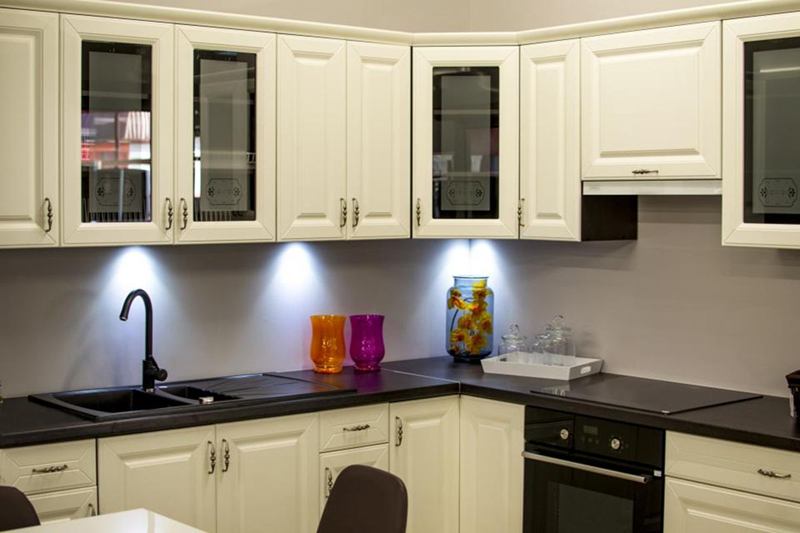
Every time you cook, fine droplets of fat rise with the steam and settle on everything nearby: the extractor hood, the tiles and, above all, the cabinet doors. Mixed with dust, it becomes a sticky, greyish film that feels unpleasant and grips new dirt. If you want to clean greasy kitchen cabinets, the key is warm water and a grease-dissolving agent – and the right approach for the material, because high-gloss, wood and foil fronts react very differently.
Here are five methods that work in our everyday cleaning jobs, including for kitchens at move-in and handover.
Why kitchen cabinets get greasy
Grease travels further than you think. When frying or boiling, it's carried in the steam and deposits where the air cools: on the doors near the hob, on top of wall cabinets, along the upper edges and under the extractor hood. Hands add their share on handles and around the fridge and bin cupboard.
A weak or clogged extractor hood makes it worse. Our guide to cleaning extractor hood filters shows how to keep it working well.
| Front material | How to recognise it | Suitable | Avoid |
|---|---|---|---|
| High-gloss lacquer or acrylic | Mirror-like shine | Soft microfibre, mild soap | Abrasives, dry rubbing |
| Real wood or veneer | Visible grain, natural feel | Barely damp cloth, mild soap, dry at once | Soaking, strong alkaline cleaners |
| Foil-coated (vinyl) | Uniform surface, edges may show a seam | Mild soap, little water | Heat, steam, solvents |
| Matt lacquer | Soft, velvety look | Soft cloth, mild soap, gentle pressure | Polishes, scouring |
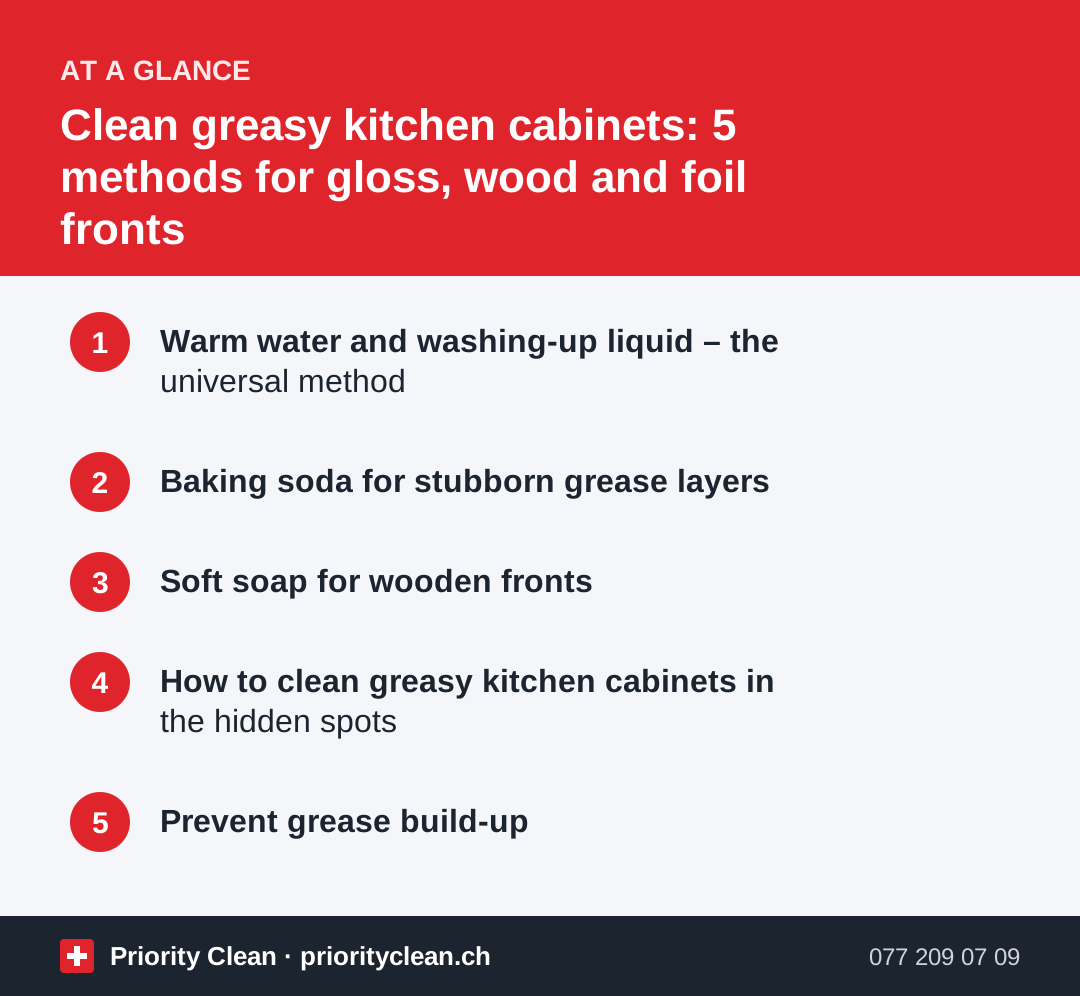
1. Warm water and washing-up liquid – the universal method
This is the right start for every front.
- Fill a bowl with warm water and add a few drops of washing-up liquid.
- Dip a soft microfibre cloth, wring it out well.
- Wipe the doors from top to bottom, with light pressure.
- For stubborn spots, leave the damp cloth on the area for a minute to soften the grease.
- Wipe with a second cloth and clear water.
- Dry immediately with a dry cloth.
Washing-up liquid is made to dissolve fat, which is exactly what you need. The consumer protection foundation also lists simple products such as soap, bicarbonate and vinegar as sufficient for most household jobs.
2. Baking soda for stubborn grease layers
For older, thicker layers on robust surfaces such as foil fronts and many lacquers:
- Dissolve one to two tablespoons of baking soda (bicarbonate) in a litre of warm water.
- Apply with a soft cloth or sponge, let it act for a few minutes.
- Wipe off with clear water and dry.
On very sticky spots, a paste of baking soda and a little water helps – but only on matt, robust surfaces and after a test. On high-gloss fronts, even fine particles can leave micro-scratches.
3. Soft soap for wooden fronts
Real wood needs a gentle touch.
- Use a small amount of soft soap (liquid plant-based soap) or washing-up liquid in lukewarm water.
- Wring the cloth out until it's barely damp.
- Wipe in the direction of the grain.
- Dry immediately and thoroughly.
- If the surface looks dull afterwards, a care product recommended by the kitchen maker can help. Oiled wood may need re-oiling.
4. How to clean greasy kitchen cabinets in the hidden spots
The fronts look clean, but the cabinet still feels sticky? Check these areas:
- Handles and knobs: Clean with a toothbrush and soapy water, especially in grooves and where handles meet the door.
- Top edges of doors: Grease collects in the gap – wipe with a cloth wrapped around a flat spatula.
- Tops of wall cabinets: Often a thick layer of greasy dust. Lay kitchen paper or baking paper on top afterwards and replace it regularly.
- Inside the doors near the hob: Steam gets in when doors are opened while cooking.
- Plinths and lower edges: Splashes and dust from the floor.
For the tops of wall cabinets, you'll need a step ladder. The BFU advises using steps with deep treads and non-slip feet instead of a chair.
5. Prevent grease build-up
- Switch on the extractor hood before you start cooking and leave it running for a few minutes afterwards.
- Use lids when frying and boiling.
- Wipe the doors near the hob weekly with warm soapy water – it takes two minutes.
- Clean or replace extractor filters regularly.
- Air the kitchen after cooking.
Common mistakes
- Scouring sponges and abrasive creams: Leave permanent dull patches, especially on high gloss.
- Steam cleaners: Heat and moisture can loosen foil and edge bands.
- Too much water: Seeps into edges and makes wood and chipboard swell.
- Oven cleaner as degreaser: Too aggressive for fronts.
- Microfibre on high gloss while dry: Rubbing dust across the surface can scratch it. Always use a damp cloth.
For stainless steel appliance fronts, see our guide on cleaning stainless steel.
Frequently asked questions
What is the best way to clean greasy kitchen cabinets?
Warm water with a few drops of washing-up liquid and a soft microfibre cloth. Let the damp cloth soften stubborn spots, rinse with clear water and dry immediately.
How do you clean greasy high-gloss kitchen doors?
Use only a damp, soft microfibre cloth with mild soapy water, never dry rubbing or abrasives. Dry with a clean microfibre cloth to avoid streaks.
Can I use vinegar on kitchen cabinets?
Vinegar is not a good degreaser and can harm some lacquers and natural stone worktops nearby. Washing-up liquid works better on grease.
How do I remove sticky residue from wooden kitchen cabinets?
Use a barely damp cloth with a little soft soap or washing-up liquid, wipe with the grain and dry at once. Test first, and follow the kitchen maker's care advice for oiled or lacquered wood.
Thanks for your feedback! Feel free to share the guide.
Thanks! What was missing? Drop us a line – we will improve the guide. WhatsApp