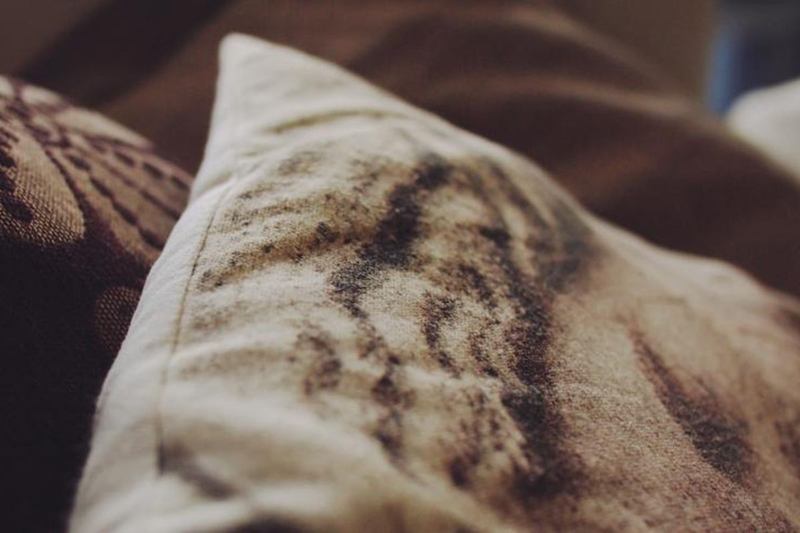
Pillowcases go into the wash every week or two, but the pillows themselves often stay untouched for years. Yet they absorb sweat, skin oils and dust every night, and yellow patches or a stale smell eventually give them away. Knowing how to wash pillows and duvets correctly makes them fresh and fluffy again – as long as the filling dries completely.
Here are five steps for down, feather and synthetic fillings, plus what to do when your duvet doesn't fit into the machine in your building's laundry room.
Why pillows and duvets need washing
Over time, bedding collects moisture, sweat, skin flakes and dust. That's not just unpleasant; for people with a house dust mite allergy, it matters. The allergy centre aha! recommends, among other measures, washing pillowcases, duvet covers and pyjamas at 60 °C and using mite-proof encasings. Whether the pillow itself can be washed hot depends on its filling and label.
Our guide on how often to wash bed sheets covers the covers; this article is about what's inside.
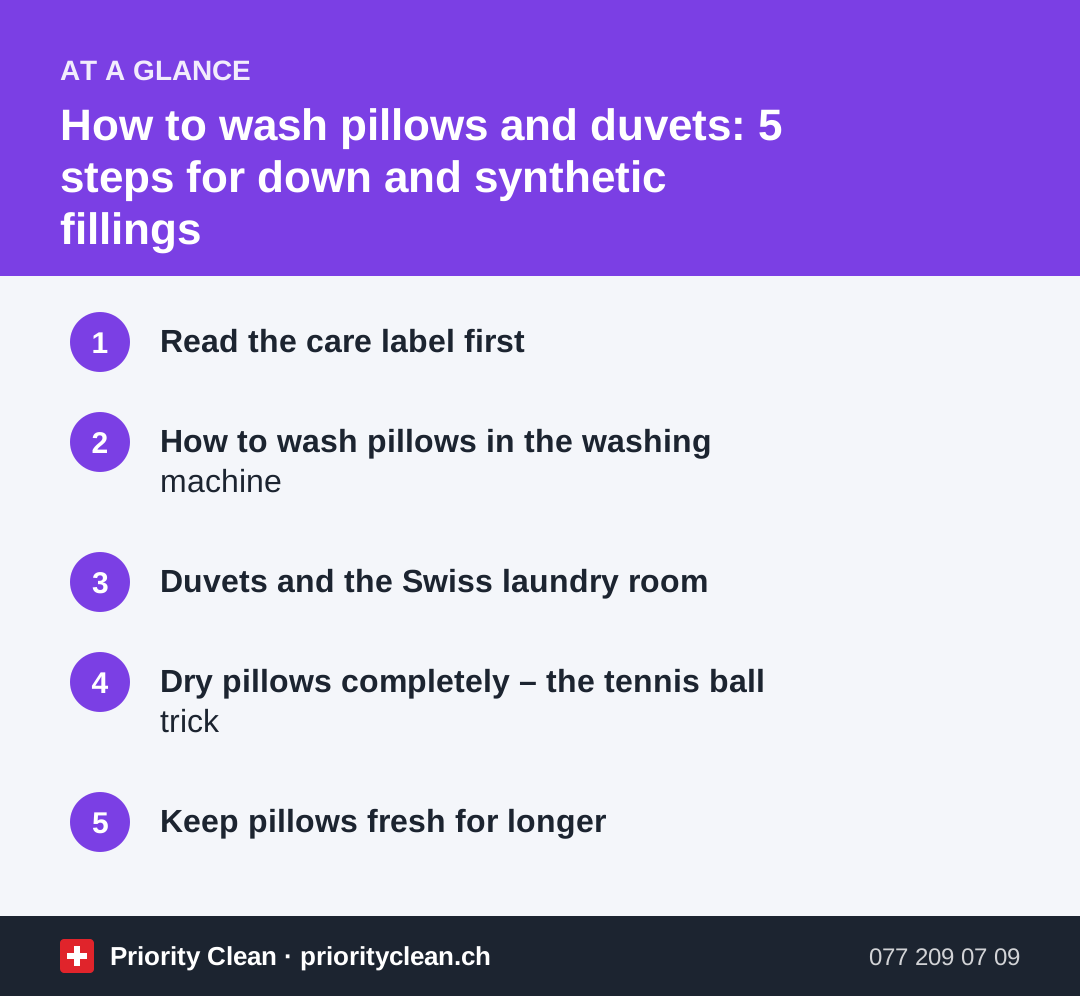
1. Read the care label first
The label tells you almost everything you need:
| Symbol / note | What it means |
|---|---|
| Wash tub with a number | Maximum washing temperature |
| Wash tub with a line below | Gentle programme |
| Hand in the tub | Hand wash only |
| Crossed-out tub | Not washable – dry or professional cleaning |
| Square with a circle | Tumble drying allowed (dots = heat level) |
- Synthetic fillings (polyester fibres) are usually washable and often tolerate higher temperatures.
- Down and feathers are usually washable at lower temperatures with a special programme.
- Memory foam and latex pillows are generally not machine washable. Only the removable cover goes into the machine.
2. How to wash pillows in the washing machine
- Check for damage: Repair small holes and open seams first, or the filling escapes.
- Load evenly: Wash one or two pillows together so the drum stays balanced and there's room for water to flow through.
- Choose the programme: Down or wool programme for down; gentle or synthetic programme for polyester, at the temperature on the label.
- Use little detergent: A mild liquid detergent or a special down detergent. Too much leaves residue in the filling.
- Add an extra rinse so no detergent stays behind.
- Spin gently: A medium spin removes water without compressing the filling too hard.
Skip fabric softener: it coats the fibres and down, reducing their loft.
3. Duvets and the Swiss laundry room
Many flats in Switzerland don't have their own washing machine but share one in the building's laundry room, booked by time slot. Our article on laundry room rules in apartment buildings explains the etiquette.
- Measure the drum: A duvet needs space to move. If it barely fits when dry, it won't get clean when wet, and it can strain the machine.
- Plan your slot: Washing and fully drying a duvet takes a long time. Book a long slot or start early.
- Too big? Use a laundromat with large machines or take the duvet to a professional textile cleaner.
EnergieSchweiz generally recommends low temperatures and eco programmes for everyday laundry. For bedding, follow the care label and any recommendation from your doctor if allergies are an issue.
4. Dry pillows completely – the tennis ball trick
This is the step that decides success or failure. A pillow that is dry on the outside can still be damp in the middle, which leads to lumps, mould spots and a musty smell.
Tumble dryer (if the label allows):
- Dry at low to medium heat.
- Add two or three clean tennis balls or special dryer balls. They break up clumps and fluff the filling.
- Stop from time to time, shake the pillow and feel for damp clumps.
- Down needs patience: several cycles are normal.
Air drying:
- Lay pillows flat on a drying rack in a warm, well-ventilated room, or outdoors on a dry day.
- Turn and shake them several times a day.
- Only put them back into use when they're dry right through.
5. Keep pillows fresh for longer
- Use protective covers: A washable pillow protector under the pillowcase catches most sweat and oils.
- Air your bed every morning: Fold back the duvet and open the window for a few minutes before making the bed.
- Shake pillows daily: Keeps the filling loose.
- Wash regularly: Many households wash pillows and duvets once or twice a year, more often with allergies, pets or night sweats.
- Know when to replace: If a pillow stays flat after shaking or folds over without springing back, it no longer supports your neck well.
Common mistakes
- Washing too many pillows at once: They don't get clean or rinsed properly.
- Too much detergent: Leaves residue and makes down clump.
- Fabric softener: Reduces loft.
- Drying too fast on high heat: Can damage fibres and fabric.
- Using pillows while still damp inside: Leads to smell and mould.
- Machine-washing memory foam: The foam can tear or crumble.
Frequently asked questions
Can you wash pillows in the washing machine?
Most down, feather and synthetic pillows can go in the washing machine if the care label allows it. Memory foam and latex pillows usually can't; wash only their covers.
How do I dry pillows without them going lumpy?
Tumble dry at low to medium heat with two or three tennis balls, stopping to shake the pillows regularly. Make sure they're dry in the middle before you use them again.
How often should you wash pillows?
Many households wash pillows once or twice a year. Wash them more often if you have allergies, pets or sweat a lot at night, and follow the care label.
What if my duvet is too big for the washing machine?
Don't force it into a small drum. Use a laundromat with large machines or take it to a professional textile cleaner.
Thanks for your feedback! Feel free to share the guide.
Thanks! What was missing? Drop us a line – we will improve the guide. WhatsApp