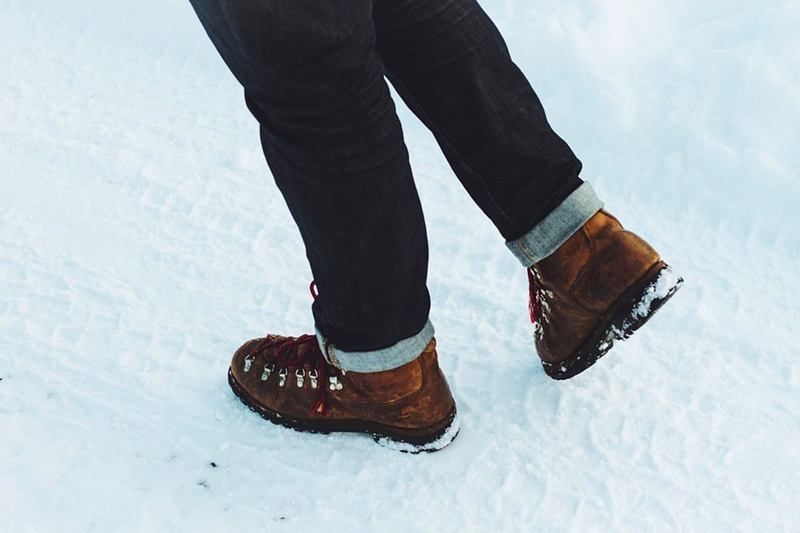
The first snow falls, the pavements are gritted – and a day later your leather boots have white wavy rims. In Swiss towns, road salt is part of winter, and it doesn't stop at your shoes: it travels into the hallway, onto the doormat and into the carpet. Salt stains on shoes look harmless, but if they stay, salt draws moisture out of leather, making it stiff and cracked.
Here are five methods to remove salt stains from shoes and carpet – and to keep the salt outside.
Why salt stains appear
Road salt dissolves in snowmelt. The salty water soaks into leather and fabric, and when it dries, the salt crystallises as white rims. Salt also draws moisture and natural oils out of leather – that's why untreated boots become brittle over the winter.
On carpets and doormats, the same process leaves greyish-white tidemarks, especially at the entrance and in the hallway.
1. Vinegar water for smooth leather
Vinegar helps dissolve salt deposits. Consumer advocates list it among the simple household cleaning remedies.
- Brush off dry dirt and loose salt first.
- Mix one part household vinegar with about two parts lukewarm water.
- Dip a soft cloth, wring it out well and wipe the salt rims gently.
- Wipe the whole section of the shoe – not just the rim – so no new edge forms.
- Wipe again with a cloth dampened with clear water.
- Dab dry with a clean cloth.
Test on a hidden spot first, such as the inside of the tongue or the heel, especially with coloured or delicate leather.
2. Dry and care for leather properly
Drying is just as important as cleaning.
- Stuff shoes with newspaper or paper towels (replace when damp) or use shoe trees.
- Let them dry at room temperature – never on the radiator, next to the heater or with a hairdryer.
- Once completely dry, apply a leather cream or conditioner suitable for the leather colour.
- Buff with a soft cloth.
- Apply a waterproofing spray suitable for leather before going out again – outdoors or on the balcony, following the label.
Heat makes wet leather shrink, harden and crack. Patience saves your boots.
3. Suede and nubuck: dry methods first
Suede and nubuck react more sensitively to water.
- Let them dry completely before cleaning.
- Brush with a suede brush in one direction to lift salt crystals and restore the nap.
- Use a suede eraser on remaining white marks.
- If needed: Dab very lightly with a cloth barely dampened with diluted vinegar, then let dry and brush again.
- Protect with a suede waterproofing spray before winter.
For expensive suede shoes with persistent marks, a professional shoe cleaner is the safer choice.
4. Fabric and synthetic shoes
Trainers, winter boots with textile uppers and synthetic materials are easier:
- Brush off dry salt.
- Wipe with lukewarm water and a few drops of mild washing-up liquid.
- Rinse with a clean damp cloth.
- Stuff and dry at room temperature.
For white trainers, see our separate guide on how to clean white trainers.
5. Salt stains on carpet and doormats
- Vacuum first – when the carpet is dry, to remove loose salt crystals and grit.
- Mix warm water with a little vinegar or a drop of washing-up liquid.
- Dab the stain with a clean cloth – don't rub, which spreads the salt.
- Blot with a dry cloth to absorb the moisture.
- Rinse by dabbing with clear water and blot dry again.
- Let dry and vacuum again.
Test on a hidden spot first. For wool rugs and delicate carpets, use very little moisture. Our guide on cleaning a rug at home covers general care.
Keep the salt outside: the entrance zone
| Measure | Effect |
|---|---|
| Coarse scraper mat outside the door | Removes snow, grit and salt |
| Absorbent mat inside the door | Takes up moisture and fine dirt |
| Shoe tray with a rim | Keeps meltwater off the floor |
| Take off shoes at the entrance | Common in Swiss homes – salt stays at the door |
| Wipe the entrance floor often | Stops salt spreading through the flat |
Common mistakes with salt stains
- Drying on the radiator: Leather cracks and shrinks.
- Only wiping the white line: Creates a new tidemark.
- Waiting until spring: Salt damages leather over time.
- Rubbing carpet stains: Spreads the salt and roughens fibres.
- Too much water on suede: Leaves dark, stiff patches.
In apartment buildings, salt and meltwater also make stairwells slippery – see our guide on stairwells in winter.
Frequently asked questions
How do you get salt stains out of leather shoes?
Brush off loose salt, wipe the stained area with a cloth dampened with a mix of one part vinegar and two parts water, wipe with clear water and let the shoes dry at room temperature. Apply leather care once dry.
Can salt stains damage shoes?
Yes. Salt draws moisture and oils out of leather, which can make it stiff and cause cracks. Remove salt stains promptly and care for the leather afterwards.
How do I remove salt stains from suede boots?
Let them dry completely, brush with a suede brush and use a suede eraser. If needed, dab very lightly with diluted vinegar, let dry and brush again.
How do I get salt stains out of carpet?
Vacuum when dry, dab with warm water and a little vinegar or washing-up liquid, blot dry, rinse by dabbing with clear water and vacuum again once dry. Test on a hidden spot first.

Thanks for your feedback! Feel free to share the guide.
Thanks! What was missing? Drop us a line – we will improve the guide. WhatsApp