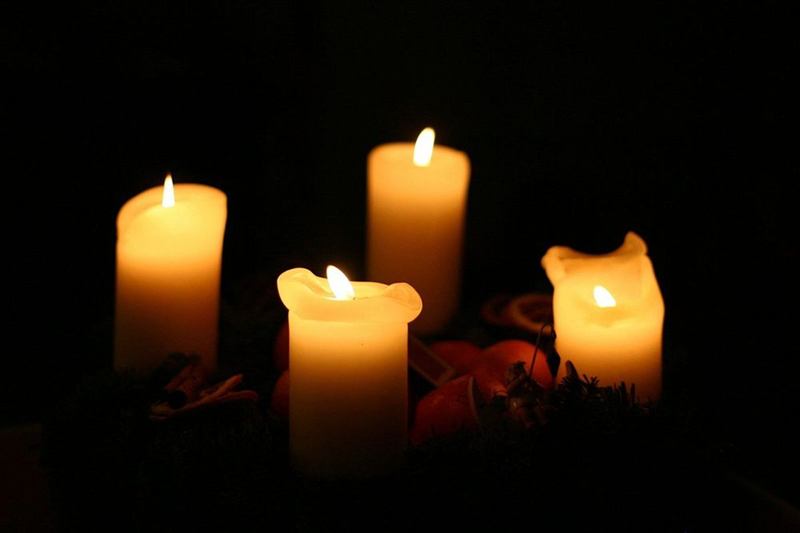
Autumn evenings, dinner with friends, advent candles: in the darker months, candles are everywhere – and so are wax drips. On the tablecloth, the rug, the wooden sideboard or the window sill. The instinct is to rub it away immediately, but that usually makes things worse. To remove candle wax cleanly, you first let it harden, then lift it off, and only then deal with any remaining grease or colour.
Here are five methods for the most common surfaces.
Before you start: never rub warm wax
Warm, soft wax gets pushed deeper into fibres and pores if you rub it. Wait until it has hardened completely – on a warm table this can take a while. Then work in two stages: first remove the solid wax, then treat the residue.
Tools you may need: ice cubes in a freezer bag, a blunt knife or old plastic card, absorbent paper (blotting paper, kitchen paper or plain brown paper), an iron, a hairdryer and a soft cloth.
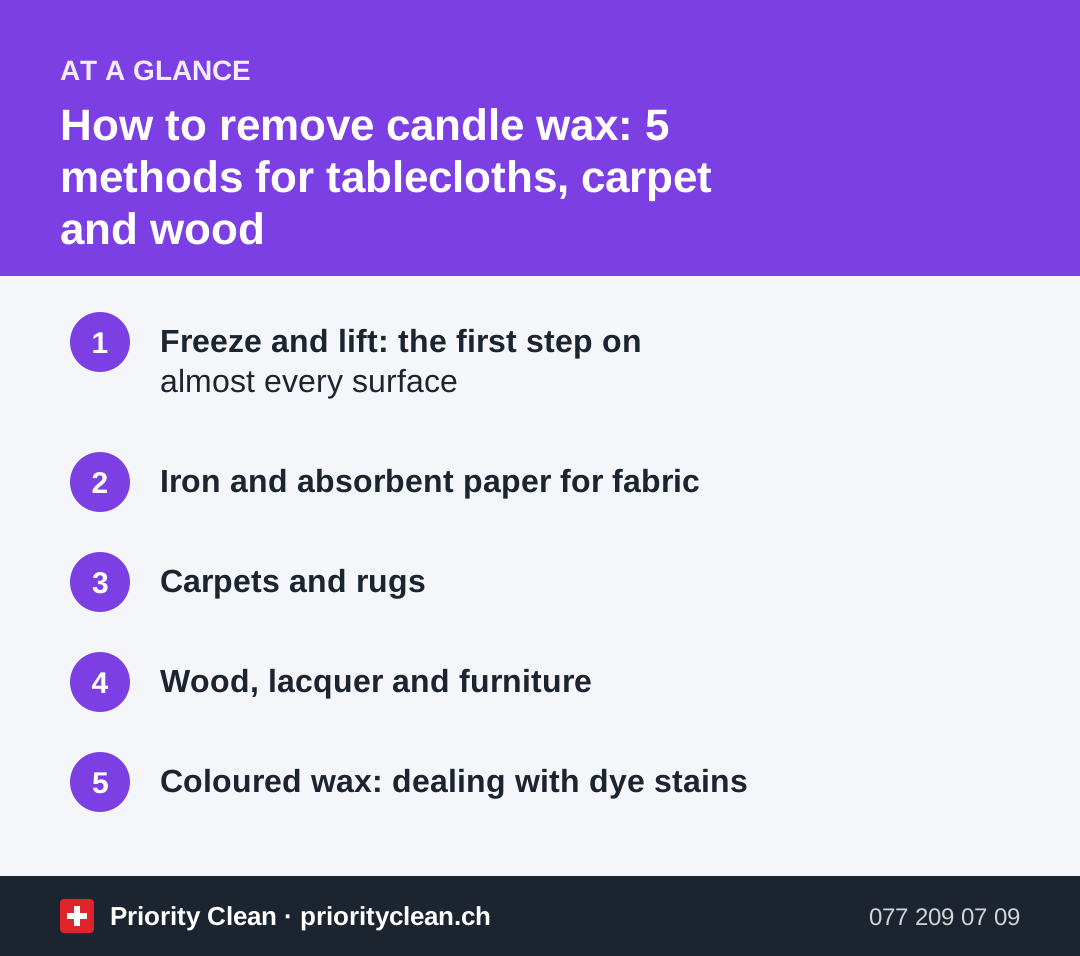
1. Freeze and lift: the first step on almost every surface
Cold makes wax brittle.
- Put ice cubes in a freezer bag and lay it on the wax for 10–15 minutes. Small items such as napkins can go straight into the freezer in a bag.
- Once the wax is hard, bend the fabric slightly or tap it – large pieces often break off.
- Carefully lift the remaining wax with a blunt knife or plastic card. Hold it flat and work from the edge.
- Brush away small crumbs.
This step alone removes most of the wax from glass, tiles, hard floors and many fabrics.
2. Iron and absorbent paper for fabric
For the thin layer that remains in tablecloths, napkins and clothes.
- Place absorbent paper under and on top of the wax spot.
- Set the iron to a low to medium temperature suitable for the fabric, without steam.
- Press briefly on the paper – don't move it back and forth.
- The wax melts and soaks into the paper. Move to a clean area of paper and repeat until no more wax transfers.
- Wash the item according to its care label to remove any greasy shadow.
3. Carpets and rugs
- Freeze the wax with an ice bag and break off as much as possible.
- Loosen the pieces from the fibres with your fingers or a blunt knife and vacuum them up.
- Put absorbent paper on the remaining wax and press gently with a warm iron on a low setting – keep it moving slightly and check often. Synthetic fibres can melt, so test on a hidden spot first.
- Treat any remaining greasy mark with a little carpet cleaner or mild soapy water, dabbing rather than rubbing.
For wool rugs and high-pile carpets, use as little heat as possible. Our guide on cleaning a rug at home covers the general care.
4. Wood, lacquer and furniture
Wooden surfaces are sensitive to both heat and scraping.
- Let the wax harden and lift off what you can with a plastic card – never a metal knife.
- Warm the remaining thin layer briefly with a hairdryer on a low setting, from a distance.
- Wipe the softened wax away immediately with a soft cloth.
- Clean the spot with a damp cloth and a drop of washing-up liquid, then dry.
- Treat oiled wood with a suitable wood care product if the surface looks dull.
For glass candle holders and window panes, freezing plus a plastic scraper usually works; any film comes off with hot soapy water.
5. Coloured wax: dealing with dye stains
Red, dark green or gold candles are especially popular in the festive season – and their dye can remain in fabric after the wax is gone.
- Remove the wax first with methods 1 and 2.
- Pre-treat the remaining colour with a stain remover suitable for the fabric – test on a hidden seam.
- For white cotton, washing at the temperature on the care label after pre-treatment often helps.
- For delicate fabrics and upholstery, contact a professional dry cleaner rather than experimenting.
| Surface | Best method | Avoid |
|---|---|---|
| Tablecloth, napkins | Freeze, iron with paper, wash | Rubbing warm wax |
| Carpet, rug | Freeze, vacuum, low heat with paper | High heat on synthetics |
| Wood | Plastic card, hairdryer on low | Metal knives, hot iron |
| Glass, tiles | Freeze, plastic scraper, hot soapy water | Sharp blades on coated glass |
| Upholstery | Freeze, gentle paper and heat | Solvents without testing |
Common mistakes when removing candle wax
- Rubbing warm wax: Pushes it deeper into fabric and wood grain.
- Scraping with a metal knife: Scratches wood, glass coatings and lacquer.
- Iron too hot: Can scorch fabric or melt synthetic carpet fibres.
- Printed paper under the iron: Transfers ink.
- Washing before removing the wax: Wax can spread in the machine.
For other festive stains, see our home remedies for stains.
Frequently asked questions
How do you remove candle wax from a tablecloth?
Let the wax harden, freeze it with an ice bag and break off as much as possible. Then place absorbent paper above and below the spot, press with a warm iron without steam and wash the tablecloth according to its label.
How do I get candle wax out of carpet?
Freeze the wax, break it up and vacuum the pieces. Remove the rest with absorbent paper and a warm iron on a low setting, testing on a hidden spot first, especially with synthetic fibres.
How do I remove candle wax from wood without damage?
Lift off hardened wax with a plastic card, soften the rest with a hairdryer on a low setting and wipe it away with a soft cloth. Avoid metal knives and a hot iron.
Why is there still a stain after removing coloured wax?
Coloured candles contain dyes that can remain in the fibres. Pre-treat with a suitable stain remover, test it first, and wash according to the care label.
Thanks for your feedback! Feel free to share the guide.
Thanks! What was missing? Drop us a line – we will improve the guide. WhatsApp