A drop of tomato sauce on a white shirt, grass on the children's trousers, red wine on the tablecloth after a summer dinner: stains happen in every household. Before you buy a special product for each one, look in your kitchen cupboard. The right home remedies for stains – used quickly and correctly – solve most everyday problems gently and cheaply.
The Swiss consumer protection foundation also recommends simple household remedies instead of a cupboard full of special cleaners. Here are the five all-rounders we rely on, and which stain each one is best for.
The golden rules before using home remedies for stains
Whatever remedy you choose, the technique decides success. Remove any solid residue with a spoon or blunt knife first. Then place a clean white cloth under the fabric and dab the stain from the outside in, so it doesn't grow.
Read the care label and test on an inside seam or hem. Delicate fabrics such as silk, wool, viscose or leather react differently from cotton and polyester. If the label says "dry clean only", it's better to leave the stain to a professional dry cleaner rather than experiment.
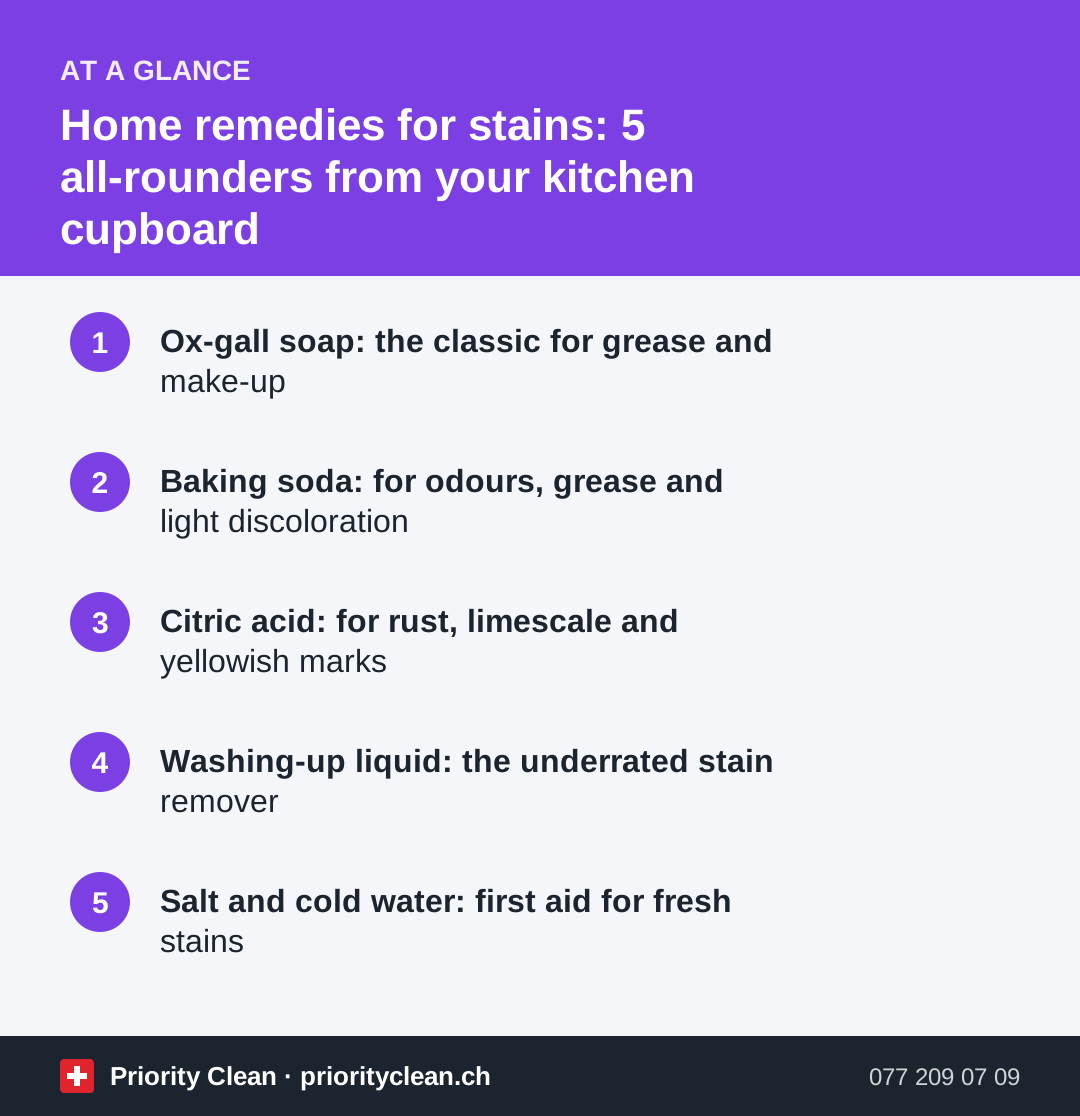
1. Ox-gall soap: the classic for grease and make-up
Ox-gall soap (in Switzerland often sold as Gallseife) is a traditional stain soap available in supermarkets and pharmacies. The bile it contains breaks down fat and protein.
- Moisten the stain with cold or lukewarm water.
- Rub the soap bar directly onto the stain.
- Work it in gently with your fingers or a soft brush.
- Leave it for 15–30 minutes, then wash as usual.
It works well on grease, food, make-up, grass and collar dirt. Because it can affect some colours, test first on coloured items.
2. Baking soda: for odours, grease and light discoloration
Baking soda (bicarbonate of soda, Natron) is mildly alkaline and slightly abrasive. As a paste, it lifts fresh grease and deodorant marks; sprinkled dry, it absorbs oil and odours.
- Fresh oil or grease: Sprinkle baking soda generously, leave for about 15 minutes to absorb, brush off, then treat the remaining mark with washing-up liquid.
- Paste for textiles: Mix 2–3 tablespoons with a little water, apply, leave for half an hour, rinse and wash.
- Upholstery and carpets: Dry baking soda sprinkled overnight and vacuumed up the next day freshens fabrics.
3. Citric acid: for rust, limescale and yellowish marks
Citric acid is a gentle acid that dissolves mineral deposits. On textiles it helps with rust spots, water marks and some yellowish discolorations on white cotton.
- Dissolve 1 tablespoon of citric acid powder in about 250 ml of lukewarm water.
- Dab the solution onto the stain or soak the affected area for up to an hour.
- Rinse thoroughly with clear water and wash.
Use citric acid only on white or colourfast fabrics, and never on natural stone surfaces such as marble – acids etch the stone.
4. Washing-up liquid: the underrated stain remover
Plain washing-up liquid is designed to dissolve fat, which makes it one of the most versatile home remedies for stains on clothes. It is especially effective on salad dressing, butter, sauces and oily cosmetics.
- Apply a drop directly to the stain.
- Work it in gently with your fingertips or an old toothbrush.
- Leave for 10 minutes, rinse with lukewarm water and wash.
Choose a clear, colourless product so you don't add dyes to light fabrics.
5. Salt and cold water: first aid for fresh stains
Salt is your emergency helper when no other home remedies are nearby. It draws liquid out of the fibres and works well on fresh red wine, fruit juice and blood.
- Red wine or juice: Blot, cover with salt, let it absorb, brush off and rinse from the back with cold water.
- Blood: Rinse immediately with cold water and a little salt – never hot water, as heat sets protein stains. Our guide on removing blood stains explains more.
Stain table: which home remedy for which stain?
| Stain | Best home remedy | Water temperature |
|---|---|---|
| Grease, oil, butter | Baking soda (absorb), then washing-up liquid | Lukewarm |
| Make-up, collar dirt | Ox-gall soap | Lukewarm |
| Red wine, fruit juice | Salt, then cold rinse | Cold |
| Blood, egg, milk | Cold water, salt or ox-gall soap | Cold |
| Grass | Ox-gall soap | Lukewarm |
| Rust, water marks on white cotton | Citric acid solution | Lukewarm |
| Sweat and deodorant | Baking soda paste | Lukewarm |
For yellow underarm marks, see our detailed guide to removing sweat stains.
Common mistakes when removing stains
- Rubbing hard: It spreads the stain and roughens the fabric surface.
- Hot water on protein stains: Blood, egg and milk set permanently.
- Tumble drying too early: Heat fixes any remaining stain. Air-dry and check before using the dryer.
- Skipping the patch test: Especially on coloured, silk or wool fabrics.
- Too much at once: Piling up home remedies doesn't add up – baking soda plus vinegar plus soap is a typical example, and many combinations neutralise each other.
Frequently asked questions
What is the best home remedy for stains on clothes?
There is no single best remedy – it depends on the stain. Ox-gall soap is the most versatile for grease, food and grass, washing-up liquid for oily stains, salt and cold water for fresh wine or blood, and citric acid for rust marks on white cotton.
Can I use vinegar to remove stains?
Diluted vinegar can help with some water marks and odours, but it is an acid and can affect colours and delicate fibres. Test first, rinse well, and never use it together with bleach.
How do I remove old, dried stains?
Soak the item first in lukewarm water with a little washing-up liquid or ox-gall soap for a few hours, then treat the stain and wash. Very old stains may only fade rather than disappear completely.
Does baking soda bleach clothes?
Baking soda is not a bleach and is generally gentle on fabrics. Still, test it on a hidden spot for delicate or dark items, as the paste can leave light residue that needs thorough rinsing.
Thanks for your feedback! Feel free to share the guide.
Thanks! What was missing? Drop us a line – we will improve the guide. WhatsApp