
As soon as the heating goes on in autumn, many people notice the same thing: dust seems to reappear on shelves, TV screens and radiators within days of cleaning. It's not your imagination. Warm, dry air moves dust around, textiles shed more fibres, and windows stay closed longer. The right dusting tips won't make dust disappear forever, but they make a clear difference to how quickly it comes back.
Here are the five techniques we use in our daily cleaning work, plus the mistakes that simply move dust from one place to another.
Why dust comes back so quickly
Household dust is a mix of textile fibres, skin flakes, hair, outdoor dirt carried in on shoes, pollen and fine particles. In winter, several factors come together: warm air rising from radiators creates air currents that carry dust up and deposit it on shelves; windows stay closed; and thick blankets, jumpers and cushions release fibres all the time.
For people with a house dust mite allergy, dust is more than a cosmetic problem. The allergy centre aha! recommends damp wiping and a vacuum cleaner with a HEPA filter, among other measures. Our guide on reducing dust mites goes into more detail.
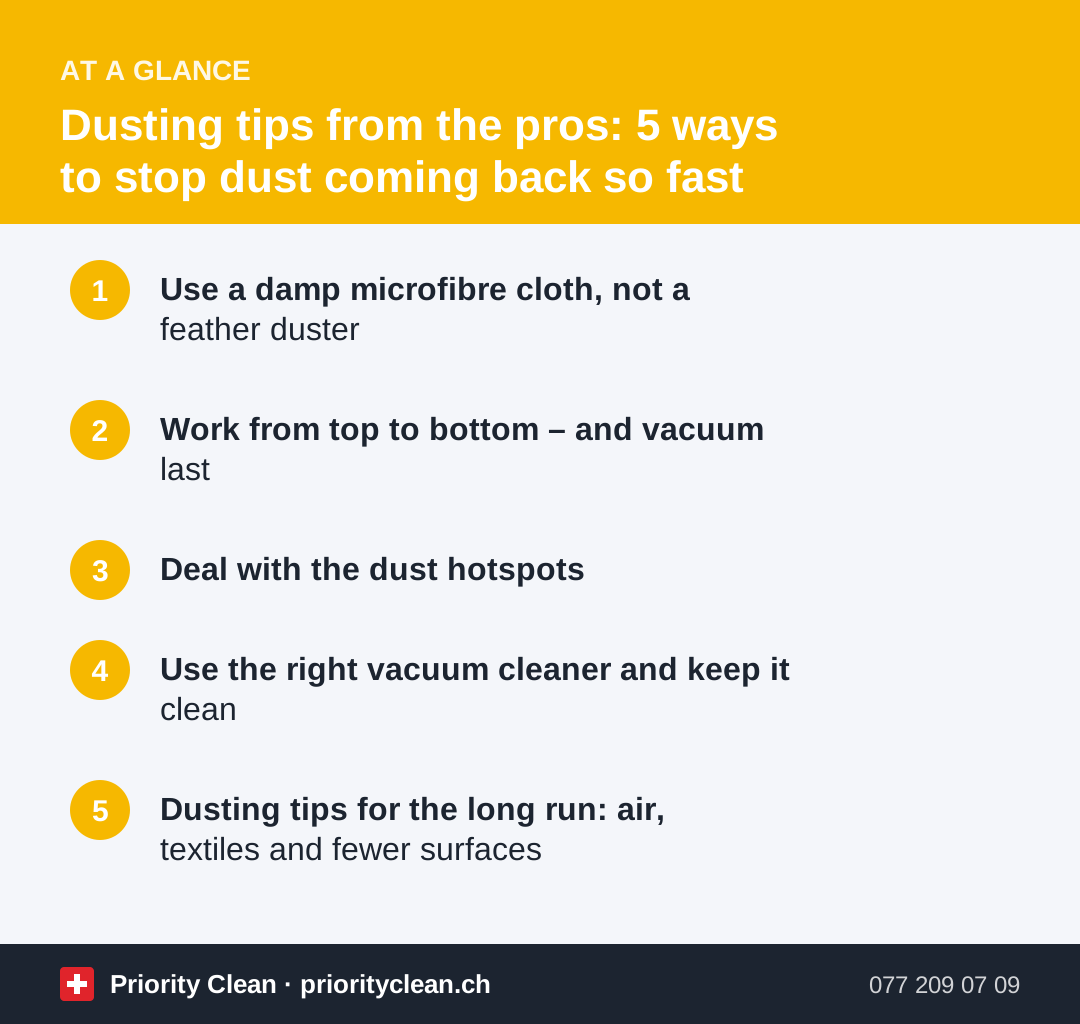
1. Use a damp microfibre cloth, not a feather duster
This is the most important of all dusting tips.
- Slightly damp, not wet: Moisten a microfibre cloth and wring it out well. Damp fibres bind dust instead of spreading it.
- Fold the cloth into quarters: You get eight clean surfaces. Turn to a fresh side as soon as one is grey.
- Rinse or swap cloths often: A saturated cloth just redistributes dirt.
- Dry-dust only delicate items: Waxed antiques, paper and electronics may need a dry microfibre cloth or a soft brush.
Feather dusters and dry rags look quick, but much of the dust simply floats up and lands again an hour later.
2. Work from top to bottom – and vacuum last
Dust falls. If you vacuum first and dust afterwards, you'll need to vacuum again.
- Start high: tops of wardrobes, door frames, lamps, picture frames.
- Continue with shelves, windowsills and furniture surfaces.
- Then radiators, skirting boards and chair legs.
- Vacuum or mop the floor at the very end.
In each room, move clockwise around the walls so you don't miss a corner. Don't forget light switches, the top edge of doors and the space behind the TV.
3. Deal with the dust hotspots
Some places collect and spread dust more than others.
| Hotspot | Why | What helps |
|---|---|---|
| Radiators | Warm air lifts dust into the room | Radiator brush, damp cloth, before heating season |
| Electronics | Static attracts dust | Dry microfibre, device switched off |
| Upholstery and cushions | Fibres and dust settle deep | Vacuum with upholstery nozzle |
| Curtains | Large surface, rarely washed | Shake out, vacuum, wash per label |
| Open shelves and decor | Many small surfaces | Fewer items, closed storage |
| Bed | Fibres from bedding | Wash bedding regularly, air daily |
Radiators deserve special attention in winter. Our step-by-step guide shows how to clean radiators, including the gaps between the fins.
4. Use the right vacuum cleaner and keep it clean
A vacuum cleaner can reduce dust or blow the finest part back into the room.
- Filter: A good fine-dust filter, such as a HEPA filter, helps keep small particles in the device.
- Bag or container: Replace or empty before it's full – suction drops sharply.
- Nozzles: Use the brush nozzle on shelves and skirting boards, and the upholstery nozzle on sofas and mattresses.
- Maintenance: Clean or replace the filters as the manual describes. Our guide on cleaning a vacuum cleaner explains how.
5. Dusting tips for the long run: air, textiles and fewer surfaces
Prevention is where you save the most time.
- Air regularly: EnergieSchweiz recommends airing three times a day for 5–10 minutes with windows wide open, rather than leaving them tilted.
- Shoes off at the door: A good doormat and a no-shoes rule keep a lot of outdoor dirt out.
- Reduce dust traps: Fewer open knick-knacks, more closed cupboards and baskets.
- Wash textiles: Cushion covers, throws and curtains release less dust when washed regularly according to the label.
- Keep a routine: A quick weekly dusting session is easier than a big clean once a month.
Common dusting mistakes
- Dry feather dusters: They move dust into the air rather than removing it.
- Too much water or spray: Wet wood swells and furniture polish residue attracts new dust.
- Vacuuming before dusting: The floor gets dusty again.
- Dirty cloths: Grey cloths spread a thin film of dirt.
- Ignoring radiators and the tops of cupboards: These are the main sources of "new" dust.
Frequently asked questions
Why does my apartment get dusty so quickly?
In winter, heating creates air currents that carry dust, windows stay closed more often, and textiles shed fibres. Dry dusting and vacuums with poor filters can also send dust back into the air.
Is it better to dust with a wet or dry cloth?
For most surfaces, a slightly damp microfibre cloth works best because it binds dust. Use a dry microfibre cloth for electronics and delicate surfaces that shouldn't get wet.
Should I dust or vacuum first?
Dust first, from top to bottom, and vacuum last. Dust falls onto the floor while you work, so vacuuming at the end catches it.
How often should I dust my home?
For most households, dusting once a week is a good rhythm. If someone in your home has a dust mite allergy, follow the recommendations of your doctor or aha!.
Thanks for your feedback! Feel free to share the guide.
Thanks! What was missing? Drop us a line – we will improve the guide. WhatsApp