Stuffy nose in the morning, itchy eyes, sneezing when you shake out the duvet? For many people with a house dust mite allergy, symptoms become more noticeable in autumn, when windows stay closed and the heating comes on. You cannot get rid of dust mites completely – they live in every home – but you can reduce dust mites and the allergens they produce considerably with the right cleaning and bedroom habits.
This guide summarises five practical measures, based on the recommendations of aha! Swiss Allergy Centre. It does not replace medical advice: if you suspect an allergy, talk to your doctor.
Why dust mites matter in autumn
House dust mites are tiny arachnids, invisible to the naked eye. They feed on skin flakes and thrive in warm, humid places – especially in mattresses, pillows, duvets, upholstered furniture and carpets. It is not the mites themselves that trigger allergic reactions, but proteins in their droppings, which dry out, break up and mix with house dust.
During summer, many mites die off in drier conditions. In autumn, when the heating starts, dead mites and their droppings are whirled up with dust, and closed windows mean less air exchange. That is why many allergy sufferers notice more symptoms from October onwards.
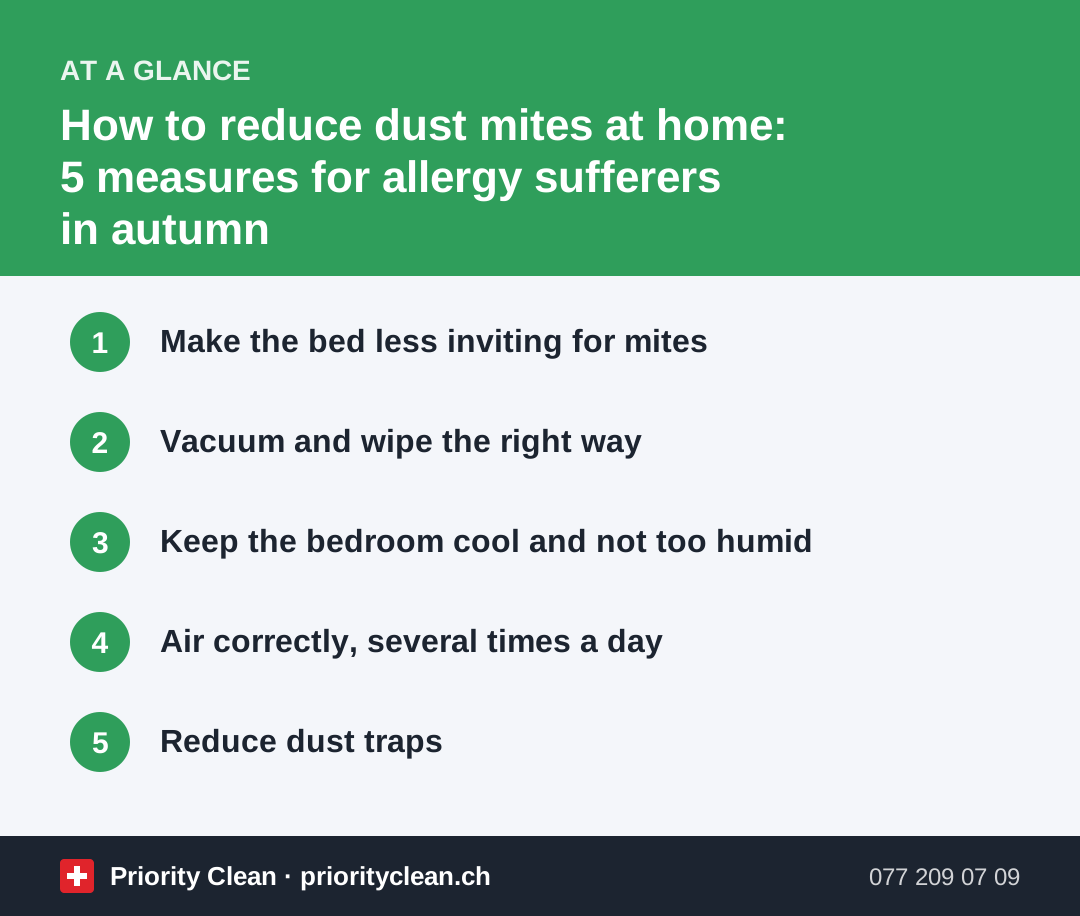
1. Make the bed less inviting for mites
The bed is where you spend a third of your life – and where mite allergens are concentrated.
- Encasings: Mite-proof covers for mattress, duvet and pillows act as a barrier between you and the allergens. aha! Swiss Allergy Centre lists mite-proof encasings among the key measures.
- Wash at 60 °C: Pillowcases, duvet covers, sheets and pyjamas should be washed regularly at 60 °C.
- Washable pillows and duvets: When you replace them, choose models that can be washed at 60 °C.
- Air the bed: Fold back the duvet in the morning so the mattress can dry out.
2. Vacuum and wipe the right way
Cleaning can reduce allergens – or stir them up if done the wrong way.
- Use a vacuum cleaner with a HEPA filter, so fine allergen particles are not blown back into the room.
- Wipe surfaces damp with a microfibre cloth instead of dry dusting, which spreads allergens into the air.
- Clean the bedroom floor regularly, including under the bed.
- Vacuum upholstered furniture and mattresses with the upholstery nozzle.
- Empty and clean the vacuum outdoors if possible, or have someone without an allergy do it.
Wiping damp and vacuuming with a HEPA filter are both part of the recommendations of aha! Swiss Allergy Centre.
3. Keep the bedroom cool and not too humid
Dust mites need warmth and humidity to thrive. The bedroom climate makes a real difference.
- According to aha!, a bedroom temperature of 18–20 °C and a relative humidity of no more than 50 % is recommended.
- Measure with a simple hygrometer from the DIY store.
- Do not dry laundry in the bedroom.
- Avoid humidifiers in the bedroom unless your doctor recommends one.
If humidity is regularly too high, our guide on reducing humidity in your apartment explains the possible causes and solutions.
4. Air correctly, several times a day
Fresh air lowers indoor humidity and helps remove airborne allergens.
- Open the windows fully for 5–10 minutes, three times a day, ideally with a cross-draught.
- Avoid leaving windows permanently tilted in the heating season: it cools the walls without exchanging much air.
- Air the bedroom thoroughly in the morning, after you get up.
The Federal Office of Public Health also recommends opening windows fully and cross-ventilating rather than keeping them tilted.
5. Reduce dust traps
The fewer places dust can collect, the easier cleaning becomes.
- Carpets: Smooth floors are easier to keep low in allergens than wall-to-wall carpets. In a rented flat you may not be able to change the floor, but you can use washable rugs.
- Curtains: Choose washable curtains or blinds and wash them regularly.
- Open shelves: Store books and decorations in closed cabinets where possible.
- Textiles: Reduce cushions, throws and soft toys in the bedroom.
- Upholstered furniture: Leather or smooth surfaces collect fewer allergens than fabric.
| Area | Measure | How often |
|---|---|---|
| Bed linen, pyjamas | Wash at 60 °C | Regularly, e.g. weekly |
| Mattress, pillows, duvet | Encasings, air daily | Encasings washed per instructions |
| Floors | HEPA vacuum, damp mop | Several times a week |
| Surfaces | Damp microfibre cloth | Weekly |
| Bedroom air | Air 3× daily for 5–10 minutes | Daily |
Common mistakes
- Dry dusting with a feather duster: Spreads allergens into the air you breathe.
- Making the bed immediately: Traps warmth and moisture in the mattress.
- Using a vacuum without a fine filter: Blows fine particles back into the room.
- Relying on sprays alone: Anti-mite sprays are no substitute for washing, encasings and a good room climate. Discuss any product with your doctor or pharmacist.
- Keeping the bedroom very warm: Comfortable for mites, not for you.
Frequently asked questions
How can I reduce dust mites in my bedroom?
Wash bed linen and pyjamas at 60 °C, use mite-proof encasings, vacuum with a HEPA filter, wipe surfaces damp, keep the bedroom at around 18–20 °C with humidity no higher than 50 % and air several times a day.
Can you get rid of dust mites completely?
No. Dust mites are present in almost every home. The goal is to reduce their numbers and the allergens they produce, which can make a noticeable difference for many allergy sufferers.
Does washing at 60 degrees kill dust mites?
aha! Swiss Allergy Centre recommends washing pillowcases, duvet covers and pyjamas at 60 °C as one of the measures against dust mites. Check the care label of your textiles first.
Why are dust mite symptoms worse in autumn?
In autumn, windows stay closed more and the heating starts, so dust and allergens from mites that died off in summer are circulated in the air. If symptoms are bothering you, consult your doctor.
Thanks for your feedback! Feel free to share the guide.
Thanks! What was missing? Drop us a line – we will improve the guide. WhatsApp