The rösti with a fried egg was delicious, but the next morning the hallway still smells of frying fat, and so does the wool jacket hanging by the door. Air freshener won't get you far against cooking smells: the odour travels on tiny droplets of fat that settle on fabrics, walls and furniture. What you do before and during cooking therefore matters most.
In small flats with an open-plan kitchen, the smell of fried food, fish or onions quickly reaches every room. These five tips show how to stop odours from settling and how to deal with the ones that linger.
Why cooking smells linger so long
Searing and frying create a fine mist of fat and steam. It carries odour molecules through the flat and settles everywhere: on cupboard fronts, curtains, sofas, rugs and clothes. As long as that film is there, it slowly releases the smell again, sometimes for days.
Hot fat, fish, onions, garlic and cabbage are the most persistent. Their odours come from volatile compounds that airing dilutes but cannot remove while the source is still there: the fat in the pan, scraps in the bin or a saturated filter in the extractor hood.
| Source of the smell | What is going on | What helps most |
|---|---|---|
| Fried and seared food | Fat mist that settles on surfaces | Extractor hood, lid, wiping surfaces |
| Fish | Strong-smelling compounds from skin and fat | Airing, taking scraps out at once |
| Onions, garlic, cabbage | Sulphur compounds | Lid, cross-ventilation, closed doors |
| Cheese fondue and raclette | Long cooking at the table, lots of steam | Thorough airing, airing fabrics |
For specific cases, see our guides on fish smell in the house and fondue smell in your flat.
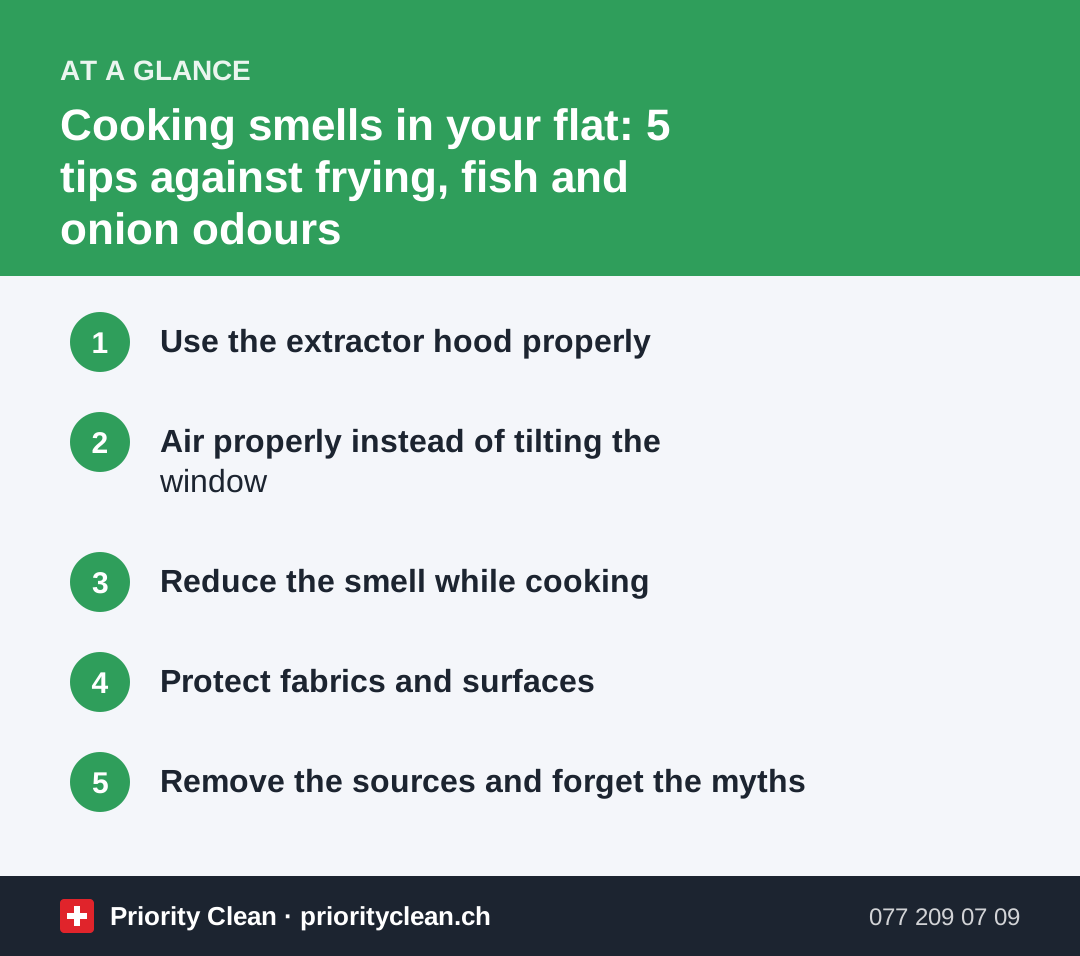
1. Use the extractor hood properly
The extractor hood is your most important tool against cooking odours, but only if it is running in time. Turn it on as soon as the pan starts to heat, so the airflow is established before the first steam rises. After cooking, let it run for a few more minutes; many models have a run-on function for this.
- Use the back rings: the hood captures steam best there.
- Choose the right setting: higher for searing, lower for simmering.
- Keep the grease filter clean: a clogged filter extracts poorly and starts to smell itself.
- Recirculating or ducted? Recirculating hoods, common in rented flats, have an activated carbon filter that must be replaced as the manufacturer specifies. Your property management or caretaker will know which type you have.
Our guide on how to clean extractor hood filters explains how to look after metal and carbon filters.
2. Air properly instead of tilting the window
Airing dilutes odours and removes water vapour. The Federal Office of Public Health recommends opening windows fully, cross-ventilating where possible and airing for at least 5 minutes in the heating season. After cooking this matters even more: a through-draught between two opposite windows exchanges the air within minutes.
A kitchen window left on tilt all day, by contrast, does little and chills the walls in winter. While you cook, close the doors to bedrooms and the hall wardrobe so the grease mist doesn't reach clothes and bedding. In an apartment building, keep the front door shut too, so the smell doesn't end up in the stairwell.
3. Reduce the smell while cooking
Many odours can be prevented before they start:
- Put a lid on it: cabbage, onions or soups keep their steam in the pot.
- Don't overheat: oil that smokes is too hot; it smells strongly and becomes unhealthy. Choose a heat-stable oil and moderate temperatures.
- Use a splatter screen: a mesh over the frying pan holds back fat droplets.
- Use the oven: fish or vegetables in a closed oven smell less than in an open pan.
- Plan deep-frying: do it less often, with a window open and the hood running.
4. Protect fabrics and surfaces
Smells cling wherever grease settles. After an evening of frying, wipe the hob, splashback, extractor hood and cupboard fronts with a damp cloth and a little washing-up liquid. An invisible film of grease on kitchen cupboards often holds on to odours longer than any curtain.
Fabrics absorb smells particularly well:
- Put tea towels and dishcloths in the wash after cooking.
- Wash or air curtains, cushions and throws in an open-plan kitchen regularly.
- Don't hang jackets and bags in the kitchen.
- After fondue or raclette, air your clothes on the balcony overnight.
The Federal Office of Public Health points out that good home hygiene matters more than the best cleaning products: dust regularly, wipe surfaces damp and clean up food residues quickly.
5. Remove the sources and forget the myths
Once the meal is over, nothing should keep on smelling. Fish and onion scraps go into a sealed bag and the bin is emptied the same evening. Don't leave a greasy pan until the next day. Never pour used frying oil down the drain: once it has cooled, take it in a closed bottle to your commune's oil collection point.
And the bowl of vinegar, ground coffee or lemon? It has its own smell but neutralises hardly anything; at best it masks cooking smells. The same applies to scented candles, incense and room sprays: according to the FOPH, such products can add further pollutants to indoor air. Fresh air and clean surfaces remain the better solution. If a smell persists for days despite everything, read our guide on how to get rid of a smell in your apartment.
The most common mistakes
- Switching on the hood once it is already smoky: by then the smell has spread.
- Only tilting the window: the air barely changes and the walls cool down.
- Leaving doors open: the grease mist reaches bedrooms, wardrobes and the stairwell.
- Masking with fragrance: sprays and candles replace neither airing nor cleaning.
- Forgetting the filters: a saturated grease or carbon filter spreads odours instead of trapping them.
Frequently asked questions
How long should the extractor hood run after cooking?
A few minutes, until all the steam has been drawn off. Many models have a run-on function that switches off automatically. Follow the instructions in the user manual.
Does a bowl of vinegar help against cooking smells?
Hardly. Vinegar has a strong smell of its own and at best masks the odour. Airing with windows wide open, a running extractor hood and degreased surfaces are far more effective.
How do I get cooking smells out of curtains and upholstery?
Wash washable fabrics according to the care label and air everything else, ideally outdoors. For upholstered furniture, regular vacuuming helps; stubborn odours can be tackled with professional upholstery cleaning.
Why does the stairwell smell of the neighbours' dinner?
Cooking odours escape through the front door or gaps that aren't airtight. Closed doors while cooking, a running extractor hood and airing through the windows rather than into the stairwell help everyone in the building.
Thanks for your feedback! Feel free to share the guide.
Thanks! What was missing? Drop us a line – we will improve the guide. WhatsApp