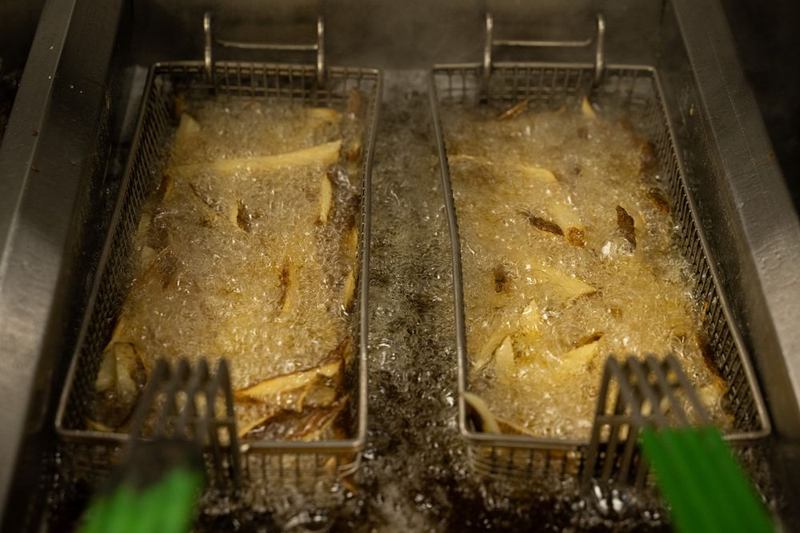
The chips night was a success, and now the deep fryer sits on the worktop with a litre of used oil. Tip it down the sink and rinse with hot water? That is exactly what you should never do. To dispose of cooking oil properly, you bottle it and take it to a collection point – which protects both the pipes in your building and rivers and lakes.
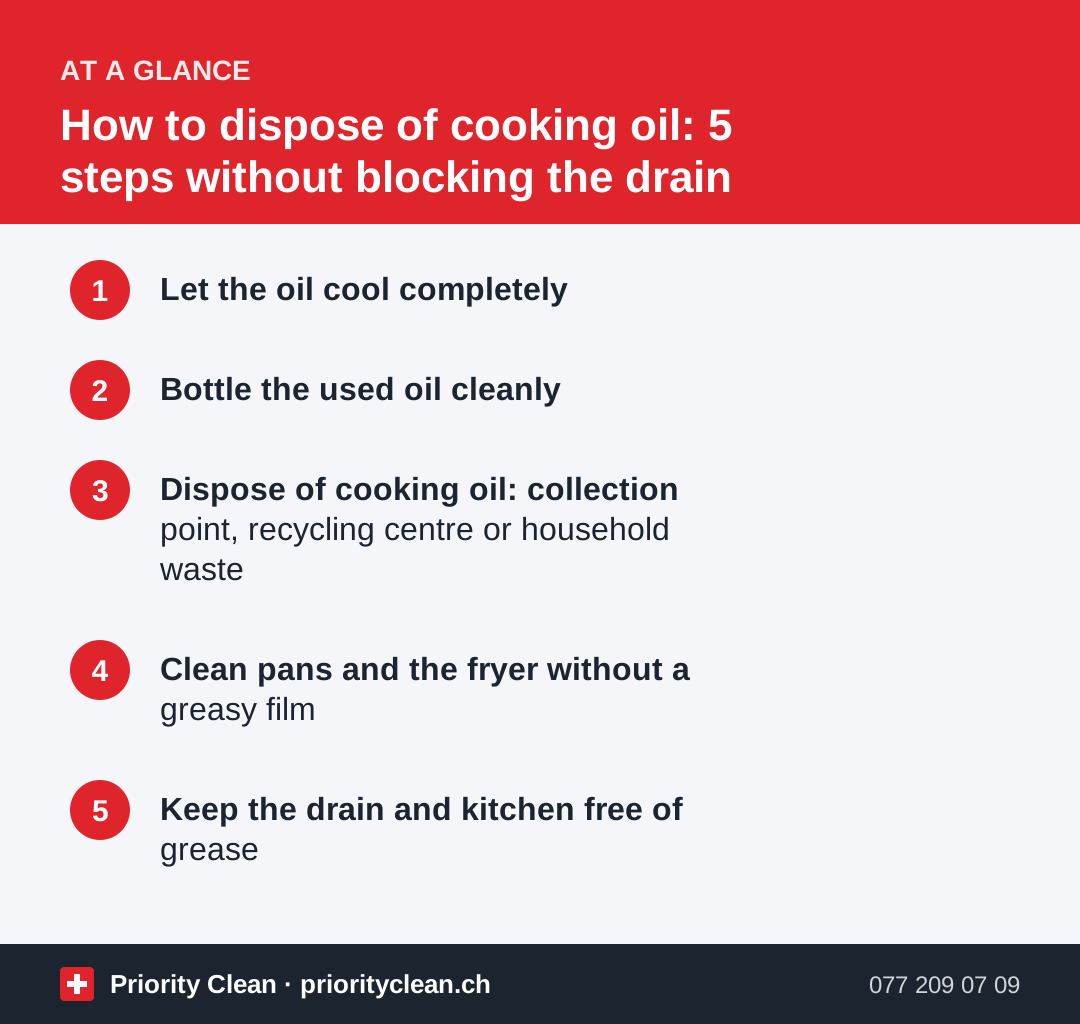
It's less effort than it sounds. Five steps show how to let used oil cool safely, bottle it cleanly, get rid of it correctly and then clean pans and the fryer without a greasy film.
Why you shouldn't pour frying oil down the drain
Hot oil flows easily down the sink, but in cooler pipes it thickens or sets. Together with food scraps it forms greasy deposits that narrow and eventually block the pipes – in your own kitchen and in the shared pipes of a block of flats. Hot water or washing-up liquid afterwards doesn't solve the problem; it just moves it further down.
Swiss Recycle warns that oil poured down the drain causes big problems in the sewers and pollutes drinking water. The route via a street drain is even more direct: the cantonal energy and environment offices explain that in a separate sewer system, water from roads, squares and terraces flows untreated into streams and rivers. Oil has no place there.
| Where to dispose of it? | Right or wrong |
|---|---|
| Kitchen sink, washbasin, toilet | Wrong – blockages and strain on the sewers |
| Street drain, gully, garden | Wrong – ends up directly or indirectly in waterways |
| Compost | Wrong – oil disrupts decomposition and attracts animals |
| Commune's used-oil collection | Right |
| Household waste (small amounts, tightly sealed) | Right, if no collection point is within reach |
1. Let the oil cool completely
After cooking, frying oil is extremely hot and stays hot for a long time. Leave the fryer or pan to cool in a safe place out of children's reach, ideally for several hours or overnight. Never pour hot oil into a plastic bottle – it can warp or melt.
2. Bottle the used oil cleanly
Once the oil is cold, pour it through a funnel into a tightly closing bottle – for example the original bottle or another plastic bottle with a screw cap. A fine sieve catches bits of batter and crumbs.
- Label the bottle so nobody mistakes the contents.
- Only put cooking oil in it – never mix in engine oil or other mineral oil.
- Keep the bottle upright and cool until you take it to the collection point.
3. Dispose of cooking oil: collection point, recycling centre or household waste
According to Swiss Recycle, frying and cooking oils belong in the used-oil collection at communal collection points. To find yours, use the Recycling Map, your commune's waste calendar or ask at the municipal recycling centre. Swiss Recycle generally recommends checking the commune's recycling calendar as well as the overview of recyclables.
If there is no collection point within reach, small amounts up to 3 dl can go in household waste in a tightly sealed plastic container. Salad dressings and solid frying fat also go in household waste.
| Amount and type | Disposal |
|---|---|
| Used frying oil, larger amount | Commune's used-oil collection |
| Small leftovers up to 3 dl, no collection point | Tightly sealed, in household waste |
| Solid frying fat | Household waste |
| Salad dressing, leftover marinade | Household waste |
| Grease left in the pan | Wipe out with kitchen roll, paper in household waste |
4. Clean pans and the fryer without a greasy film
Before a pan or fryer basket goes into the washing-up water, wipe out the oil and grease thoroughly with kitchen roll – as Swiss Recycle also recommends. Dispose of the paper in household waste. Only then wash up with hot water and washing-up liquid.
Clean the fryer according to the manufacturer's instructions: unplug it, drain the oil, wipe the inside with kitchen roll, wash the removable parts and let everything dry well. For burnt-on residue, see our guide on burnt-on pans.
5. Keep the drain and kitchen free of grease
Even without frying, grease goes down the sink every day: pan juices, butter, sauces. A few habits prevent deposits:
- Scrape or wipe plates and pans with kitchen roll before washing up.
- Always leave the strainer in the sink.
- Put food scraps in household waste, or in the green waste if your commune accepts cooked leftovers.
- Remove splashes on walls and the cooker quickly, before they harden. More in our guide on removing grease stains.
If water is already draining slowly, see our guide on a blocked kitchen sink. If the drain stays blocked despite cleaning, or several flats are affected, tell your property management or caretaker.
The most common mistakes
- Flushing with hot water: the grease is only pushed further along and settles deeper in the pipe.
- Pouring oil down the toilet: it still ends up in the sewer.
- Filling a plastic bottle with hot oil: risk of burns and leaking bottles.
- Pouring oil into a street drain or the garden: it can reach waterways directly.
Frequently asked questions
Can I pour a little frying oil down the sink?
No. Even small amounts build up in the pipes and strain the sewers. Soak up leftovers with kitchen roll and put it in household waste.
Where can I dispose of cooking oil in Switzerland?
At communal collection points with a used-oil collection, often also at the municipal recycling centre. You'll find locations on the Recycling Map or in your commune's waste calendar.
Can I dispose of frying oil in household waste?
Only if no collection point is within reach: small amounts up to 3 dl in a tightly sealed plastic container. Solid frying fat and salad dressings go in household waste.
How often can I reuse frying oil?
It depends on the oil, the temperature and what you fry. Filter it once cool and store it cool and dark. If it smells rancid, is very dark or smokes early, take it to the collection point.
Thanks for your feedback! Feel free to share the guide.
Thanks! What was missing? Drop us a line – we will improve the guide. WhatsApp