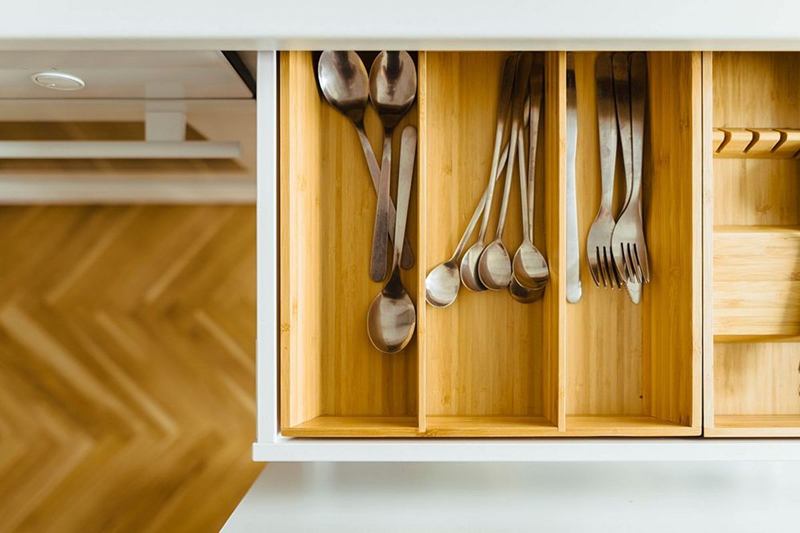
You reach for a teaspoon and something crunches: under the cutlery tray lie crumbs, a few grains of rice and a sticky patch of unknown origin. Out of sight, out of mind, until an unpleasant smell starts to escape. To clean kitchen drawers you don't need special products, just the right order and not too much water.
One afternoon is enough to give cutlery, utensil and food drawers a thorough clean. These five steps show how to remove crumbs, grease and odours, and how to check along the way that no pantry moths or small beetles have moved in.
Why it pays to clean kitchen drawers regularly
Plenty of things that aren't quite clean end up in kitchen drawers: cutlery put away while still damp, wooden spoons with residue, spice jars with sticky rims. Add crumbs of bread, sugar or flour. With a little moisture, a film forms that smells and attracts germs.
The Federal Food Safety and Veterinary Office reminds us that germs spread via hands, chopping boards, utensils and cloths, and that worktops and utensils should be cleaned with hot water and soap after each step. Clean utensils in a dirty drawer soon lose that advantage.
| Drawer type | How often to clean | What to look out for |
|---|---|---|
| Cutlery drawer | About once a month | Crumbs under the tray |
| Utensils and wooden spoons | Every one to two months | Greasy handles and residue |
| Food drawer | Every time you restock | Spills, moths, beetles |
| Drawer under the hob | Every few weeks | Grease film and splashes |
| All drawers, thoroughly | Twice a year | Runners, fronts, handles |
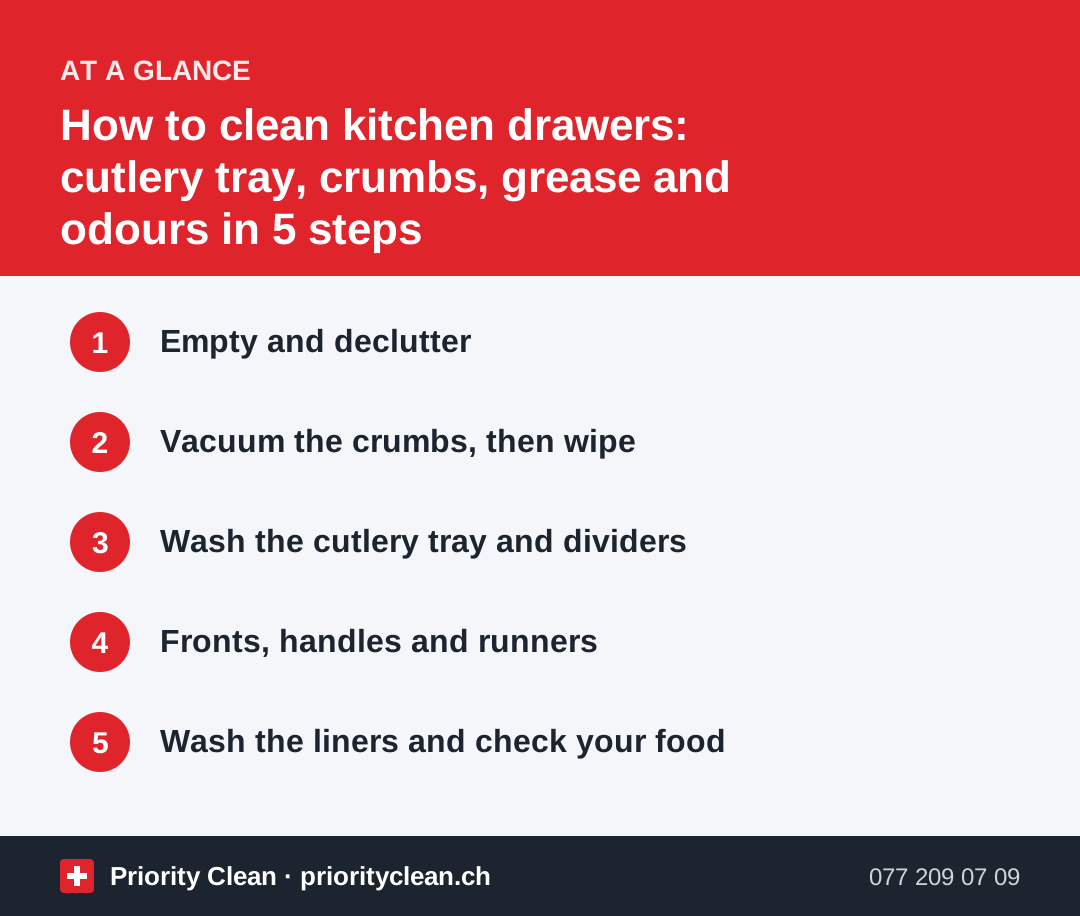
1. Empty and declutter
Take everything out, including the cutlery tray and the non-slip liner. This is your chance to declutter: duplicate ladles, gadgets you were given and never used, out-of-date spices. For food, check the dates and the packaging.
Put the items on a clean cloth on the worktop. Anything that isn't going back can go straight away; electrical appliances and batteries belong at a collection point, not in the rubbish bag.
2. Vacuum the crumbs, then wipe
Vacuum the empty drawer with the crevice tool, paying attention to the corners and side grooves. Without a vacuum cleaner, a small hand brush or a dry paintbrush will do. Only then do you wipe: if you start with a damp cloth, sugar and flour turn into a sticky paste.
Warm water with a little washing-up liquid is all you need. Wring the microfibre cloth out very well, wipe the base and sides, and dry immediately with a dry cloth. An old toothbrush reaches into the corners.
3. Wash the cutlery tray and dividers
Most of the dirt is usually under the cutlery tray, with more in its compartments.
- Plastic tray: many can go in the dishwasher if the manufacturer allows it. Otherwise wash it in the sink with hot water, washing-up liquid and a brush.
- Wooden tray: never in the dishwasher and never soaked. Wipe it with a damp cloth and a little washing-up liquid, then dry it at once. Treat it now and then with a food-safe oil, as described in our guide on how to clean and oil a wooden worktop.
- Metal or bamboo dividers: follow the manufacturer's instructions; treat bamboo like wood.
Only put cutlery back when it's completely dry. Damp spoons and forks are a common cause of water marks, smells and swollen drawer bottoms.
4. Fronts, handles and runners
The outside is often forgotten, even though it's the part you touch most. Wipe fronts and handles with warm water and a little washing-up liquid. The grease film on drawers next to the hob usually comes off well this way; for stubborn build-up on gloss, wood or foil, see our guide on how to clean greasy kitchen cabinets.
Wipe the runners and rails dry or with a barely damp cloth only. Don't oil or grease them unless the manufacturer specifically says so. If a drawer sticks or the soft-close no longer works, report it to your property management in a rented flat rather than getting out the screwdriver yourself.
5. Wash the liners and check your food
Non-slip liners and plastic drawer mats can usually be washed by hand in warm water with washing-up liquid; some can go in the washing machine at a low temperature. Follow the manufacturer's instructions and only put the liner back once it's completely dry.
Food drawers deserve a closer look. The City of Zurich explains that pantry moth eggs are brought home with food and the larvae develop in stored food kept warm for a long time. Look out for fine webbing, larvae and signs of feeding. Bread beetles are also common: according to the City of Zurich, small reddish-brown beetles of 2–3 mm at the window are often the first sign, and their larvae bite through packaging of flour, pasta, spices and nuts.
So keep your food in tightly closing tins or jars. If you find an infestation, read our guide on how to get rid of pantry moths.
The most common mistakes
- Wiping wet instead of barely damp: chipboard and wood swell.
- Wiping first, vacuuming second: the crumbs turn into sticky paste.
- Putting a wooden tray in the dishwasher: it cracks, warps and turns rough.
- Putting damp cutlery away: this brings smells and water marks into the drawer.
- Storing food open: moths and beetles easily find something to eat.
Frequently asked questions
How often should you clean kitchen drawers?
The cutlery drawer about once a month, food drawers every time you restock. Twice a year it's worth giving all drawers a thorough clean, including fronts, handles and runners.
Can the cutlery tray go in the dishwasher?
Often yes, if it's plastic and the manufacturer allows it. Never if it's wood or bamboo: wipe it with a damp cloth and dry it straight away.
What helps if a drawer smells musty?
Empty it, vacuum it, wipe it barely damp and leave it open to dry. Moisture is often the cause, for example from wet cutlery. If the smell persists, check the wood and back panel for water damage and, in a rented flat, let the property management know.
How do I recognise pantry moths in a drawer?
By fine webbing in corners and packaging, small larvae and moths that fly up when you open the drawer. Small reddish-brown beetles at the window can point to bread beetles. Throw away affected food and clean the drawer thoroughly.
Thanks for your feedback! Feel free to share the guide.
Thanks! What was missing? Drop us a line – we will improve the guide. WhatsApp