The dishes are clean, but what they sit on often isn't: water stands in the tray for days, white marks form on the wires, and pink streaks or black dots appear in the corners. Good dish rack cleaning needs no special products – just the right order and a little regularity.
In summer especially, when the kitchen is warm, germs multiply quickly in standing water. These five steps show you how to remove limescale, mould and rust, and how to keep the rack clean for longer afterwards.
Why a dish rack gets dirty so fast
A dish rack is almost always wet. Rinse water carries traces of grease and food into the tray, and at room temperature that is ideal food for bacteria and fungi. Within a few days a slimy film forms – known as biofilm. It feels slippery, smells musty and is often pink or grey.
Then there is limescale. When water evaporates, the dissolved minerals stay behind as white rings in the tray and crusts on the wires and cutlery basket. How bad this gets depends on where you live: in Switzerland, tap water ranges from soft to very hard depending on the municipality. The Swiss gas and water association's platform lets you look up the water hardness for your postcode.
| What you see | Likely cause | What helps |
|---|---|---|
| Slippery pink or grey film | Biofilm from standing water | Hot water, washing-up liquid, brush |
| White rings and crusts | Limescale from evaporated water | Citric acid solution |
| Black dots in corners and grooves | Mould from constant damp | Scrub thoroughly, dry well |
| Brown spots on the wires | Rust on a damaged coating | Remove the rust, keep dry |
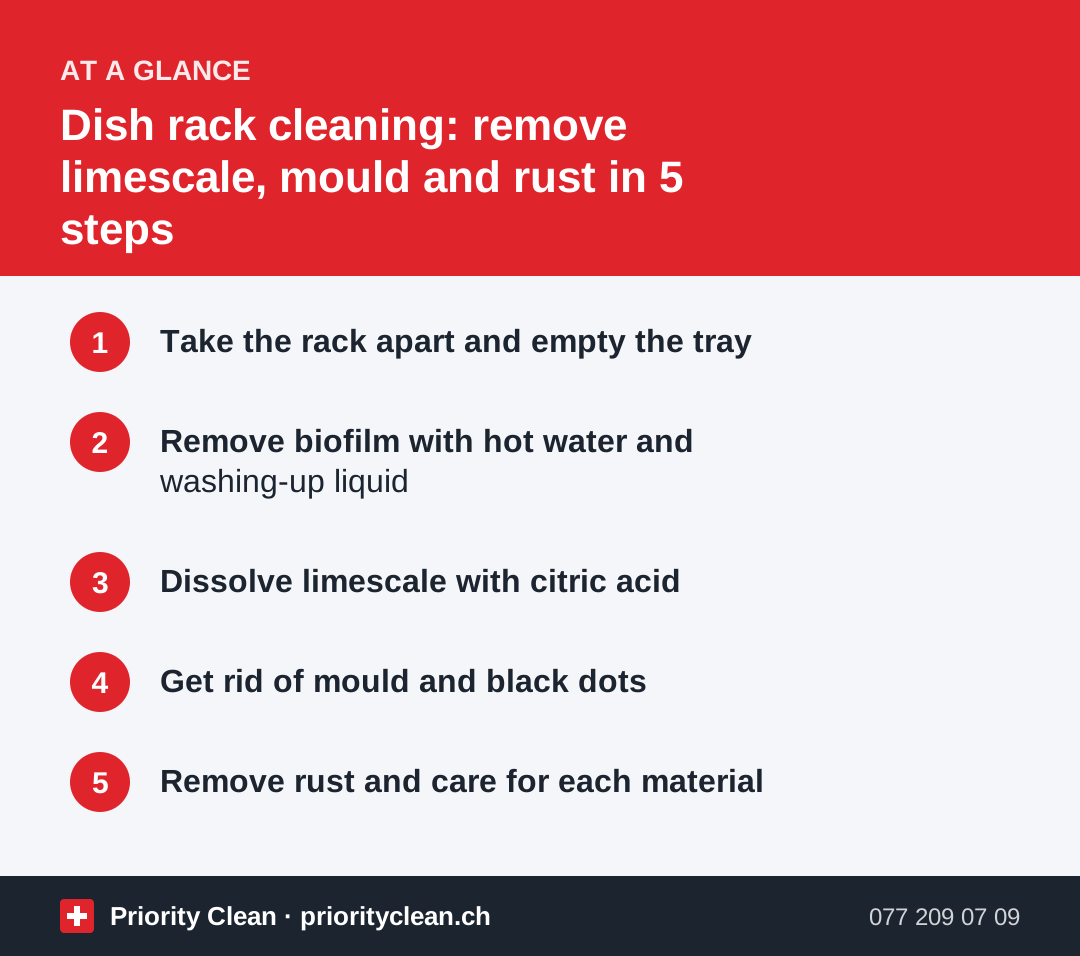
1. Take the rack apart and empty the tray
Put the dishes away and dismantle the rack completely: wire frame, drip tray, cutlery basket and – if there are any – silicone mat, drainage spout and glass holders. Most models come apart without tools. The most dirt collects under the cutlery basket and in the grooves of the tray.
Pour away the standing water and give the parts a quick rinse with hot water. Pick out larger bits by hand so they don't block the sink drain.
2. Remove biofilm with hot water and washing-up liquid
For routine cleaning, a bowl of hot water with a squirt of washing-up liquid is enough. Let the parts soak for a few minutes, then scrub every surface with a dish brush, including the underside of the tray. An old toothbrush is handy for the narrow gaps between the wires.
Rinse everything with clean water. According to the instructions, many plastic trays and cutlery baskets can also go in the dishwasher.
3. Dissolve limescale with citric acid
White marks won't budge with washing-up liquid, because limescale is mineral. You need an acid:
- Dissolve one level tablespoon of citric acid powder in about one litre of lukewarm water – or use a ready-made solution as directed on the pack.
- Put the scaled parts into the solution or cover thick spots with a soaked cloth.
- Leave for 15 to 30 minutes depending on the layer, then scrub with the brush.
- Rinse thoroughly with clean water so no acid stays on the material.
Don't use hot water: heated citric acid can form residues that are hard to dissolve. Household vinegar also works but smells stronger. Which one suits which surface is covered in our guide Descaling with citric acid or vinegar. On wood, bamboo and natural stone, skip the acid – water, washing-up liquid and thorough drying are enough.
4. Get rid of mould and black dots
Black or green dots in the corners of the tray, on silicone feet or in the grooves of a wooden rack are usually mould. The Federal Office of Public Health points out that mould is unhealthy, should be removed quickly and the cause of the damp fixed. With a dish rack, the cause is nearly always the same: water that never gets the chance to dry.
- Plastic, stainless steel and silicone: scrub thoroughly with hot water, washing-up liquid and a brush, then let dry completely. Dishwasher-safe parts can then go through a cycle.
- Wood and bamboo: scrub off surface growth and let the rack air-dry. If mould has penetrated deep into the wood, it can hardly be removed – a new rack is then the more hygienic solution.
- Silicone mats: mould lodged in pores and grooves is stubborn. If it quickly comes back after cleaning, replace the mat.
5. Remove rust and care for each material
Wire racks are usually chrome-plated or plastic-coated. Once the coating is scratched or chipped, the steel underneath rusts. Light surface rust can be rubbed off with a paste of bicarbonate of soda and a little water, or with the citric acid solution; rinse well afterwards and pat dry. More methods are in our guide on how to remove rust.
Once the coating is damaged, rust keeps coming back. That's the time for a new rack, for example in stainless steel.
| Material | Cleaning | Watch out for |
|---|---|---|
| Stainless steel | Washing-up liquid, citric acid for limescale | No steel wool |
| Chrome-plated wire | Washing-up liquid, gentle descaling | Don't scratch the coating |
| Plastic | Washing-up liquid, often dishwasher-safe | Discolouration is often only cosmetic |
| Wood and bamboo | Water and washing-up liquid, dry well | No acid, no soaking |
| Silicone | Hot water, often dishwasher-safe | Replace if mould returns |
Everyday dish rack cleaning: habits that work
A few habits spare you the big clean-up:
The most common mistakes
- Rinsing only the wire frame: most of the build-up sits in the tray and under the cutlery basket.
- Scouring with steel wool: it scratches chrome and coatings – and encourages rust.
- Combining acid and bleach: dangerous and unnecessary. One product per job is enough.
- Reassembling it wet: damp corners are exactly what mould lives on.
Frequently asked questions
How often should you clean a dish rack?
Empty and wipe the tray every day. A thorough clean with hot water and washing-up liquid makes sense once a week, and with hard water add a round of citric acid every few weeks.
Can a dish rack go in the dishwasher?
That depends on the model. Many trays and cutlery baskets made of plastic, stainless steel or silicone are dishwasher-safe; wood and bamboo are not. Check the instructions or the symbol on the product.
What is the pink slime in the drip tray?
Pink or orange streaks are usually a biofilm of bacteria that forms in damp corners. It comes off with hot water, washing-up liquid and a brush. After that, one thing matters most: keeping the tray dry.
What if the rack keeps rusting?
Recurring rust shows that the coating is damaged. You can remove light rust, but only a new rack – for example in rust-free stainless steel – solves the problem for good.
Thanks for your feedback! Feel free to share the guide.
Thanks! What was missing? Drop us a line – we will improve the guide. WhatsApp