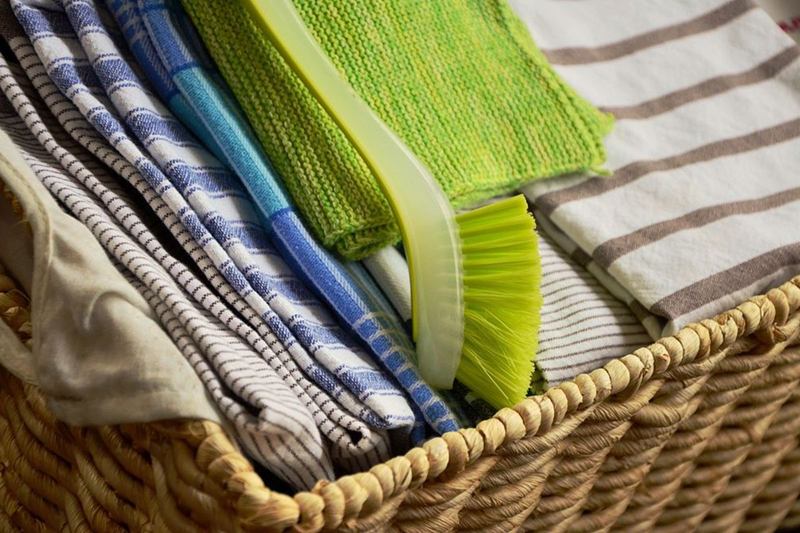
It hangs on the oven handle, dries the plates, wipes a quick pair of hands and mops up spilt juice: in many kitchens the tea towel is an all-purpose tool. That is exactly what turns it into a germ spreader. If you want to wash tea towels so they are genuinely hygienic, three things matter most: changing them often, choosing the right temperature and drying them well.
In summer, when the kitchen is warm and humid, bacteria multiply particularly fast in tea towels and cloths. These five rules show how to keep tea towels, dishcloths and cleaning cloths clean, at home or in the shared laundry room.
Why tea towels turn into germ spreaders so quickly
Bacteria need moisture, warmth and food. A tea towel that stays damp on the handle all day and has soaked up traces of sauce, milk or meat juices offers all three. Every time you use it, the germs end up back on plates, glasses and hands.
The Federal Food Safety and Veterinary Office points out that germs in the kitchen spread via hands, chopping boards, utensils and cloths, and that worktops and utensils should be cleaned with hot water and soap after each step. A clean cloth is therefore just as much a part of kitchen hygiene as a clean chopping board.
A musty smell is a clear sign: if a cloth smells, a lot of bacteria have already multiplied in it. It needs to go straight into the wash.
| Textile | When to change it | How to wash it |
|---|---|---|
| Dishcloth and sponge cloth | Daily or every other day | 60 °C, heavy-duty detergent |
| Tea towel | Every two to three days, at once if dirty | 60 °C, heavy-duty detergent |
| Kitchen hand towel | Every few days | 60 °C |
| Microfibre cloth for surfaces | After bigger cleaning jobs | 60 °C, no fabric softener |
| Cloth that touched raw meat | Immediately | 60 °C |
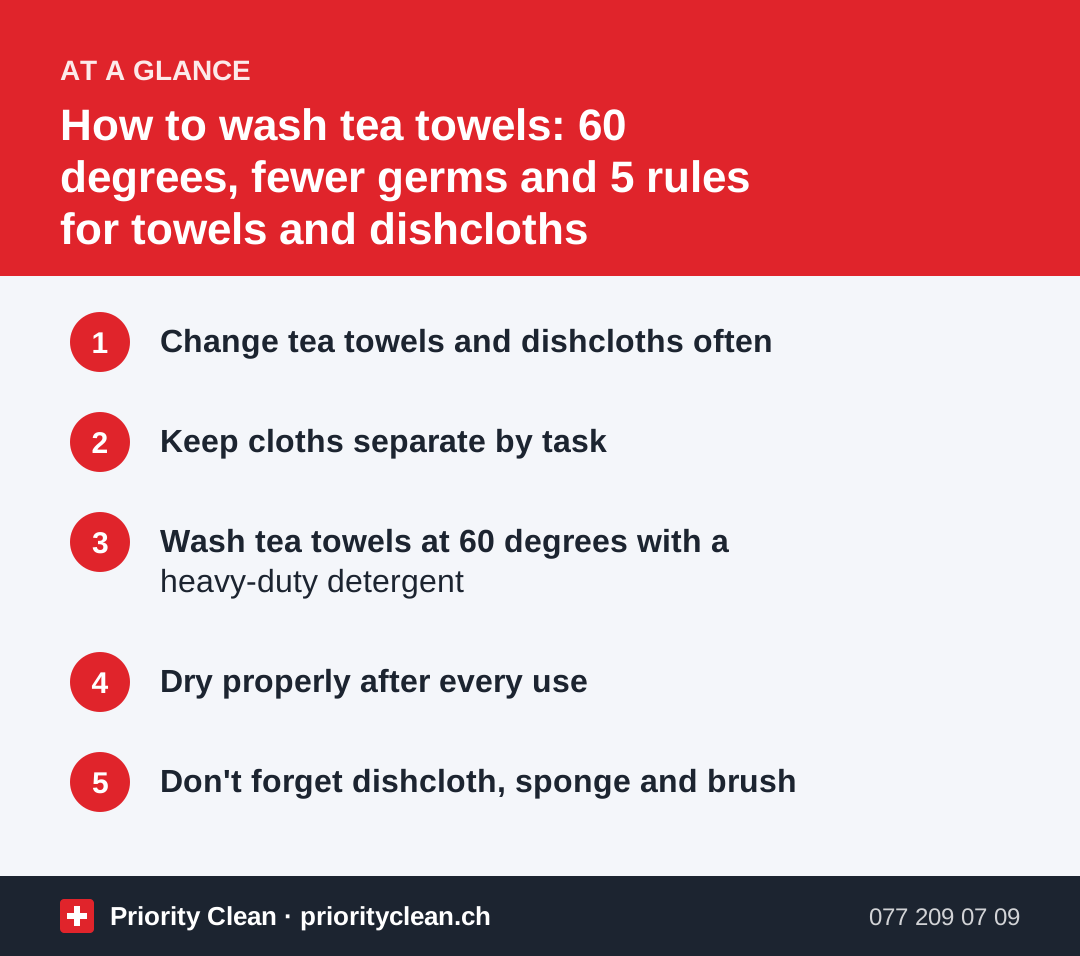
1. Change tea towels and dishcloths often
The simplest hygiene rule is a good supply. If you have enough tea towels and dishcloths in the cupboard, you'll actually change them. Better to have ten more than to use a single one for a whole week.
As a rule of thumb: dishcloths and sponge cloths daily or every other day, tea towels every two to three days. Any cloth that has touched raw meat, poultry, eggs or fish, is visibly dirty or smells goes straight into the wash.
2. Keep cloths separate by task
One cloth for everything carries germs from the worktop to your clean dishes. So keep them strictly apart:
- Tea towel: only for clean, washed plates, glasses and cutlery.
- Hand towel: separate and easy to recognise, for example in a different colour.
- Dishcloth or microfibre cloth: for the worktop, hob and sink.
- Kitchen paper: for raw meat, grease and heavy dirt.
A colour system helps everyone in the household tell the cloths apart. Our guide to colour-coded cleaning cloths explains how it works.
3. Wash tea towels at 60 degrees with a heavy-duty detergent
Low temperatures make sense for everyday clothes: SwissEnergy (EnergieSchweiz) recommends low temperatures of 20 to 30 °C, eco programmes and full loads, without increasing the detergent dose. Tea towels, dishcloths and kitchen hand towels are the exception, though. Wash them at 60 °C if the care label allows it, which is usually the case for cotton and linen blends.
- Use a heavy-duty powder: it usually contains an oxygen-based bleach that works well at 60 °C.
- No fabric softener: it makes the cloths less absorbent and leaves streaks.
- Fill the drum: tea towels, dishcloths, kitchen and bath towels can go into one 60-degree wash together. That keeps energy use reasonable.
- Wash microfibre cloths too: also at 60 °C, but without softener. More in our guide on how to wash microfibre cloths.
A special laundry sanitiser is generally not necessary in a private household if you wash your tea towels at 60 °C with a heavy-duty detergent.
4. Dry properly after every use
Moisture is the main factor that lets bacteria grow. A cloth that dries quickly between uses stays fresh far longer.
- Hang the tea towel spread out on a hook or rail, not scrunched up over the tap.
- Rinse dishcloths and sponge cloths well after use, wring them out and let them dry flat.
- After washing, dry the cloths completely, in the tumble dryer or on the line, before putting them away.
5. Don't forget dishcloth, sponge and brush
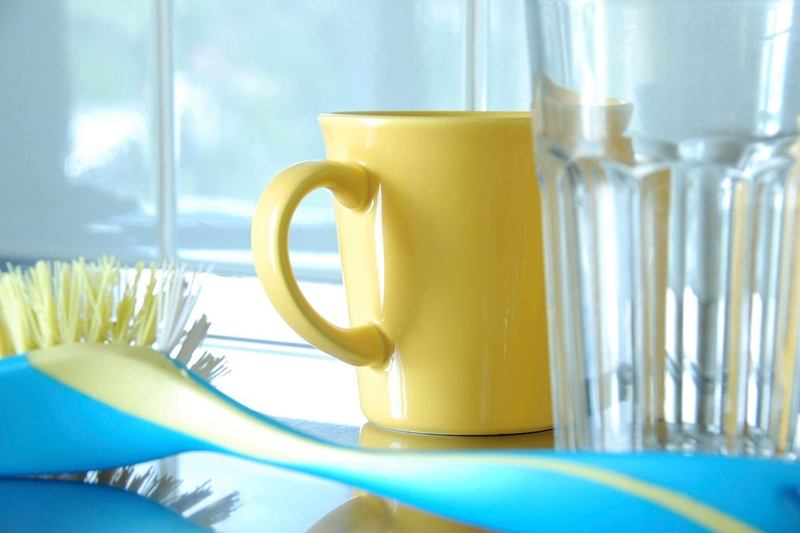
Fabric cloths aren't the only things that collect germs. The kitchen sponge is damp, porous and often the most contaminated utensil in the kitchen. Replace it often and let it dry well between uses; our guide on how to clean a kitchen sponge shows which methods actually help.
The washing-up brush can go in the dishwasher regularly if the manufacturer allows it. Cellulose sponge cloths can usually go in the washing machine too; follow the instructions on the packaging.
The most common mistakes
- One cloth for everything: hands, worktop and plates with the same cloth spreads germs.
- Washing at 30 °C: for kitchen textiles this is often not enough, and the smell stays.
- Using fabric softener: the cloths absorb less and leave streaks.
- Leaving it scrunched up: the cloth stays damp and starts to smell.
- Owning too few: with only two, you change them too rarely.
Frequently asked questions
How often should you change tea towels?
As a rule of thumb every two to three days, and dishcloths daily or every other day. Change any cloth immediately if it is dirty, smells or has touched raw meat.
Is 40 degrees enough for tea towels?
For kitchen textiles, 60 °C with a heavy-duty detergent is recommended, provided the care label allows it. At lower temperatures, germs and smells are more likely to remain.
Why do my tea towels smell after just one day?
Usually they stay damp for too long because they hang scrunched up, or they were washed too cool. Drying them spread out and washing at 60 °C solves the problem in most cases.
Can I wash tea towels with bath towels?
Yes, cotton tea towels and bath towels can be washed together at 60 °C. Very dirty floor cloths or bathroom cloths are better washed separately.
Thanks for your feedback! Feel free to share the guide.
Thanks! What was missing? Drop us a line – we will improve the guide. WhatsApp