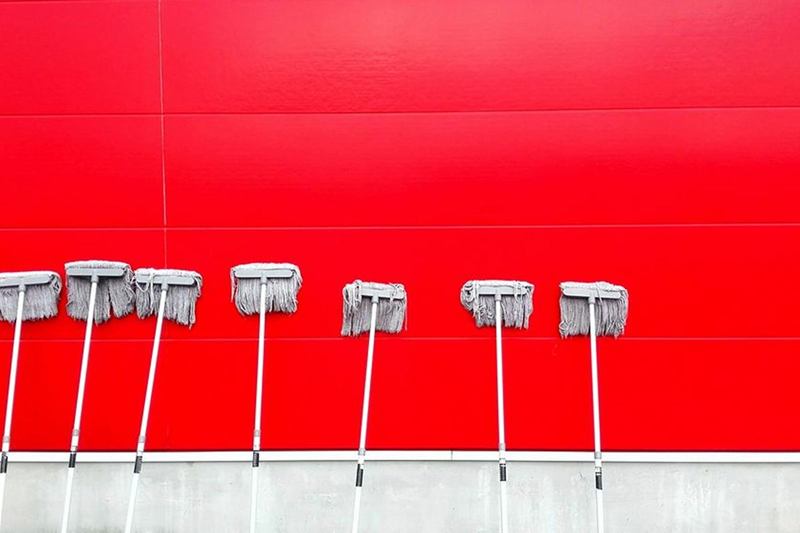
The floor has just been mopped, but instead of smelling clean it smells like a damp cellar, and grey streaks show up against the light. Usually it's not the cleaning product that's to blame but the mop itself. If you want to wash mop heads so they genuinely clean, a few rules matter: the right temperature, no fabric softener and thorough drying.
Whether you use a flat mop with a hook-and-loop pad, a classic string mop or a spin mop with a bucket, the principles are the same. These five steps show how to keep pad, bucket and handle clean, and when it's time for a new head.
Why you should wash mop heads regularly
While you clean, the mop picks up dust, sand, hair, grease and germs. If it is only rinsed briefly afterwards and left damp in the bucket, bacteria multiply in the fibres. The result: a musty smell that spreads through the whole room next time you mop, and streaks, because the head releases the dirt again.
On top of that come detergent residues. Too much cleaner in the water builds up in the mop and on the floor, which then feels sticky. Read more in our guide floor sticky after mopping.
| Mop type | Washing | Special point |
|---|---|---|
| Flat mop with microfibre pad | Machine, usually 60 °C | No softener, hook-and-loop in a wash bag |
| Cotton string mop | Machine, usually 60 °C | Shake out well, long drying time |
| Spin mop head | Machine or by hand, per manufacturer | Remove the head, clean the bucket basket |
| Sponge mop | Rinse only | Replace the sponge regularly |
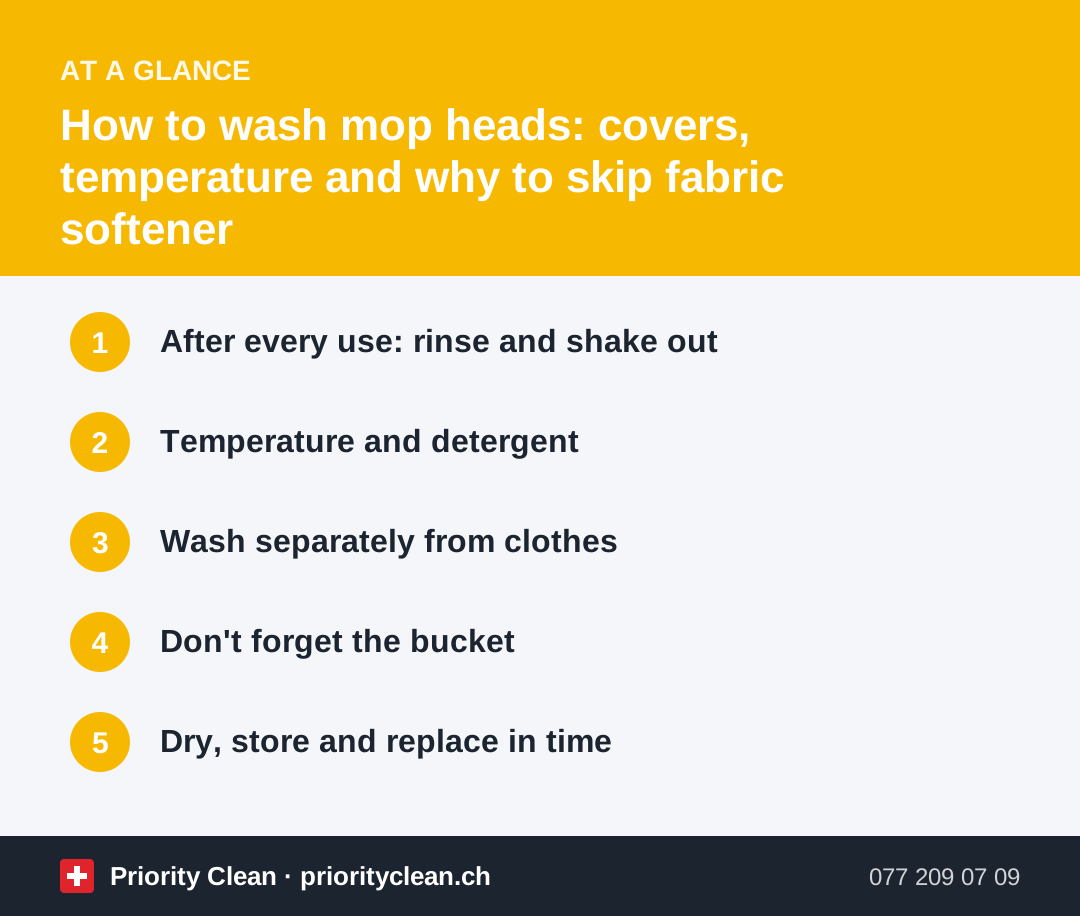
1. After every use: rinse and shake out
Care starts right after cleaning. Rinse the mop in fresh water until hardly any dirt comes out, then wring or spin it out well. Hair, sand and crumbs are best shaken out outdoors, on the balcony or over the rubbish bag.
That doesn't make the mop hygienically clean, but it dries faster and doesn't smell. The proper wash follows regularly: for heads used every day, after every major cleaning session; in a private household usually after mopping the whole flat.
2. Temperature and detergent
Most microfibre and cotton mop heads can take 60 °C. Always check the care label or the manufacturer's instructions, though: some pads are only meant for 40 °C.
- 60 °C for a normal wash: it removes grease and odours more reliably than a cool wash.
- Heavy-duty or colour detergent: powder with bleach helps against smells; for coloured pads, a colour detergent is enough.
- Dose correctly: SwissEnergy (EnergieSchweiz) recommends full loads and eco programmes and advises not increasing the detergent dose at low temperatures. Overdosing leaves residues in the mop.
- No laundry sanitiser needed: in a private household, a 60-degree wash with heavy-duty detergent is usually enough.
3. Wash separately from clothes
Mops and cleaning cloths don't belong with shirts and jumpers. They contain sand, hair and dirt that can get stuck in clothing, and hook-and-loop fasteners pull threads out of delicate fabrics.
- Wash mop heads together with cleaning cloths and microfibre cloths.
- Put hook-and-loop pads in a wash bag or close the fastening first.
- Don't add cotton terry towels: their lint gets caught in the microfibre.
- In the shared laundry room, shake out coarse dirt beforehand so no sand ends up in the drum.
Our guide on how to wash microfibre cloths covers microfibre care in detail.
4. Don't forget the bucket
A clean mop in a dirty bucket doesn't achieve much. Empty the cleaning water after each use, ideally into the toilet or a utility sink, not the kitchen sink where you wash dishes. Rinse the bucket with hot water and let it dry upside down.
With a spin mop, hair and dirt collect in the spinner basket and at the bottom of the bucket. Take the insert out regularly and scrub it with a brush. Never leave the mop standing in dirty water overnight: that is exactly how the typical musty smell develops.
5. Dry, store and replace in time
After washing, the head must dry completely before it goes back in the cupboard. Hang it somewhere airy, for example over the clothes airer. The label tells you whether it can go in the tumble dryer; microfibre often only tolerates a low setting.
Store the mop hanging up or with the head pointing upwards, so the fibres don't sit on a damp floor. Replace the head when it frays, hardly absorbs water any more or still smells after washing.
The most common mistakes
- Leaving the mop damp in the bucket: this is the most common cause of musty smells.
- Using fabric softener: the fibres clog and stop picking up dirt.
- Too much cleaning product: residues in the mop make the floor sticky.
- Washing with clothes: sand and hair end up in your laundry, and hook-and-loop damages fabrics.
- Only rinsing, never washing: germs and grease stay in the fibres.
Frequently asked questions
How often should you wash mop heads?
In a private household, ideally after mopping the whole flat, and at the latest when the mop smells or leaves streaks. Between washes, rinse it well and let it dry.
What temperature should mop heads be washed at?
Most microfibre and cotton mop heads can be washed at 60 °C. The care label or the manufacturer's instructions are what count.
Why does my mop smell after use?
Usually it stays damp for too long, for example in the bucket, or it was washed too cool or with too much detergent. A 60 °C wash and thorough drying help; if it still smells afterwards, replace the head.
Can a mop head go in the tumble dryer?
That depends on the material. Many microfibre pads only tolerate a low setting, and some shouldn't go in the dryer at all. If in doubt, let them air-dry.
Thanks for your feedback! Feel free to share the guide.
Thanks! What was missing? Drop us a line – we will improve the guide. WhatsApp