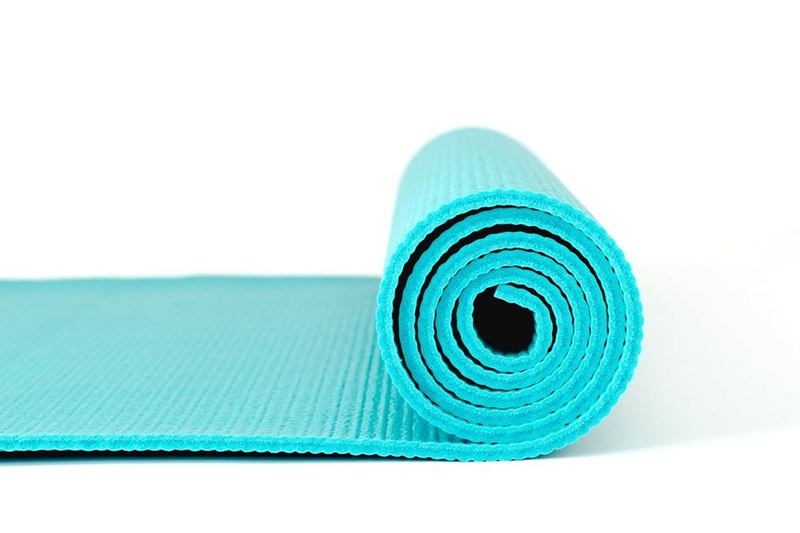
After a sun salutation in the living room or a class at the studio, more stays on the mat than you can see: sweat, skin oil, hand cream and dust from the floor. Over time the surface becomes slippery, blotchy and starts to smell. If you want to clean a yoga mat properly, though, you first need to know what it is made of – because not every home remedy suits every material.
TPE, PVC, cork and natural rubber react very differently to water, acids and oils. Here is how to care for your mat according to its material, how often to do it and how to dry it without damage.
Why you should clean a yoga mat regularly
During practice, your hands, feet and often your face rest directly on the mat. Sweat and skin oil settle on the surface and attract dust. You notice the effects quickly: the mat turns slippery and your hands and feet slide in downward dog. Moisture trapped when the mat is rolled up also causes a musty smell.
Open-cell materials such as natural rubber and cork absorb more moisture and grease than closed-cell mats made of TPE or PVC. That is why the right care depends on the material.
1. Identify what your mat is made of
Look at the label, the packaging or the manufacturer's website. This overview will help:
| Material | Typical features | Suitable | Better avoided |
|---|---|---|---|
| PVC | Durable, smooth, often inexpensive | Mild soapy water, damp cloth | Abrasives, solvents |
| TPE | Light, soft, often two-tone | Mild soapy water, little water | Heat, strong sun, harsh cleaners |
| Natural rubber | Heavy, very grippy, slight own smell | Clear water, very mild soap | Essential oils, vinegar, sun |
| Cork (usually on rubber or TPE) | Warm surface, natural grain | Barely damp cloth, mild soap | Soaking, lots of water |
| Cotton or jute | Textile rug, often used on top | Washing machine as per the care label | Tumble dryer unless allowed |
Cork and rubber mats often have two layers. In that case, treat each side as its material requires.
2. After every session: a quick wipe
Daily care takes less than two minutes and saves a lot of work later:
- Lay the mat flat on the floor.
- Dip a soft microfibre cloth in lukewarm water, wring it out well and wipe the top surface.
- If needed, add a drop of mild soap, such as plain curd soap or a pH-neutral washing-up liquid.
- Go over it again with a second, dry cloth.
- Leave the mat unrolled for a few minutes before rolling it up.
If you practise on borrowed mats at the studio, bring your own towel. There is more on the topic in our guide to gym hygiene.
3. Give the mat a deep clean
Every few weeks – more often if you practise a lot – the mat needs a thorough clean on both sides.
- Remove dust: shake the mat out or vacuum it gently with the brush attachment.
- Mix soapy water: a few drops of mild soap in a bowl of lukewarm water.
- Wipe: work over the surface in circles with a soft sponge or cloth. On PVC and TPE you can press a little harder; on cork and natural rubber, stay gentle.
- Rinse: remove soap residue with a wrung-out cloth dipped in clean water. Otherwise residue makes the mat slippery.
- Dry off: pat dry with a terry towel.
The washing machine is only an option if the manufacturer expressly allows it. Many mats warp, tear or lose their grip in the drum. Cotton mat covers can be washed according to their care label, much as described in our guide to washing sportswear.
4. Using home remedies – and which to avoid
You don't need special products for your mat. The Swiss consumer foundation Stiftung für Konsumentenschutz shows that simple household remedies such as curd soap, vinegar, bicarbonate of soda or alcohol can replace many specialist cleaners. The key is to match them to the material:
- Mild soap: suits every material – always use sparingly and rinse well.
- Diluted vinegar: on PVC and TPE, a splash in the wiping water helps against odours. On natural rubber and cork, leave it out if in doubt and check the manufacturer's advice first.
- Bicarbonate of soda: a thin paste of bicarbonate and water lifts individual stains on PVC and TPE. Rinse well so no white film is left behind.
- Essential oils: they smell nice but can attack natural rubber and make any mat slippery. Better left out.
- Cream cleaners and solvents: off limits for every mat, as they roughen or dissolve the surface.
To learn more about the uses and limits of vinegar, see our guide to cleaning with vinegar.
5. Drying and storing the mat
Most damage happens while drying. Natural rubber and TPE are sensitive to UV light and heat: the surface becomes brittle, sticky or fades.
- Hang to dry: drape the mat over a clothes airer, the back of a chair or the balcony railing so air reaches both sides.
- In the shade: no strong sun, no radiator, no hairdryer and no tumble dryer.
- Be patient: depending on material and thickness, it takes a few hours. Cork usually dries faster because it gets so little water.
- Store it properly: only roll the mat up when it is completely dry, top side facing out, and keep it somewhere cool and dry – not in a hot car.
The most common mistakes
- Too much water: soaking the mat or putting it under the shower makes open-cell materials swell and stay damp for a long time.
- Too much soap: residue makes the surface slippery.
- Drying in the sun: UV light and heat make rubber and TPE brittle.
- Rolling it up damp: trapped moisture leads to odours and, at worst, mould.
Frequently asked questions
How often should you clean a yoga mat?
Wipe it with a damp cloth after every session and give it a deep clean every few weeks. If you practise daily or sweat a lot, deep clean it more often.
Can you put a yoga mat in the washing machine?
Only if the manufacturer expressly allows it. Most mats made of PVC, TPE, cork or natural rubber warp in the drum or lose their grip. Cotton mat covers can usually go in the machine.
Can you use vinegar on a natural rubber mat?
If in doubt, no. Clear water and very mild soap are enough for natural rubber, and some manufacturers expressly advise against acidic products. Read the care instructions and test any product on an inconspicuous spot first.
Why does my yoga mat smell?
Usually because of sweat, skin oil and moisture trapped when it was rolled up. Clean it thoroughly, let it dry fully and only roll it up once dry. New natural rubber mats also have their own smell, which fades over time.
Thanks for your feedback! Feel free to share the guide.
Thanks! What was missing? Drop us a line – we will improve the guide. WhatsApp