In many Swiss kitchens, the stovetop espresso maker is as much a part of breakfast as a croissant. The eight-sided classic, often simply called a "Bialetti", is sturdy and lasts for decades – if it is treated properly. Yet when people set out to clean a moka pot, they often do exactly the wrong thing: they put it in the dishwasher or scrub it shiny with a cream cleaner.
In fact, the pot needs very little care: hot water, thorough drying and the occasional descale. Here is how to keep the base, funnel, filter plate and gasket clean, and what to watch out for with aluminium.
Why you should clean a moka pot regularly
When brewing, hot water is pushed up through the ground coffee. Coffee oils and fine particles are left behind in the funnel, the filter plate and inside the upper chamber. Many people like a thin film, which is said to round off the flavour. But when it gets too thick, the oil turns rancid over time – and the coffee tastes bitter or stale.
Limescale also builds up in the base, faster or slower depending on your water hardness. It can slow down brewing and block the safety valve. Finally, the rubber gasket hardens with heat and eventually starts to leak.
| Problem | Likely cause | Solution |
|---|---|---|
| Coffee tastes rancid or bitter | Old coffee oils in funnel, filter and upper chamber | Clean thoroughly with hot water and a little washing-up liquid |
| White deposits in the base | Limescale | Descale (step 4) |
| Coffee leaks at the thread | Hard or dirty gasket, coffee grounds on the rim | Clean or replace the gasket, wipe the rim |
| Dark grey inside | Oxidation, often after the dishwasher | Clean gently, wash by hand from now on |
| Coffee barely comes through | Blocked filter plate or coffee ground too fine | Clean the filter, choose a coarser grind |
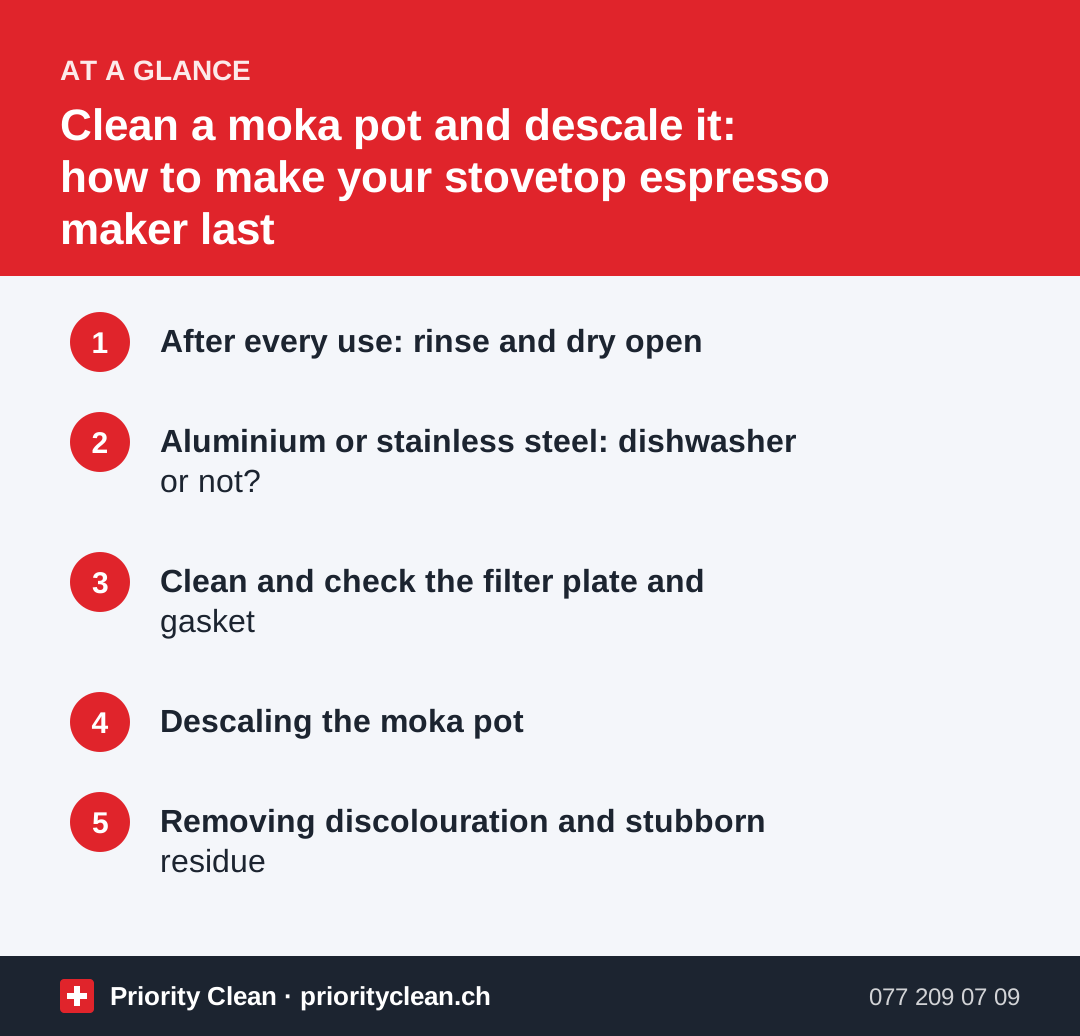
1. After every use: rinse and dry open
Daily cleaning is quick – provided the pot has cooled down. Never force a hot moka pot open.
- Let the pot cool, or run the base under cold water while holding it with a tea towel.
- Unscrew the top and base, take out the funnel and knock the grounds into the organic waste.
- Rinse all parts under hot water. A soft sponge helps with residue.
- Dry the parts individually or lay them out on a towel, taken apart.
- Only screw the pot back together once everything is completely dry.
If the pot is screwed together wet, moisture is trapped inside. That encourages oxidation spots on the aluminium and can give the gasket a musty smell.
2. Aluminium or stainless steel: dishwasher or not?
Classic models are made of aluminium. Dishwasher tablets are strongly alkaline and attack aluminium: the surface turns dark grey, dull and patchy. So for aluminium pots the rule is: by hand only, with hot water.
- Aluminium: use washing-up liquid sparingly, and only if rancid oil has built up. No steel wool, no cream cleaner, no oven spray.
- Stainless steel: many stainless steel models, including those for induction hobs, are dishwasher-safe according to the manufacturer. Take the gasket out first. Check the instructions.
How to look after aluminium in general is explained in our guide on how to clean aluminium.
3. Clean and check the filter plate and gasket
The upper chamber has a round filter plate held in place by a rubber or silicone gasket. This is exactly where coffee oil and grounds collect.
- Lever the gasket out carefully with a blunt object, such as the handle of a teaspoon. Don't use a knife.
- Take out the filter plate and hold it up to the light: if holes are blocked, clean it under hot water with a soft brush or an old toothbrush.
- Wipe out the groove the gasket sits in with a cloth.
- Rinse the gasket in warm water and check it: if it is hard, cracked or flattened, replace it. Replacement gaskets and filter plates in the right size for your pot are available from specialist shops.
- Put the filter plate and gasket back, pressing the gasket in evenly all the way round.
The funnel has a filter too – clean it at the same time.
4. Descaling the moka pot
How often you need to descale depends on your water. In Switzerland, hardness varies from one municipality to the next; on the Swiss gas and water association's platform you can look up your water hardness by postcode. With hard water, deposits appear sooner. Descale as soon as a white film forms in the base.
The Swiss consumer foundation Stiftung für Konsumentenschutz names citric acid and vinegar as tried-and-tested household remedies against limescale. For aluminium, dilute them well and don't leave them to act for too long, because acid attacks the metal over time.
- Fill the base with water to just below the valve and dissolve a little citric acid in it, or add a splash of vinegar. Follow the dosage on the pack.
- Leave it briefly, then loosen the deposit with a soft sponge.
- Pour the solution away and rinse the base several times with clean water.
- Reassemble the pot and run it once or twice with water only, no coffee. Pour this water away.
Which of the two works better for which job is covered in our guide citric acid or vinegar.
5. Removing discolouration and stubborn residue
If the inside of an aluminium pot has turned dark, it is usually a layer of oxide. It is not dangerous, but it can rub off. Clean the area with a soft sponge and a little washing-up liquid; stubborn marks can be loosened gently with a thin paste of bicarbonate of soda and water. Then rinse and dry thoroughly.
On the outside, marks from a gas flame or boiled-over coffee also come off with a sponge and washing-up liquid. Steel wool and abrasives scratch the surface.
The most common mistakes
- The dishwasher: it turns aluminium dark and dull.
- Screwing it together wet: this encourages oxidation spots and odours.
- Descaling for too long: acid left for hours attacks aluminium.
- Never changing the gasket: a hard gasket lets coffee and steam escape at the thread.
- Polishing with abrasives: scratches make the pot more prone to new deposits.
Frequently asked questions
Can a moka pot go in the dishwasher?
Not aluminium models: the alkaline dishwasher detergents turn the metal dark and dull. Many stainless steel models are dishwasher-safe according to the manufacturer; it is best to remove the gasket first.
Should you use washing-up liquid on a moka pot?
For daily cleaning, hot water is enough. If rancid coffee oil has built up or the coffee tastes bitter, you can use a little washing-up liquid and then rinse thoroughly.
How often should you descale a moka pot?
As soon as a white film appears in the base. With hard water this happens more often than with soft water. You can look up the water hardness where you live by postcode.
When does the gasket need replacing?
When it is hard, cracked or flattened, or when coffee leaks at the thread. Make sure you buy the right size for your pot and replace the filter plate at the same time if needed.
Thanks for your feedback! Feel free to share the guide.
Thanks! What was missing? Drop us a line – we will improve the guide. WhatsApp