A few cloves for the tomato sauce, an onion for the risotto, and hours later every move of your hand still smells of the kitchen. Ordinary soap often only half works. Getting rid of garlic smell on hands takes a little patience and the right order: cold water first, then a simple home remedy, and soap to finish.
The good news: everything you need is already in your kitchen. Here are five tricks that also work for onions, chives or fish, and how to stop your board and knife from passing the odour back to you.
Why garlic smell clings to your hands
Garlic and onions contain sulphur compounds. As long as the bulb is whole it hardly smells; it is only when you cut, crush or chop it that the typical pungent compounds form. They are fat-soluble, cling to the skin's natural oily film and lodge under your nails and in the fine creases of your skin.
That is why water alone removes them poorly. Very hot water often makes things worse, because heat sends more of the volatile compounds up to your nose. And whatever is left on the board or knife ends up back on your fingers the next time you touch them.
| Method | How it works | Best for |
|---|---|---|
| Cold water | Rinse hands under cold water for 30 seconds | Always as the first step |
| Stainless steel | Rub against a spoon or tap under cold water | Light smell, quick in-between fix |
| Lemon | Rub in a little juice, leave briefly | Garlic and fish |
| Coffee grounds | Rub damp grounds between your hands | Onions, strong smell |
| Salt or baking soda | Mix with a little water into a paste, massage in | Fingertips and nails |
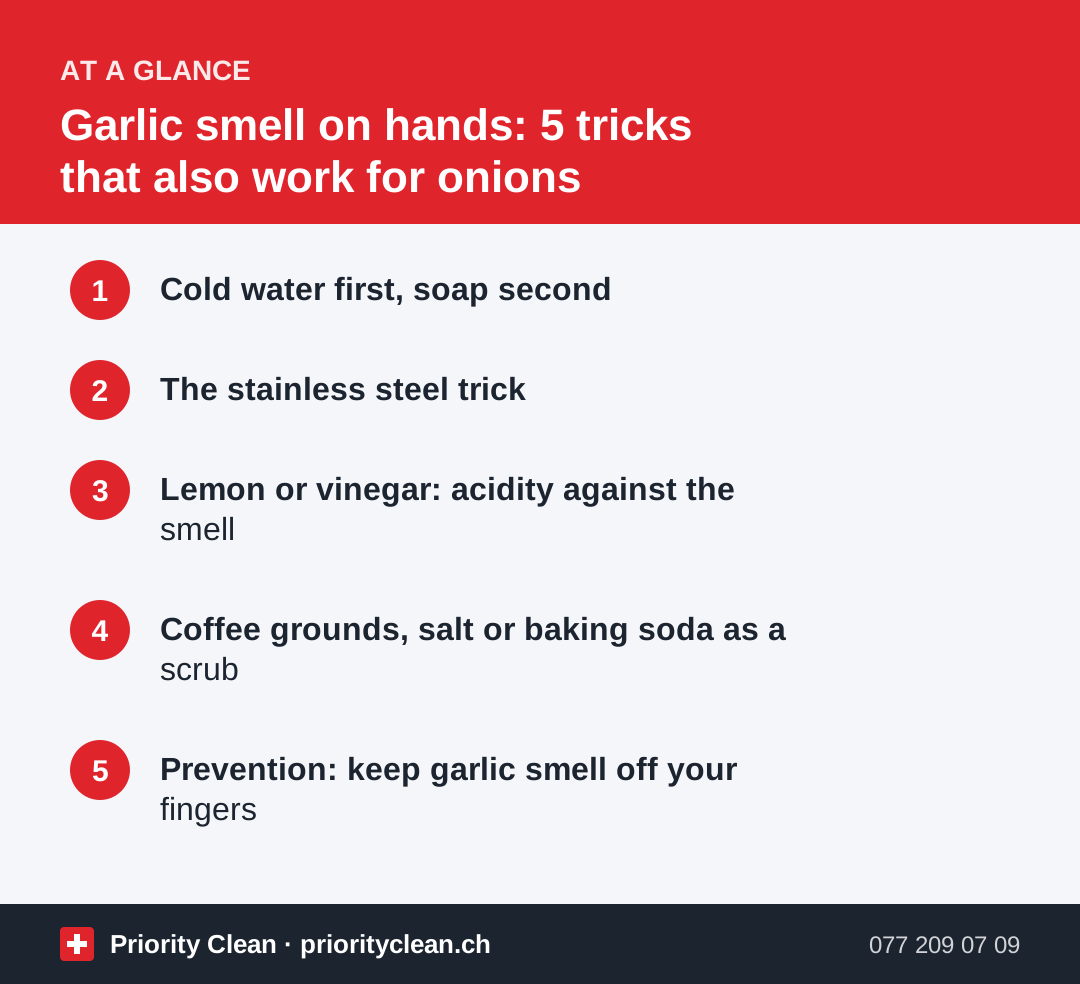
1. Cold water first, soap second
The order makes all the difference. Hold your hands under cold water first and rub palms, the gaps between your fingers and fingertips thoroughly. Then use a home remedy, and finish with soap and warm water.
Washing your hands properly is a must anyway whenever you switch between ingredients. The Federal Food Safety and Veterinary Office explains that germs spread via hands, chopping boards, utensils and cloths, and that worktops and utensils should be cleaned with hot water and soap after each step. The cold rinse against the smell does not replace washing with soap; it comes before it.
2. The stainless steel trick
This is the best-known trick: rub your hands for about 30 seconds under cold running water against something made of stainless steel, such as a spoon, the sink or the tap. You can even buy "stainless steel soap" bars for this.
The effect has not been clearly proven scientifically, and not everyone notices the same result. Many people do find the garlic smell much weaker afterwards, though. Since the trick costs nothing and is gentle on the skin, it is worth a try, ideally combined with the other remedies.
3. Lemon or vinegar: acidity against the smell
Acidity helps to loosen the odour compounds. Rub your hands with a little lemon juice, leave it for a moment and then rinse with water and soap. A splash of vinegar in a bowl of water works in a similar way, but has a smell of its own.
The Swiss consumer protection foundation lists vinegar, citric acid, washing soda, bicarbonate, curd soap, salt and lemon juice among useful household remedies. For your skin, lemon juice, diluted vinegar, salt and baking soda are the suitable ones; washing soda and pure citric acid are meant for surfaces, not hands.
Be careful with small cuts or cracked skin: acid stings. In that case skip lemon and vinegar and use coffee grounds or stainless steel instead.
4. Coffee grounds, salt or baking soda as a scrub
Damp coffee grounds are an underrated remedy: rub a teaspoonful between your hands as if washing them, then rinse thoroughly. The fine grains remove the odour compounds mechanically, and the coffee aroma covers the rest.
Salt or baking soda mixed with a little water into a paste works in a similar way. Massage it briefly into your fingertips and around your nails. Then wash your hands and apply hand cream, as salt and acidity dry the skin. For more ways to use it around the home, see our guide to baking soda cleaning.
5. Prevention: keep garlic smell off your fingers
The easiest option is to stop the smell from reaching your fingers at all:
- Use a garlic press and rinse it straight away under cold water before any residue dries.
- Hold it with a fork: steady the onion with a fork rather than your fingers.
- Wear disposable gloves or thin kitchen gloves if you have a lot of chopping to do.
- Clean knife and board immediately: garlic and onions leave their smell especially in wood. Our guide on how to clean a wooden chopping board shows the right care.
- Separate boards for garlic and onions on one side and fruit on the other, so your apple sauce doesn't taste of garlic.
After cooking, the smell often lingers not just on your hands but throughout the flat. You'll find tips in our guide on cooking smells in your flat.
The most common mistakes
- Starting with hot water: the garlic smell gets stronger instead of weaker.
- Using only soap: soap alone often doesn't remove all the sulphur compounds.
- Experimenting with cleaning products: bleach or scouring powder irritates the skin and is dangerous.
- Forgetting your nails: the smell lasts longest under the nails.
- Leaving the board and press lying around: dried residue keeps passing the smell back to your hands.
Frequently asked questions
Does the stainless steel trick really work?
The effect hasn't been clearly proven, but many people notice a weaker smell afterwards. As it is free and gentle on the skin, it is worth trying under cold running water.
Why should I start with cold water against garlic smell?
Warm water sends more of the volatile compounds up to your nose, so the smell seems stronger. Cold water rinses some of it away before you move on to a home remedy and soap.
How do I get onion smell out from under my fingernails?
Massage a paste of salt or baking soda and a little water around your nails, then run a nail brush or the edge of a spoon underneath. Finish with soap and moisturise.
What if the smell is coming from my mouth?
That is a different matter: after a meal, part of the smell is produced inside the body. Washing your hands won't help, but time will. If bad breath persists, talk to your dentist or GP.
Thanks for your feedback! Feel free to share the guide.
Thanks! What was missing? Drop us a line – we will improve the guide. WhatsApp