Skirting boards hardly get noticed – until low light across the floor shows up a grey line of dust, hair in the corners and black streaks left by the vacuum cleaner. Knowing how to clean skirting boards properly makes all the difference in a thorough clean and before you hand back a rented flat. In the right order, the job goes faster than you might think.
The following five tricks work on white-painted wooden boards as well as on PVC, MDF or tiled skirting – and they are kind to your back.
Why skirting boards get dirty so quickly
Dust loves to collect where the floor meets the wall: the vacuum pushes it to the edges, and the top of the board acts like a little shelf where it settles. When you mop, dirty water splashes onto the skirting and dries into grey streaks.
On top of that come scuffs from shoes, chair legs, the vacuum cleaner or the bike parked in the hallway. In the kitchen, grease settles on the boards; in the bathroom, soap residue and limescale build up on tiled skirting. The best approach depends on the material:
| Material | How to clean it | Better to avoid |
|---|---|---|
| White-painted wood or MDF | Barely damp, mild all-purpose cleaner, then wipe dry | Water on edges and joints, abrasive cleaners |
| Oiled or waxed solid wood | Dry to barely damp, suitable wood care | Standing water, harsh cleaners |
| PVC | Damp, with a little washing-up liquid | Solvents |
| Foil-wrapped boards | Barely damp, soft cloth | Water, melamine sponge |
| Tiles or natural stone | Damp, joints with a soft brush | Acids on limestone and marble |
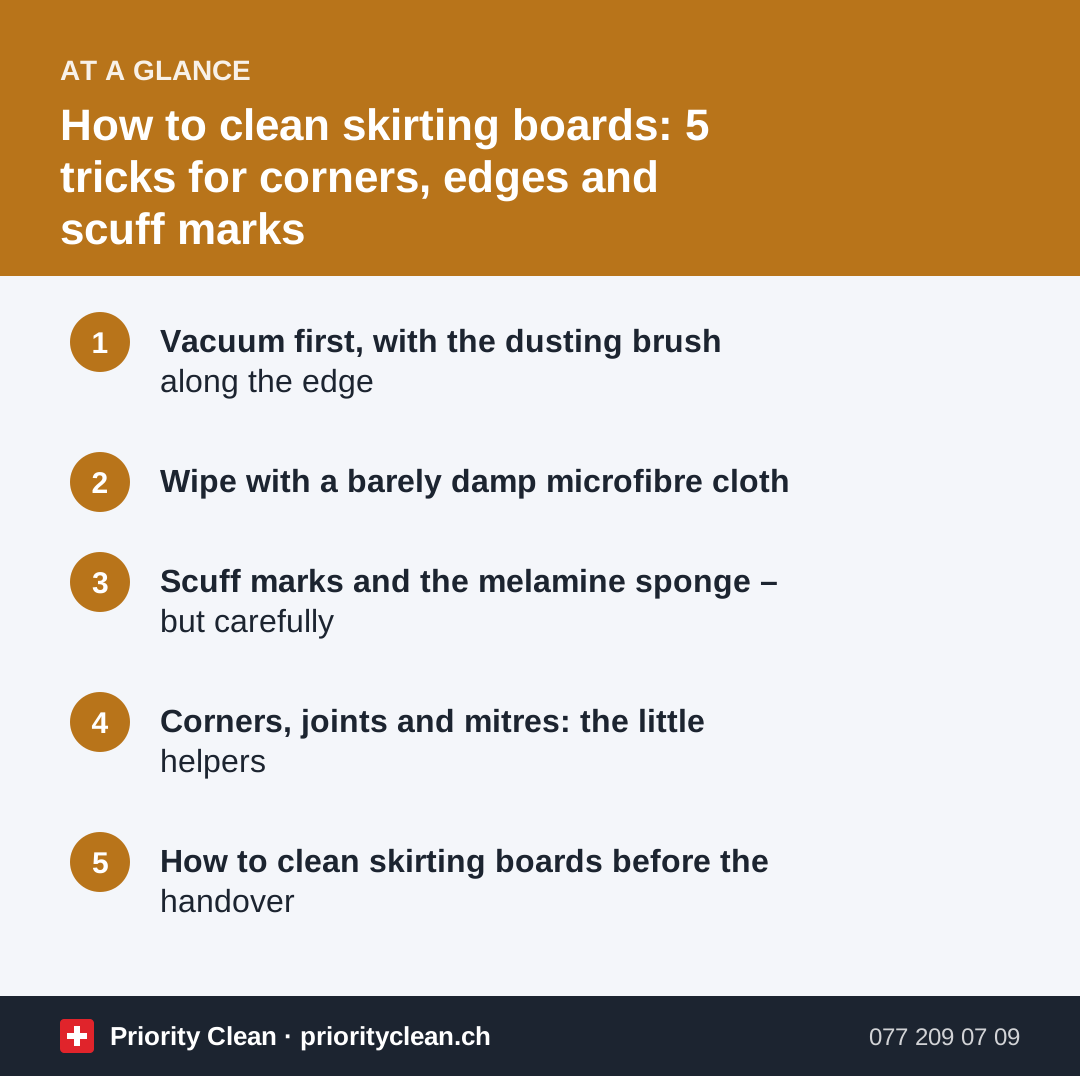
1. Vacuum first, with the dusting brush along the edge
Dry dust turns into grey smears as soon as it meets water. So always vacuum first: with the dusting brush along the top and front, and with the crevice tool in corners, behind heating pipes and along door frames. Move light furniture away, because that is often where most of the dust hides.
Work from top to bottom: first the skirting boards, then the floor. That way nothing lands on a freshly cleaned surface. If you run the dusting brush along the boards briefly whenever you vacuum each week, you save yourself a lot of work later.
2. Wipe with a barely damp microfibre cloth
Fill a bucket with lukewarm water and a little mild all-purpose cleaner or a squirt of washing-up liquid. Wring the microfibre cloth out very well – it should only be barely damp.
- Wipe the top edge first, then the front.
- Work in sections of about a metre and rinse the cloth often.
- Change the water as soon as it turns grey.
- Wipe painted, MDF and wooden boards dry with a dry cloth.
If you'd rather not kneel, use a flat microfibre mop or a skirting board duster with a handle. For a thorough clean, though, kneeling on a cushion is often quicker and more precise.
3. Scuff marks and the melamine sponge – but carefully
Black streaks from rubber soles or the vacuum cleaner often disappear with a melamine sponge. It works like very fine sandpaper – and that is exactly where the risk lies.
- Dampen the sponge and squeeze it out well.
- Rub gently over the scuff mark only, not over the whole board.
- Wipe away any residue with a damp cloth.
- Always test on an inconspicuous spot first, for example behind a door.
On high-gloss paint, foil and oiled wood, the sponge can leave dull patches. There, light marks often come off with a soft eraser or a drop of washing-up liquid on the microfibre cloth. Our guide to the melamine sponge explains where it helps and where it does damage. Deep scratches or chipped paint, on the other hand, can't be cleaned away.
4. Corners, joints and mitres: the little helpers
The most stubborn dirt collects in corners, mitred joints and where two lengths of skirting meet. These tools help:
- Old toothbrush or paintbrush: for corners and the gap between the board and the floor.
- Cotton bud: for mitres, door frames and narrow gaps.
- Radiator brush: for skirting behind and under radiators.
Only wipe the flexible sealant joint between the board and the wall gently with a damp cloth – don't scrub, or it may tear. Skirting boards with an integrated cable duct should only be cleaned barely damp, so that no moisture reaches the cables.
5. How to clean skirting boards before the handover
At the handover inspection, people look closely, and a grey line of dust on the skirting is noticed straight away. The Federal Office for Housing's brochure «Living in Switzerland» states that the flat is handed back thoroughly cleaned when you move out and that defects are recorded jointly in a report. So build the skirting boards firmly into your final clean – after the move, once the furniture is out.
You will find a complete list for every room in our end of tenancy cleaning checklist.
Common mistakes
- Mopping them wet: MDF and foil-wrapped boards can swell at edges and joints.
- Melamine sponge on high-gloss paint: it leaves dull patches that you can't get rid of.
- Cream cleanser or solvents on paint: the surface goes dull or starts to lift.
- Acid on natural stone skirting: vinegar and citric acid attack limestone and marble.
- Floor first, skirting boards second: dust and drips land on the freshly cleaned floor.
Frequently asked questions
What is the best way to clean skirting boards?
Vacuum them first with the dusting brush, then wipe with a barely damp microfibre cloth and a little mild all-purpose cleaner or washing-up liquid. A melamine sponge works for scuff marks, but only after a test on an inconspicuous spot.
How can I clean skirting boards without bending down?
With a flat microfibre mop or a skirting board duster on a telescopic handle. For a thorough clean, kneeling on a cushion is often more efficient – just change position and take breaks.
How often should skirting boards be cleaned?
Vacuum them every time you vacuum the floor, and wipe them damp roughly once a month to once a quarter – more often in the kitchen and entrance. Before the handover of a rented flat, they are part of the thorough final clean.
How do I get yellowed white skirting boards bright again?
A film of dirt comes off with a mild cleaner. If the paint itself has yellowed, however, cleaning only helps to a limited extent. Our guide on how to clean door frames and yellowed doors explains more, as doors and skirting boards are often painted with the same paint.
Thanks for your feedback! Feel free to share the guide.
Thanks! What was missing? Drop us a line – we will improve the guide. WhatsApp