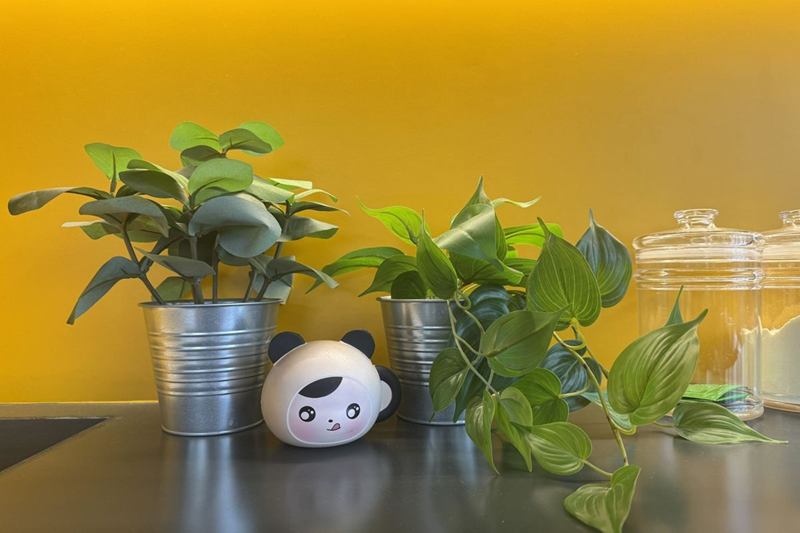
They need neither water nor fertiliser – but artificial plants don't stay clean on their own. After a few months a grey film covers leaves and flowers, and the plant suddenly looks more fake than it is. When working out how to clean artificial plants, choose the method by material: plastic can take a shower, fabric flowers and paper can't.
The five methods below range from a quick dust to a thorough wash. They'll have your ficus, olive tree and orchid looking fresh again, and dust won't settle in as quickly.
Why it's worth cleaning artificial plants regularly
Artificial plants have lots of leaves, ridges and petals – and therefore lots of surface for dust to settle on. Plastic also builds up static and practically pulls in fine particles. In the kitchen, dust combines with cooking grease into a sticky grey film; by a sunny window, colours fade over time.
For people with a house dust mite allergy, decorations like these are real dust traps. The aha! Swiss Allergy Centre recommends reducing dust traps and wiping surfaces damp. If you don't want to do without artificial plants, choose washable ones and clean them regularly. Our guide on how to reduce dust mites covers more measures.
| Material | Suitable methods | Best avoided |
|---|---|---|
| Plastic (leaves, grasses, succulents) | Hairdryer, duster, shower, soapy water | Hot water, abrasives |
| Fabric (polyester "silk flowers") | Hairdryer on cold, duster, salt-bag trick | Soaking, hard rubbing |
| Paper, foam | Soft brush, hairdryer on cold | Any moisture |
| Preserved plants and moss | Hairdryer on cold from a distance, very soft brush | Water, sprays, frequent handling |
| Wooden trunk, pot weighted with plaster or stones | Dry dusting, clean leaves separately | Submerging |
Real houseplants, by the way, need different care – see our guide to cleaning houseplant leaves.
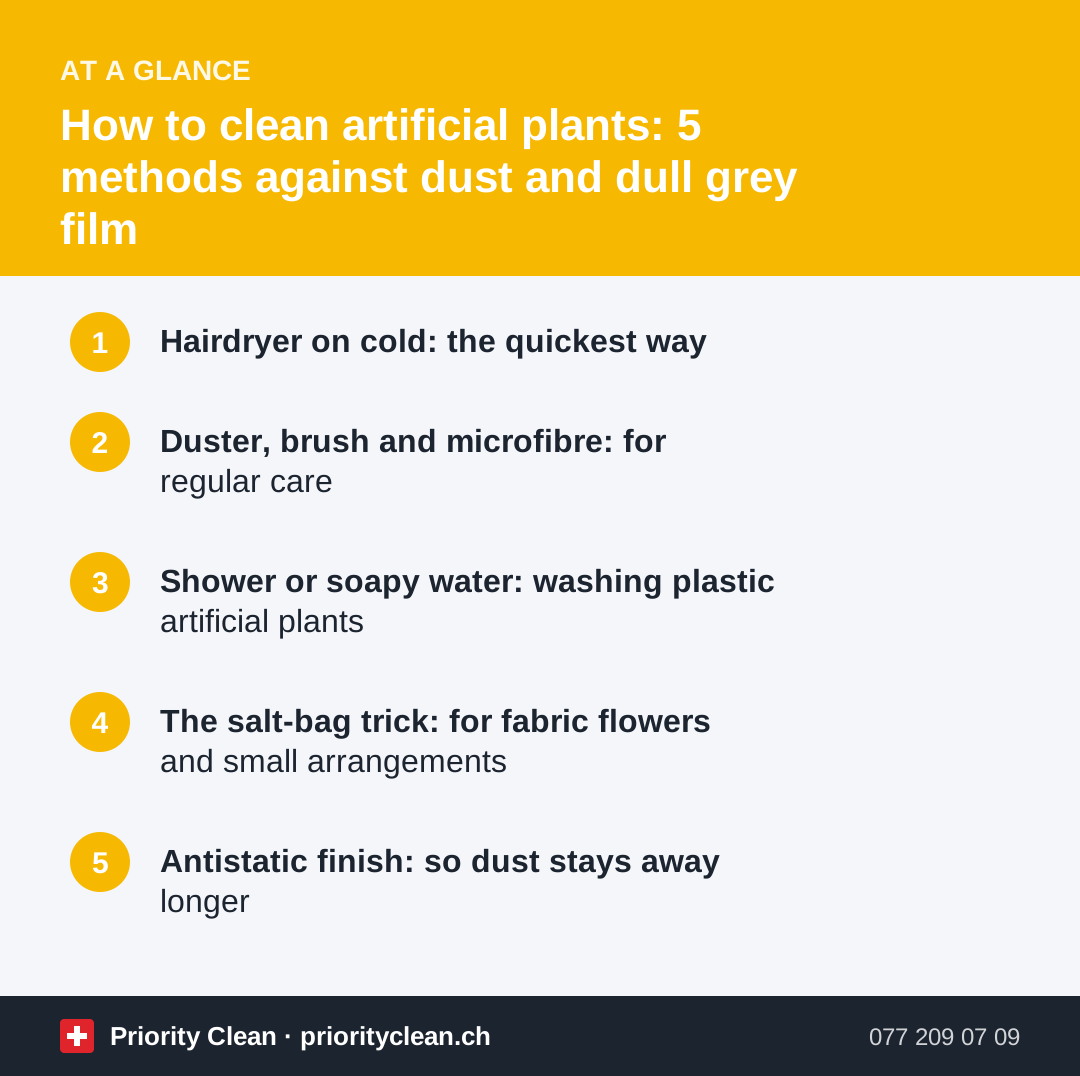
1. Hairdryer on cold: the quickest way
For loose dust, a hairdryer is ideal. Set it to cold and blow over the plant from top to bottom, keeping a little distance. Hot air can warp plastic and loosen glued parts.
It's best to do this on the balcony or at an open window so the dust isn't spread around the flat. Afterwards, wipe the floor and windowsill with a damp cloth.
2. Duster, brush and microfibre: for regular care
Once a week or every two weeks, a quick once-over is enough:
- Duster: microfibre or feather dusters pick up dust instead of just moving it around.
- Soft brush: a wide paintbrush or make-up brush reaches ridges, flower cups and needles.
- Microfibre cloth: hold larger plastic leaves between the two layers of a slightly damp cloth and draw it from the centre outwards.
The Federal Office of Public Health (FOPH) considers good home hygiene more important than the best cleaning products and advises removing dust regularly and wiping surfaces damp. That applies here too: dust often and you'll rarely need to wash. Our dusting tips explain the technique.
3. Shower or soapy water: washing plastic artificial plants
Once the grey film turns sticky, dusting is no longer enough. Plants made entirely of plastic can then be washed:
- Remove the pot or base, or cover it with a plastic bag and tie it shut.
- Rinse the plant with lukewarm water in the shower or bath.
- Clean stubborn spots in lukewarm water with a drop of washing-up liquid, using a soft sponge or brush.
- Rinse with clean water so no soap residue attracts fresh dust.
- Shake well and leave to dry completely on a towel.
Small plants can also be swished upside down in the washbasin. Don't submerge plants with wire stems, artificial moss or glued flowers: wire can rust and glue can come loose.
4. The salt-bag trick: for fabric flowers and small arrangements
Polyester silk flowers and small arrangements often can't take water. A simple trick helps:
- Put two to three tablespoons of coarse salt into a large plastic or freezer bag.
- Place the flowers in head first and hold the bag closed around the stems.
- Shake the bag gently for about half a minute: the salt grains rub the dust off.
- Take the flowers out and tap off the salt outside or over the bin.
On delicate or very dark fabrics, test the trick on one flower first. It's too rough for paper flowers and preserved plants.
5. Antistatic finish: so dust stays away longer
After cleaning, one last step is worthwhile: wipe the plastic leaves with a microfibre cloth dipped in water with a drop of fabric softener and wrung out well. This reduces static for a while. Allergy sufferers are better off avoiding scented products.
Special care or antistatic sprays aren't necessary. If you do use one, the FOPH advises choosing a pump spray over an aerosol with propellant and following the instructions for use. Spray on the balcony or with the window open, never towards people or pets.
Common mistakes
- Blow-drying or washing hot: plastic warps and glued parts come loose.
- Soaking fabric flowers: colours can run and flowers lose their shape.
- Leaving soap residue: it attracts new dust.
- Just moving dust around: a dry cotton cloth stirs dust up instead of picking it up.
- Candles right next to the arrangement: artificial plants burn. The BFU recommends fire-proof candle holders and at least 30 cm distance from flammable materials.
Frequently asked questions
How often should you clean artificial plants?
Dusting them every week or two with a hairdryer, duster or cloth is usually enough. Wash them thoroughly when a grey film remains despite dusting – depending on where they stand, every few months, and more often in the kitchen.
Can artificial plants go in the dishwasher or washing machine?
Better not. Heat and movement can warp leaves and loosen glued parts. Lukewarm water and a little washing-up liquid by hand are much gentler.
How do I clean fabric artificial flowers?
As dry as possible: with a hairdryer on cold, a soft brush or the salt-bag trick. Dab individual marks with a slightly damp cloth after testing for colourfastness on an inconspicuous spot.
Why do artificial plants get dusty so quickly?
Plastic builds up static and attracts fine particles, and the many leaves offer plenty of surface. Regular dusting and a damp wipe with a drop of fabric softener in the water help reduce this.
Thanks for your feedback! Feel free to share the guide.
Thanks! What was missing? Drop us a line – we will improve the guide. WhatsApp