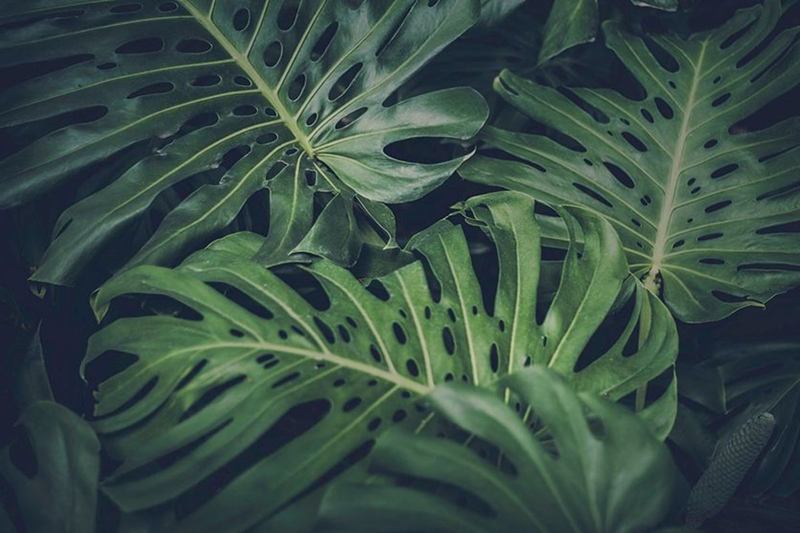
In the shop, a Swiss cheese plant, rubber plant or fiddle-leaf fig looks glossy and deep green. After a few months by the window, a grey film settles on it that you only notice when you run a finger over a leaf. To clean houseplant leaves you hardly need any equipment – just the right method for each type of leaf.
April is a good time: the days are getting longer, plants start growing again and need every bit of light. These five methods show how to remove dust gently and check at the same time that your houseplants are healthy.
Why dust is bad for houseplant leaves
Plants get their energy through their leaves: using light, water and carbon dioxide, they make the sugars they need to grow. A layer of dust acts like a filter. In a spot that is not very bright to begin with, the plant then runs short of light. Dust can also cover the tiny pores (stomata) through which the leaf exchanges gases – most of them sit on the underside.
Dusty leaves matter for you, too: a leafy houseplant is a dust trap. The Swiss Federal Office of Public Health (FOPH) notes that good home hygiene matters more than the best cleaning product and recommends removing dust regularly and wiping surfaces with a damp cloth. For people with a house dust mite allergy, aha! Swiss Allergy Centre also advises reducing dust traps and damp wiping – which includes the indoor jungle in the bedroom.
The right method depends on the leaf:
| Leaf type | Examples | Method |
|---|---|---|
| Large and smooth | Swiss cheese plant, rubber plant, fiddle-leaf fig, bird of paradise | Damp cloth, support the leaf from below |
| Lots of small leaves | Weeping fig, ferns, pothos, spider plant | Lukewarm shower |
| Hairy or velvety | African violet, some begonias | Dry, with a soft brush |
| Spines or waxy coating | Cacti, echeverias, other succulents | Brush or bellows, no cloth |
| Orchids | Moth orchid (Phalaenopsis) | Damp cloth, no water in the crown |
1. Wipe large leaves with a damp cloth
For plants with large, smooth leaves, lukewarm water and a soft cloth – microfibre or cotton – are all you need.
- Dip the cloth in lukewarm water and wring it out well.
- Support the leaf from below with your flat hand so that it does not snap.
- Wipe from the stalk to the tip, first the top, then the underside.
- Rinse the cloth now and then, otherwise you only spread the dust around.
For greasy dust, for example on a plant in the kitchen, add a drop of mild washing-up liquid to the water and wipe again with clear water afterwards. In many Swiss municipalities tap water is hard and leaves white limescale marks. In that case, use rainwater or filtered water. How hard your water is, is explained in our guide to water hardness in Switzerland.
2. Give small-leaved plants a lukewarm shower
Nobody wipes the hundreds of little leaves on a weeping fig one by one. Here, the shower is the best solution:
- Cover the pot and soil with a plastic bag or cling film so the soil does not wash out.
- Stand the plant in the shower or bath and rinse it with a gentle, lukewarm spray from above and from the sides – never cold, never hot.
- Let it drain well and only put it back once the leaves are dry, out of direct midday sun and cold draughts.
Small plants can also be dipped upside down in a bucket of lukewarm water for a moment and swished gently, holding the soil in place with your hand and the film. Once or twice a year is enough for most houseplants, more often in a very dusty flat.
3. Clean hairy leaves and cacti dry
Not every leaf tolerates water. On hairy or velvety leaves such as those of the African violet, it clings to the hairs and can leave marks. Cacti and succulents with a whitish waxy coating should not be wiped either: the coating protects the plant and does not grow back.
- Use a soft brush, such as a clean paintbrush or a make-up brush.
- Sweep the dust from the centre of the leaf outwards.
- For cacti with dense spines, a bellows or a hairdryer on the cold setting, held at a distance, helps.
4. Leaf shine, milk and beer: what to make of them
The internet is full of home remedies for glossy leaves: milk, beer, banana peel or a few drops of olive oil. They are best avoided. Milk and beer leave a sticky film that can smell and attracts fresh dust. Oil does make leaves shine, but forms a thick film that seals the leaf surface and literally holds on to dust.
Shop-bought leaf shine sprays are mainly cosmetic. If you use one, do so sparingly, only on smooth leaves and according to the manufacturer's instructions – never on hairy, velvety or matt leaves, and not on young shoots.
5. Check for pests while you clean houseplant leaves
Use the cleaning session to check the undersides of the leaves and the leaf axils in particular:
| Sign | Possible pest |
|---|---|
| Fine webbing, tiny pale dots on the leaf | Spider mites, often with dry air from the heating |
| Sticky coating on leaves and windowsill | Aphids or scale insects |
| White, cottony tufts in the leaf axils | Mealybugs |
| Small black flies above the soil | Fungus gnats |
| Silvery patches and streaks | Thrips |
Move an infested plant away from the others, give it a thorough shower and remove badly affected leaves. If the problem persists, ask a garden centre or specialist shop for a suitable treatment. What helps against the flies in the soil is covered in our guide on getting rid of fungus gnats.
Common mistakes
- Rubbing smooth leaves dry: dust acts like sandpaper and can scratch the surface.
- Cold water: many houseplants come from warm regions and react badly to cold water.
- Home remedies for shine: milk, beer and oil cause more problems than they solve.
- Soil not covered: in the shower it washes out, and soggy soil attracts fungus gnats.
Artificial plants need different care – see our guide on how to clean artificial plants.
Frequently asked questions
How often should you clean houseplant leaves?
Large, smooth leaves are best wiped with a damp cloth every two to four weeks, as soon as dust is visible. For small-leaved plants, a shower once or twice a year is usually enough.
Can you clean plant leaves with milk or beer?
It is best not to. Both leave a sticky film that can smell and attracts new dust. Lukewarm water and a soft cloth are all you need.
Can I use washing-up liquid on the leaves?
For greasy dust, for example in the kitchen, a drop of mild washing-up liquid in the water is fine. Wipe again with clear water afterwards so that no residue stays on the leaf.
Do I need a leaf shine spray?
No. A properly wiped leaf shines on its own. If you do use a spray, apply it sparingly, only on smooth leaves and according to the manufacturer's instructions.
Thanks for your feedback! Feel free to share the guide.
Thanks! What was missing? Drop us a line – we will improve the guide. WhatsApp