A grey line along the top of the books, fluff between the spines and a sneeze as soon as you pull out an old volume: bookshelves are among the biggest dust traps in any flat. When dusting books, however, leave the wet cloth aside – paper and bindings need gentle treatment.
Spring cleaning in April is a good opportunity to go through your whole library. These five tricks show how to clean books and shelves properly and how to prevent foxing, silverfish and dust in the future.
Why books attract dust and foxing
Open shelves are perfect landing spots for dust: it settles on the top edges of the books, on the shelf boards and in the gaps between spines. It often stays there for months, because nobody takes out every single book during a quick dusting session. That is bad news for people with a house dust mite allergy: aha! Swiss Allergy Centre recommends reducing dust traps, damp wiping and using a vacuum cleaner with a HEPA filter.
The second problem is moisture. Paper absorbs moisture from the air. If a bookcase stands against a cold outside wall or in a damp cellar, brown spots known as foxing can appear, the paper cockles and smells musty. Damp corners also attract silverfish and booklice.
| Problem | Common cause | What helps |
|---|---|---|
| Grey line on the top edge | Open shelf, rarely dusted | Regular brushing or vacuuming |
| Brown spots in the paper | Air too humid | Air rooms properly, move the bookcase away from the outside wall |
| Musty smell | Moisture, possibly mould | Find the cause, dry affected books separately |
| Small silvery insects | Damp spots in the flat | Lower the humidity, call in a specialist |
| Faded spines | Direct sunlight | Keep the bookcase away from sunny windows |
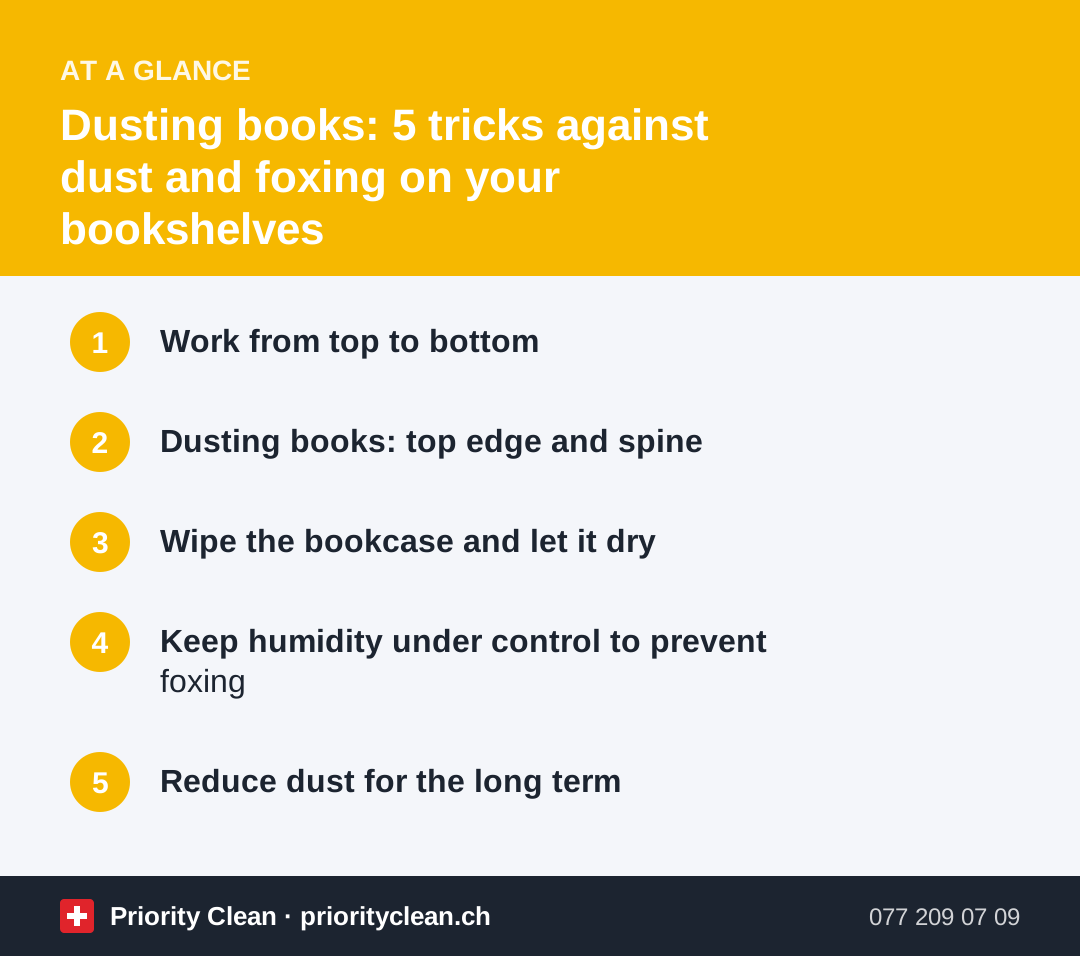
1. Work from top to bottom
Thorough dusting is best done one shelf at a time:
- Take a photo of the bookcase so you can restore your order afterwards.
- Start with the top shelf so that falling dust only lands on areas you have not cleaned yet.
- Take the books off one shelf and stack them on a clean table.
- Dust the books, wipe the shelf and only then clear the next one.
- Finally, vacuum the floor in front of the bookcase.
For the top shelves you need a safe step – not a chair or a stool on castors.
2. Dusting books: top edge and spine
Most of the dust sits on the top edge of the pages, known as the head. Here is how to remove it without pushing it between the pages:
- Hold the book firmly closed: grip it by the spine and press the pages together so no dust slips between the leaves.
- Tilt it: angle the top edge slightly downwards so the dust falls away rather than into the book.
- Brush from the spine outwards: with a wide, soft brush or a lambswool duster.
- Or vacuum: with the brush attachment on low suction. For old or valuable books, stretch a piece of gauze or a nylon stocking over the nozzle so nothing loose gets sucked up.
Wipe the spine and cover with a dry microfibre cloth. Laminated dust jackets can take a barely damp cloth; leather, cloth and paper bindings should only be cleaned dry.
3. Wipe the bookcase and let it dry
Once a shelf is empty, wipe it with a well-wrung cloth and a little mild cleaner, including the back panel and corners. For oiled or waxed wood, follow the manufacturer's care instructions.
Drying is essential: put the books back only when the wood is completely dry, otherwise the paper soaks up the moisture. While you are at it, check the wall behind the bookcase. Dark spots or a musty smell are warning signs of mould. Place bookcases on outside walls a few centimetres away from the wall so that air can circulate.
4. Keep humidity under control to prevent foxing
A dry indoor climate is the best protection against foxing, mould and silverfish. The Swiss homeowners' association HEV Schweiz gives a guideline of 30 to 50 % relative humidity during the heating season and airing with a through-draught three times a day for 5 to 10 minutes instead of leaving windows permanently tilted. A simple hygrometer shows whether you are in the right range.
- Do not store books in the cellar, the attic or the shared laundry room – humidity and temperature swings are high there.
- Do not place bookcases directly above a radiator or in full sun.
- Do not pack books too tightly: a little air between volumes protects bindings and spines.
Foxing can hardly be removed from paper without damaging it. For old or valuable books with spots or mould, contact a bookbinder or a paper conservator. Do not brush mouldy books indoors. If you find small silvery insects, our guide on grey silverfish versus silverfish helps you identify them. Tiny pale creatures on the shelf may also be booklice.
5. Reduce dust for the long term
So that dusting books does not become a weekly chore, a few habits help:
- Dust visible edges regularly: run a microfibre duster over the top edges every one to two weeks.
- Thoroughly once or twice a year: take all the books out and wipe the shelves.
- Closed cabinets: rarely read or valuable books stay dust-free behind glass doors.
- Fewer ornaments: every figurine and vase on the shelf is one more dust trap.
- Vacuum cleaner with a HEPA filter: it holds on to fine dust instead of blowing it back out.
More measures for allergy sufferers are described in our guide to reducing dust mites.
Common mistakes
- A wet cloth on paper: moisture cockles the pages and encourages foxing.
- Blowing dust away: it just lands on the next shelf and in the air.
- Starting at the bottom: dust from above falls onto shelves you have already cleaned.
- Bookcase flush against an outside wall: condensation and mould can form behind the books.
- Full suction: loose spines or old pages can be damaged.
Frequently asked questions
How often is dusting books necessary?
Give the visible top edges a quick dust every one to two weeks, and do a thorough clean with all books taken out once or twice a year. More often in a dusty flat or if someone has allergies.
Can you vacuum books?
Yes, with the brush attachment on low suction, keeping the book closed. For old or valuable books, stretch gauze or a nylon stocking over the nozzle.
What helps against foxing in books?
Prevention is key: keep humidity between 30 and 50 % during the heating season, air rooms properly and do not place bookcases against damp walls. Existing spots are hard to remove; for valuable books, ask a specialist.
How do I protect books from dust?
Closed cabinets with glass doors keep dust out. With open shelves, regular dusting, few ornaments and a vacuum with a HEPA filter help.
Thanks for your feedback! Feel free to share the guide.
Thanks! What was missing? Drop us a line – we will improve the guide. WhatsApp