Office shoes, Chelsea boots or weekend brogues: good smooth-leather shoes last for many years if you give them a few minutes regularly. Leather shoe care doesn't need a cupboard full of special products – just a brush, the right shoe cream, some newspaper and a pair of shoe trees.
In February especially, road salt, slush and dry heating air take their toll. The five steps below take you from brushing and proper drying to cream, shine and waterproofing. Suede follows its own rules.
Why leather shoes need regular care
Leather is a natural material that contains fats and moisture. With every step it flexes in the same places; from the inside it absorbs foot sweat, from the outside water, dust and, in winter, road salt. Water and salt draw fat out of the material: it hardens, gets white tide marks and eventually cracks along the creases. Dust and grit act like sandpaper on the surface.
| Problem | Cause | Remedy |
|---|---|---|
| White marks | road salt and slush | wipe damp, dry, apply cream |
| Dull, greyish surface | dust, no care for a long time | brush, cream, polish |
| Cracks at the creases | dried-out leather | regular cream, shoe trees |
| Hard and misshapen | dried too hot | dry slowly at room temperature |
| Patchy colour | wrong cream or too much water | matching or neutral cream, little water |
For stubborn salt marks, follow our guide on how to remove salt stains from shoes.
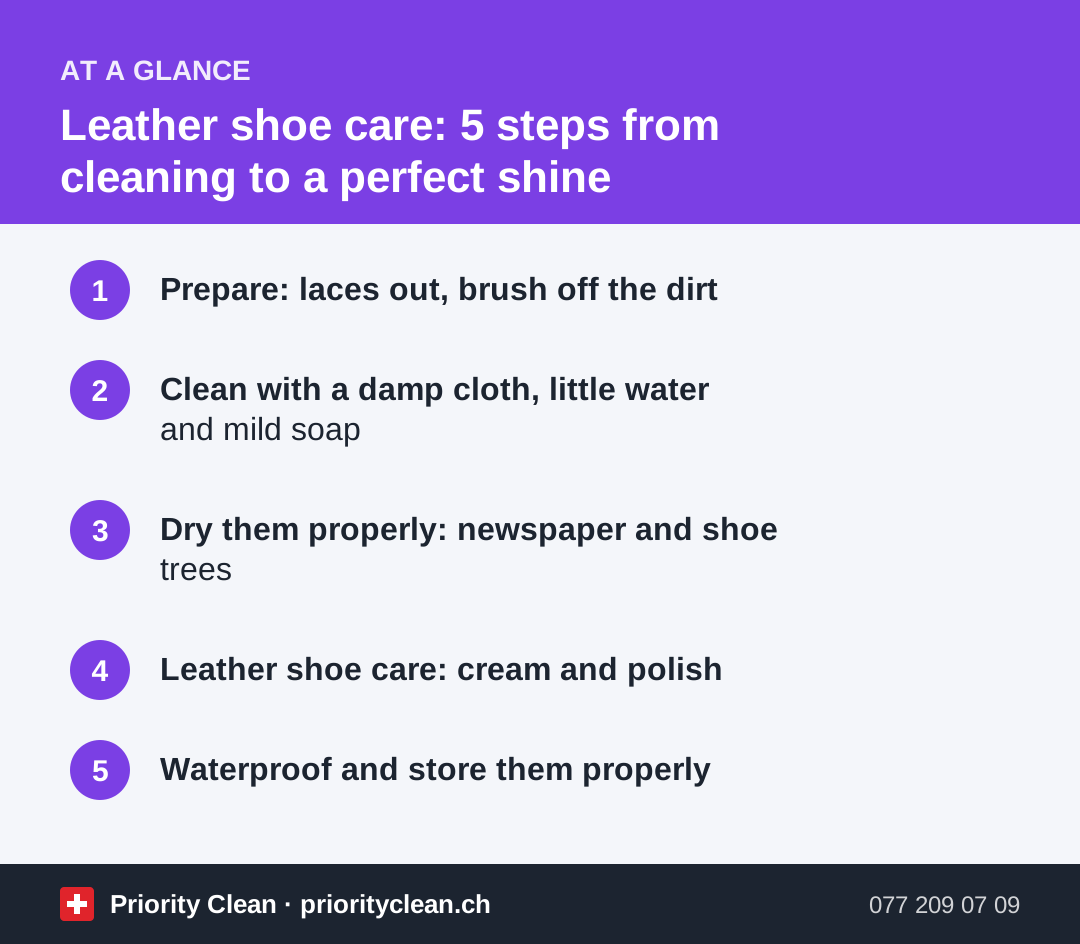
1. Prepare: laces out, brush off the dirt
- Take out the laces. This lets you reach the tongue and eyelets, and keeps cream off the laces. Wash dirty laces by hand in soapy water.
- Insert shoe trees or stuff the shoes with paper so the upper doesn't dent while you brush.
- Remove dried dirt with a firmer brush. Let wet mud dry first – smeared, it is harder to get off.
- Clean the welt seam between the upper and the sole with an old toothbrush; salt collects there.
2. Clean with a damp cloth, little water and mild soap
A well-wrung damp cloth is usually enough. For heavier dirt, add a little mild soap to lukewarm water: the Swiss consumer protection foundation (Stiftung für Konsumentenschutz) lists curd soap among the simple household remedies that replace many special cleaners. Saddle soap also works for sturdy shoes.
- Wipe the whole upper in small circles, not just individual marks, so no tide marks form.
- Remove soap residue with a second cloth dampened with water only.
- Old, caked-on layers of polish can be dissolved with a leather cleaner from a cobbler or shoe shop.
- Rubber soles can be scrubbed with a brush and soapy water; leather soles should only be wiped briefly with a damp cloth.
Leather shoes never go in the washing machine or in a water bath: the leather hardens and warps, and glued seams can come apart.
3. Dry them properly: newspaper and shoe trees
Wet shoes need time, not heat.
- Take out the insoles and dry them separately.
- Stuff the shoes loosely with newspaper. If the lining is light-coloured, use plain paper or kitchen roll so no printing ink rubs off.
- Change the paper as soon as it feels damp.
- Dry at room temperature – not on or right next to a radiator, not in the sun and not with a hairdryer.
- When the shoes are only slightly damp, insert shoe trees so they dry in shape.
Shoes that are soaked through often need more than a day. Only carry on with the care once they are completely dry.
4. Leather shoe care: cream and polish
| Product | Effect | Best for |
|---|---|---|
| Shoe cream (tin or tube) | nourishes, refreshes the colour, light shine | smooth leather, regularly |
| Neutral cream or lotion | nourishes without colouring | light leather, uncertain shades |
| Hard wax polish | protects, high shine | toe cap and heel, not on creases |
| Instant-shine sponge | quick shine on the go | emergencies, no substitute for care |
Here's how:
- Pick up a little cream with a cotton cloth or a small applicator brush.
- Apply it thinly in small circles over the whole upper, including the tongue and welt.
- Let it soak in for a few minutes.
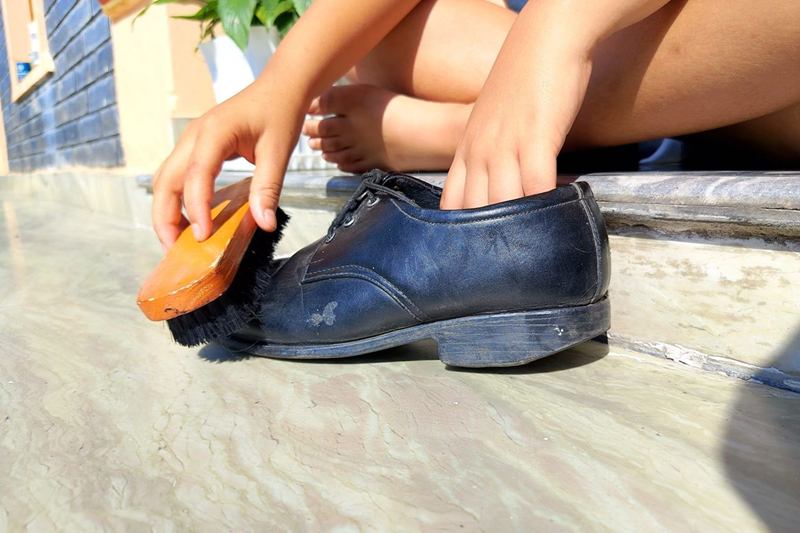
- Buff with a horsehair brush using quick, light strokes.
- Finish with a soft cotton cloth or an old pair of nylon tights.
Choose a cream in the colour of the shoes or slightly lighter – neutral if in doubt – and test any new product on an inconspicuous spot, such as inside the heel. Apply cream as soon as the surface looks dull or dry: pairs you wear a lot more often than your Sunday best.
5. Waterproof and store them properly
A waterproofing spray adds protection against wet, dirt and salt marks. Only spray onto clean, dry shoes, keep to the distance given on the can and let the product work for as long as the manufacturer says.
- Shoe trees: keep the shape in the cupboard too.
- Fabric bags instead of plastic: the leather can breathe.
- Store dry and airy: in a damp cellar, mould spots can appear.
Common mistakes
- Drying on the radiator: the leather hardens, cracks and warps.
- Too much cream: the surface gets sticky, attracts dust and loses its shine.
- Wrong shade: cream that is too dark leaves marks, especially on light leather.
- Hard wax on the creases: it cracks when you walk and flakes off.
- The same pair every day: sweat can't evaporate, so the lining stays damp.
- Treating suede like smooth leather: suede gets no cream – see how to clean suede instead.
For an overview of all leather types, see our guide to leather cleaning.
Frequently asked questions
How often should I care for leather shoes?
Brush them whenever they are dirty, apply cream as soon as the leather looks dull or dry, and always after cleaning them with a damp cloth. In winter, with road salt and wet weather, they need care more often than in summer.
How do I dry wet leather shoes?
Take out the insoles, stuff the shoes with newspaper, change the paper regularly and let them dry at room temperature – no radiator, no hairdryer. Finally, put in shoe trees and apply cream.
Do I need both shoe cream and waterproofing spray?
The cream nourishes the leather and refreshes the colour; the spray protects against water and salt. For smooth leather the cream matters most, and the spray is a useful extra in winter and rainy weather.
Can I put leather shoes in the washing machine?
As a rule, no. The leather hardens, can warp and discolour, and glued seams can come apart. Clean leather shoes by hand with a brush, a damp cloth and a little mild soap.
Thanks for your feedback! Feel free to share the guide.
Thanks! What was missing? Drop us a line – we will improve the guide. WhatsApp