A few strokes in the morning, a few more at night – and after a few weeks a grey mat of fluff has formed between the bristles. If you want to know how to clean a hairbrush, the good news is that you need neither special products nor much time: a tail comb, a little shampoo and lukewarm water are enough.
The actual work takes barely ten minutes, plus drying time overnight. Here is how to go about it step by step, and what to watch out for with wooden brushes, cushion brushes, round brushes and combs.
Why you need to clean a hairbrush regularly
When you brush, the hairbrush picks up not only loose hair but also oil from the scalp, flakes of skin and residue from hairspray, gel, oil or dry shampoo. Add dust from the bathroom, and the hair mats together with all of this into a greyish layer. A dirty brush puts grease and styling residue straight back onto freshly washed hair, which then looks greasy sooner.
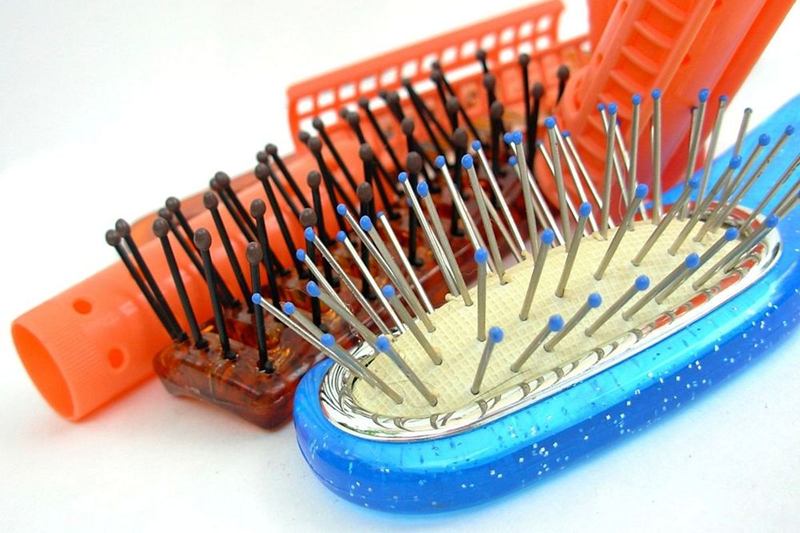
How you proceed depends on the type of brush:
| Type of brush | What to watch | Soak? |
|---|---|---|
| Plastic brush without a cushion | robust | yes, briefly |
| Cushion brush | small air hole in the rubber cushion | no, wash only the bristles |
| Wooden brush, natural bristles | wood swells, glue dissolves | no |
| Round brush with a metal or ceramic barrel | hair wraps around the barrel | only briefly, then dry well |
| Plastic comb | robust | yes |
| Wooden or horn comb | natural material | no, just wipe |
| Electric hot-air or straightening brush | electricity | never, wipe only as the manual says |
Similar rules apply to makeup brushes – see how to clean makeup brushes.
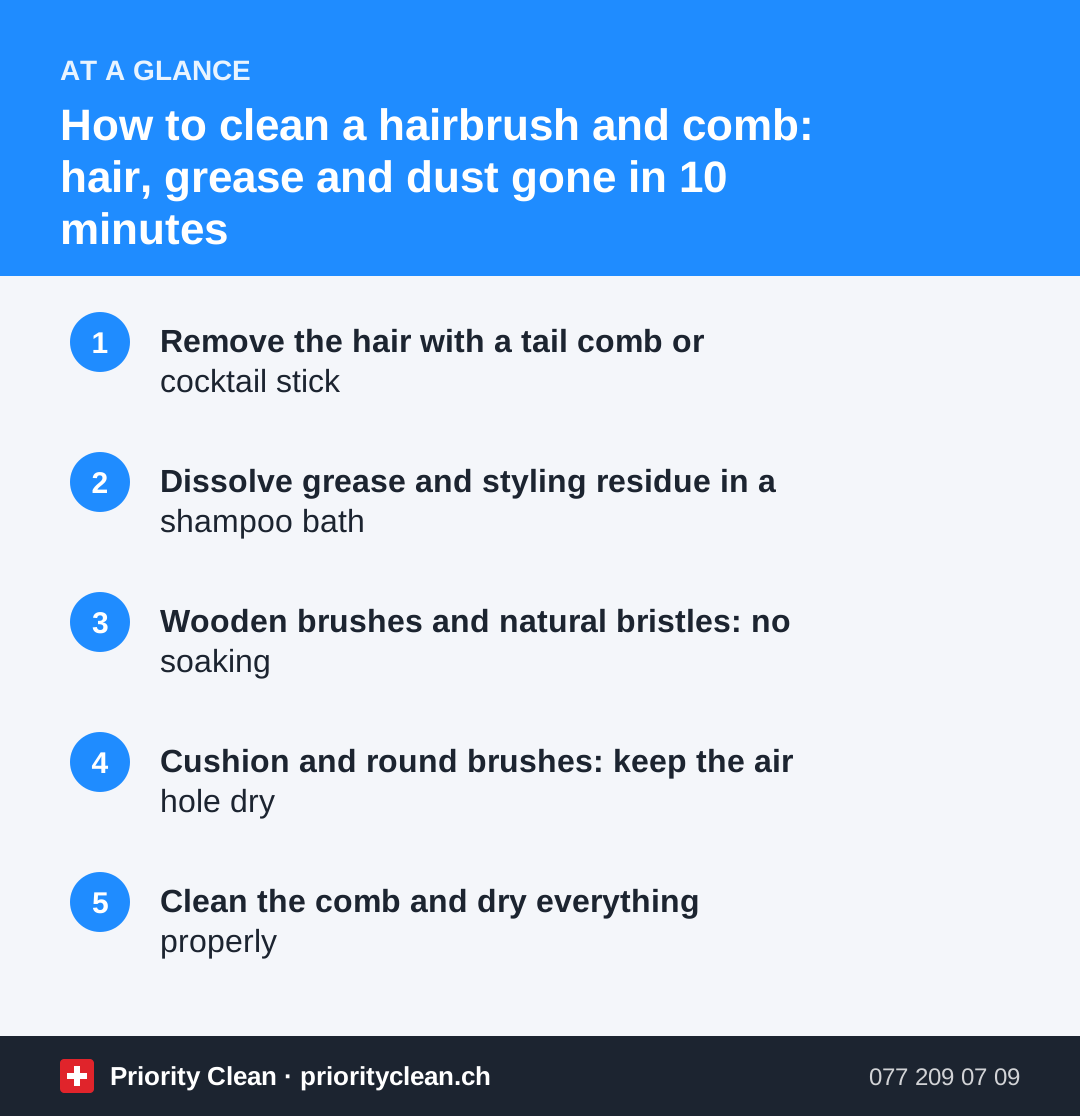
1. Remove the hair with a tail comb or cocktail stick
- Run the tail of a comb, a wooden cocktail stick or a pen along the base of the bristles and lift the matted hair.
- Pull it out with your fingers, working from one side to the other.
- On round brushes, cut the hair with small scissors along the barrel, then pull it out – without snipping the bristles.
- Put the hair in the bin, not down the washbasin or the toilet, where it clogs the drain. If that has already happened, see how to clean a shower drain.
2. Dissolve grease and styling residue in a shampoo bath
You don't need a special product. A mild shampoo lifts scalp oil from the bristles just as well as from your hair. Mild soap works too: the Swiss consumer protection foundation (Stiftung für Konsumentenschutz) lists soap and bicarbonate of soda among the simple household remedies that replace many special cleaners.
- Fill the washbasin or a bowl with lukewarm water and stir in a squirt of shampoo.
- Soak plastic brushes and combs for a few minutes.
- Scrub the base of the bristles with an old toothbrush, from the base to the tips, especially where the grey layer clings.
- Rinse thoroughly under running water until no more foam appears.
- Shake briefly and pat dry with a towel.
For stubborn styling residue on plastic brushes, a teaspoon of bicarbonate of soda in the soaking water helps.
3. Wooden brushes and natural bristles: no soaking
Wood swells in water, varnish can crack and the glue that holds the bristles dissolves. So treat wooden brushes and natural-bristle brushes gently:
- Hold the brush bristles down and dip only the tips into the shampoo water.
- Clean the base of the bristles with a toothbrush that you dip into the soapy water again and again.
- Rinse only the bristles under a gentle stream, keeping the wooden body dry.
- Wipe the handle and back with a damp cloth and dry them straight away.
Natural bristles are made of keratin, just like hair. They cope well with mild shampoo, but not with harsh cleaners.
4. Cushion and round brushes: keep the air hole dry
Many brushes have a rubber cushion with a small air hole. If water gets in, it stays inside the cushion and the brush starts to smell musty.
- Never submerge it: hold the brush bristles down and wash only the bristle surface, or work with a toothbrush and soapy water.
- Put your thumb over the air hole while rinsing.
- If water has got in anyway, shake the brush with the hole facing down and leave it to dry in the open.
- Round brushes with a metal or ceramic barrel: once you have cut out the hair, wash them only briefly and let them dry well.
- Electric hot-air and straightening brushes: unplug them, let them cool and clean them only as the manual allows – never under water.
5. Clean the comb and dry everything properly
Combs: plastic ones go in the same shampoo bath; an old toothbrush helps between the teeth. Wipe wooden or horn combs with a damp cloth only and dry them immediately.
Drying: lay all brushes bristles down on a dry towel. That way the water drains out of the base instead of seeping into the cushion or the wood. Leave them to dry overnight at room temperature – not on the radiator and not with a hairdryer.
Replacing: if bristles are bent or broken, or the ball tips are missing, it is time for a new hairbrush, because damaged bristles are hard on hair and scalp.
Common mistakes when you clean a hairbrush
- Soaking a wooden brush: the wood swells, the varnish cracks, bristles fall out.
- Submerging a cushion brush: water stays in the cushion and smells musty.
- The dishwasher: heat and harsh detergent can warp plastic; wood and rubber cushions get damaged.
- Hairdryer or radiator: plastic warps, wood cracks.
- Disinfectant or bleach: they attack bristles and glue and are unnecessary in everyday life.
Frequently asked questions
How often should I clean my hairbrush?
Ideally pull out the hair after every use, or at least once a week. As a rule of thumb, wash the whole brush about once a month, more often if you use a lot of hairspray, oil or dry shampoo.
Can I put a hairbrush in the dishwasher?
Better not. Heat and harsh dishwasher detergent can warp plastic, and wood and rubber cushions suffer. A shampoo bath by hand is gentler and just as thorough.
How do I clean a wooden hairbrush?
Pull out the hair, dip only the tips of the bristles into lukewarm water with a little shampoo and clean them with a toothbrush. Keep the wooden body dry, wipe the handle with a damp cloth and let the brush dry bristles down.
Do I need to disinfect my hairbrush?
Not in everyday life. The FOPH points out that disinfecting cleaners are not needed in an average household of healthy people. Shampoo and water are enough. If there are head lice, put plastic brushes and combs in hot soapy water at 60 °C for 10 minutes.
Thanks for your feedback! Feel free to share the guide.
Thanks! What was missing? Drop us a line – we will improve the guide. WhatsApp