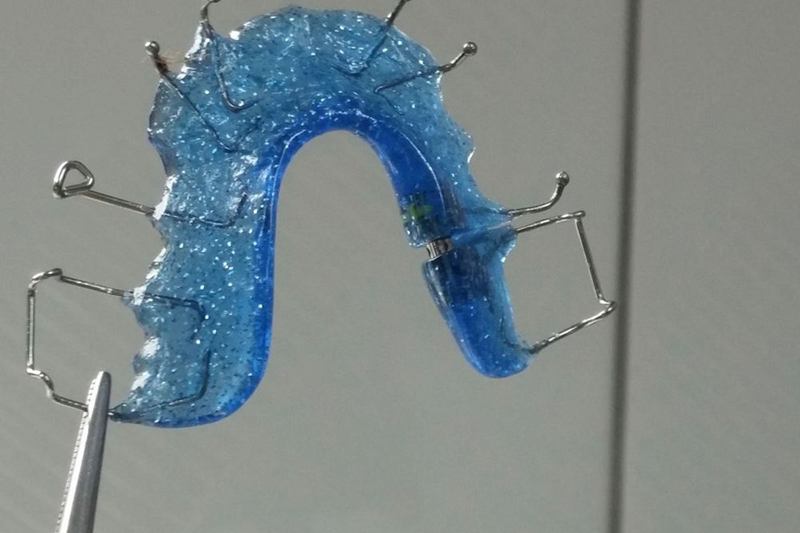
Whether it's a night guard against teeth grinding, a retainer after braces or clear aligners, a dental splint spends many hours in your mouth, collecting saliva, plaque and bacteria. Knowing how to clean a retainer properly mostly comes down to cool water, a soft brush and a little routine – hot water and toothpaste, on the other hand, do it harm.
Here is how to look after it every day, prevent deposits and stains, and keep the storage case clean. Your dentist's or the manufacturer's instructions always take priority.
Why deposits build up on a retainer
In your mouth, the appliance is constantly bathed in saliva containing bacteria, food particles and minerals. A soft film of plaque soon forms. If it isn't removed, minerals settle in it and hard, whitish deposits develop – much like tartar on teeth. Then there are stains from coffee, tea or red wine if you drink with aligners in.
A neglected retainer smells unpleasant, turns cloudy and feels rough – and a replacement has to be made at the practice, which takes time and effort.
| Problem | Typical cause | What helps |
|---|---|---|
| Milky, slimy film | Saliva and plaque | brush daily with a soft brush and mild soap |
| Hard white deposits | Mineral deposits from saliva | cleaning tablets or an ultrasonic bath, after checking with the practice |
| Yellow or brown stains | Coffee, tea, red wine, smoking | drink only water with aligners in, brush your teeth before putting them back |
| Unpleasant smell | Bacteria, a damp and closed case | clean more thoroughly, leave the case open to dry |
| Dull, scratched surface | Toothpaste, hard brush, scouring powder | soft brush, no toothpaste |
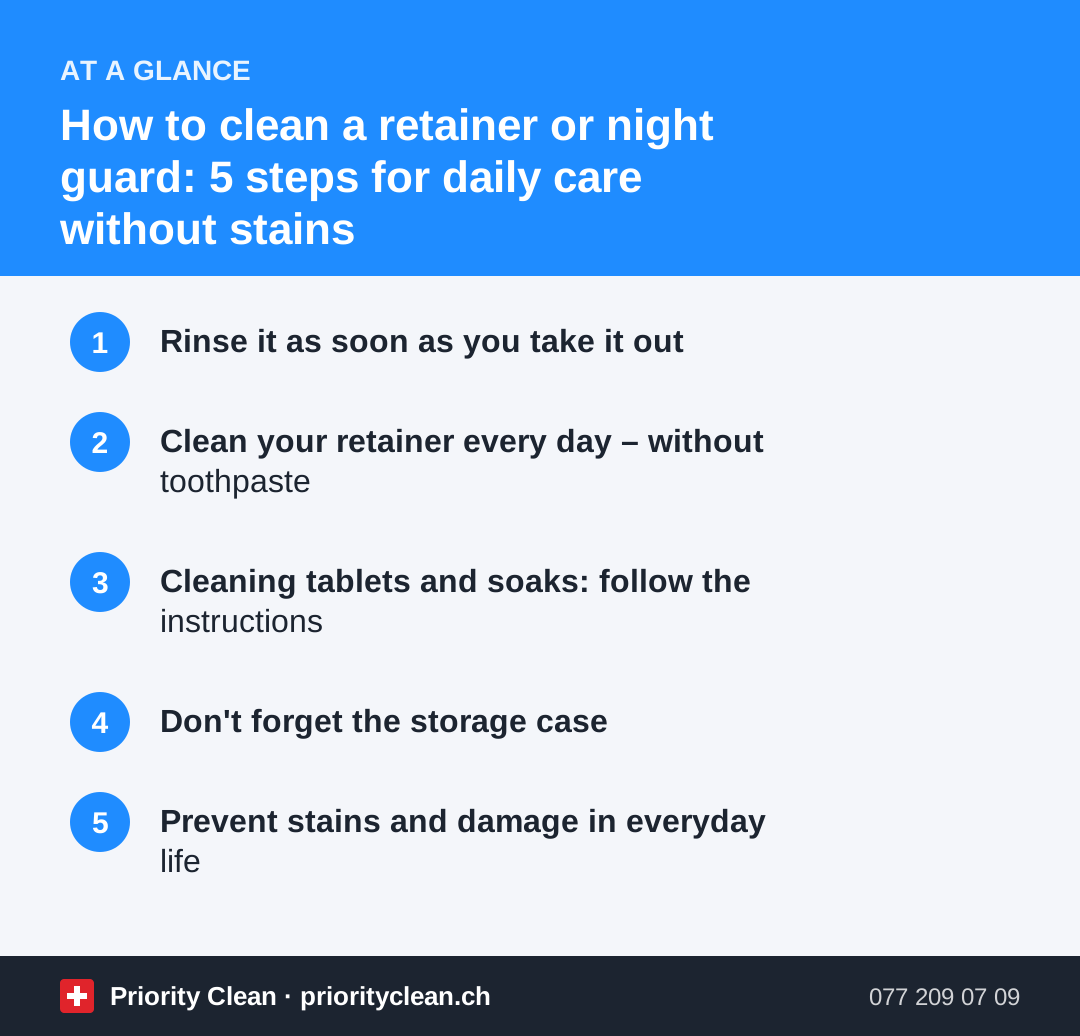
1. Rinse it as soon as you take it out
Rinse the appliance under cold or lukewarm water straight after wearing it, so saliva and plaque don't get a chance to dry on. Hot or boiling water is off limits: many splints are made of thermoplastic material that can warp at high temperatures – and then it no longer fits properly.
For the same reason, it doesn't belong in the dishwasher, on a radiator or in direct sunlight, for example on the dashboard of your car.
2. Clean your retainer every day – without toothpaste
Once a day, ideally after wearing it, give it a thorough clean:
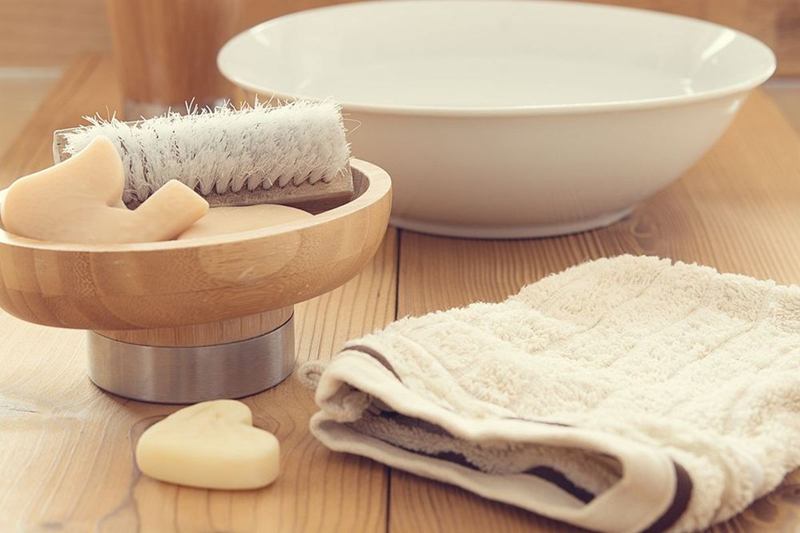
- Run a little water into the washbasin or lay a towel in it – if the appliance slips out of your hand, it is less likely to break.
- Use a soft toothbrush that is kept just for this job.
- Put a little mild, unscented liquid soap or plain bar soap on the brush.
- Gently brush all surfaces, inside and out, including the hollows that fit around your teeth.
- Rinse thoroughly in cold water until you can no longer feel any soap.
Toothpaste contains abrasive particles that leave fine scratches in the plastic. Deposits cling to these scratches all the more easily, and the surface turns dull.
3. Cleaning tablets and soaks: follow the instructions
Once a week, or as soon as the first deposits appear, a deep clean is worthwhile:
- Cleaning tablets: there are tablets made specifically for retainers, splints and braces. Dissolve them in cold or lukewarm water and stick exactly to the dose and soaking time. Only use denture cleaner if the manufacturer approves it for your appliance.
- Ultrasonic bath: small devices loosen deposits with vibrations. Ask your practice whether your appliance is suitable.
- Diluted vinegar: some practices recommend it for hard deposits, others advise against it depending on the material. Only use it after checking with them.
After every soak, rinse it thoroughly in cold water before it goes back into your mouth.
4. Don't forget the storage case
Even the best clean achieves little if the appliance then goes back into a dirty case – bacteria thrive in a closed, damp container. To keep it clean:
- Rinse it with water every day and leave it open to dry.
- Once a week, wash it with warm water, a little soap and a soft brush.
- Dissolve limescale marks with vinegar or citric acid, then rinse well. The Swiss consumer protection foundation lists both among the household remedies that can replace many specialist cleaners.
- Replace the case if it is cracked or no longer closes properly.
Whether the appliance should be stored dry or moist depends on the material – follow your practice's advice. The cup by the washbasin needs regular attention too, as our guide on how to clean a toothbrush holder explains.
5. Prevent stains and damage in everyday life
A few habits help it stay clear and intact for longer:
- Only drink water with aligners in: coffee, tea, red wine and sugary drinks get under the aligner and stain it. Take aligners out to eat.
- Never wrap it in a paper napkin: that is how it ends up in the bin. Always put it in its case.
- Keep pets away: dogs love chewing on retainers – keep the case out of their reach.
- Have it checked: cracks, sharp edges or a change in fit are a job for the practice.
A fixed retainer, i.e. a wire bonded behind the teeth, is cleaned as part of your daily brushing. If you wear a removable denture, you'll find suitable advice in our guide on how to clean dentures.
Common mistakes
- Hot water "to disinfect": the appliance warps and no longer fits.
- Scrubbing with toothpaste: the surface gets scratched and cloudy.
- Soaking for too long: a longer soaking time than stated can damage the material.
- Bleach and harsh cleaners: they can attack plastic and metal parts. Only use alcohol-based mouthwash after checking with your practice, too.
- Forgetting the case: a clean retainer in a dirty case is soon contaminated again.
Frequently asked questions
How often should you clean a retainer?
Rinse it after every use, brush it thoroughly once a day and give it a deep clean with a tablet or soak about once a week. Rinse the case daily and wash it weekly.
Can I clean my retainer with toothpaste?
Better not. The abrasive particles in toothpaste leave fine scratches where deposits take hold, and the plastic turns cloudy. A soft brush with mild soap is gentler.
How do I remove white build-up from a retainer?
Hard white deposits are usually mineral. Special cleaning tablets or an ultrasonic bath help if you use them as directed. If the build-up won't shift, ask your dental practice – they can have it cleaned professionally.
Can you put a night guard in the dishwasher?
No. The heat and detergents in a dishwasher can warp and damage it. Wash it by hand in cold or lukewarm water.
Thanks for your feedback! Feel free to share the guide.
Thanks! What was missing? Drop us a line – we will improve the guide. WhatsApp