The letter from school usually comes out of the blue: head lice have been found in the class. Head lice – what to wash? Many families then do far more than necessary: sheets, curtains, soft toys, everything at 90 degrees. It costs time and nerves but achieves very little.
Lice live on the scalp, not in the flat. The cantonal fact sheets are clear: what counts is treating the head, and at home a few targeted steps are enough. Here they are. This guide is not a substitute for medical advice.
Why head lice are hardly a household problem
Head lice feed on blood from the scalp and need warmth. The canton of Fribourg's leaflet Head lice are back! explains that they spread through direct head-to-head contact, like clean hair just as much as dirty hair and die within 48 hours off the scalp. According to the canton of Lucerne's head lice fact sheet (in German), they are not a sign of poor hygiene: they cannot jump or fly and survive on objects for two to three days at most.
The upshot: your home is hardly a source of infection. Your energy belongs on the head.
| Item | What to do | Why |
|---|---|---|
| Combs, brushes, hair clips | 10 minutes in hot soapy water (60 °C) | Direct contact with hair and scalp |
| Hats, scarves, headbands | 3 days in a sealed bag | Lice do not survive that long |
| Pillowcase | Change it and wash as usual | Hygiene, not a must |
| Bedding, clothes, soft toys | No special cleaning needed | Not a significant route of infection, according to the fact sheets |
| Sofa, carpet, car seat | Vacuum as usual | No sprays needed |
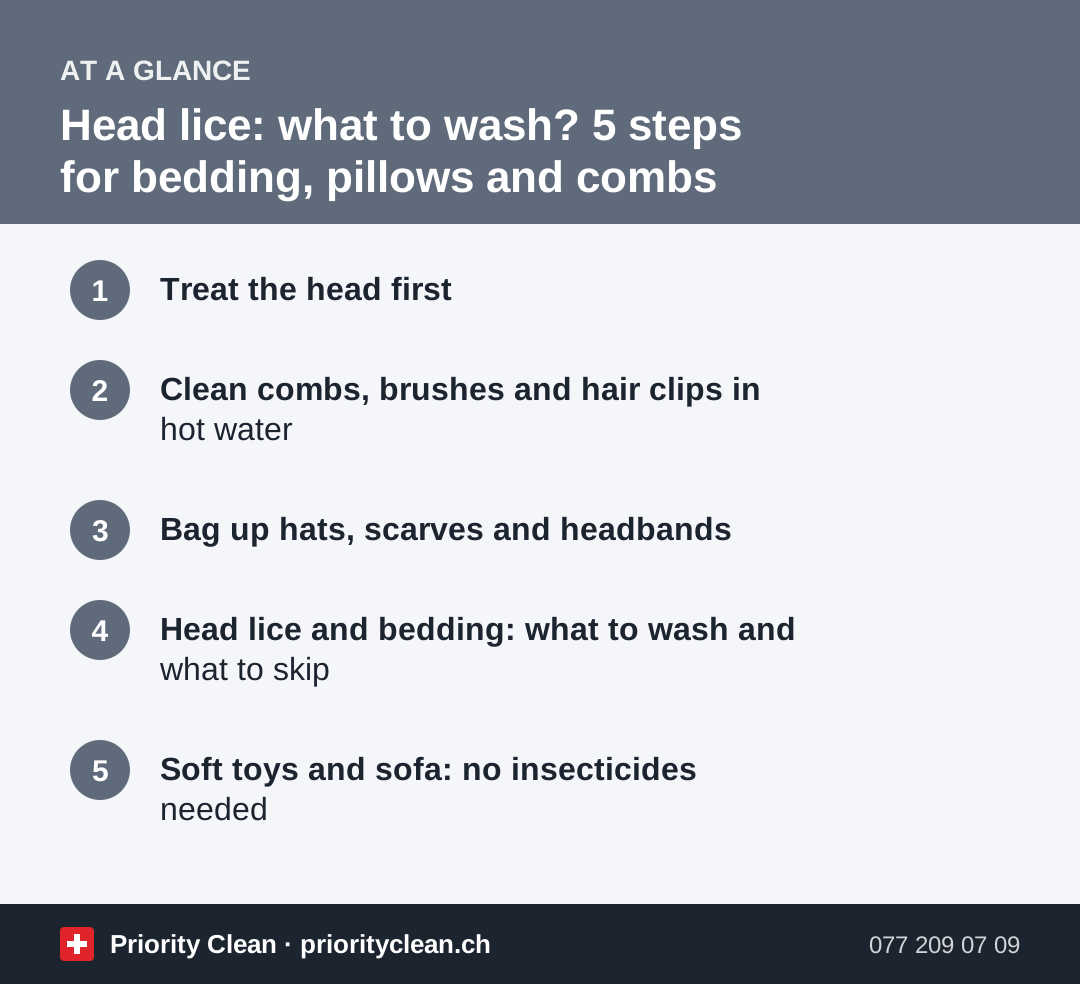
1. Treat the head first
Before you think about laundry, focus on the head. According to the Fribourg leaflet, you only treat when live lice are found – preventive treatment makes no sense. To check:
- Wet the hair and apply plenty of conditioner.
- Comb strand by strand from roots to tips with a fine nit comb.
- Wipe the comb on kitchen paper after every stroke and look closely.
Which product is right is something to discuss with your pharmacy or paediatrician. Both fact sheets recommend a fixed plan over several weeks with repeated combing; the Lucerne sheet lists days 1, 4, 8, 11, 15 and 22. Check every member of the family and let the school or nursery know.
2. Clean combs, brushes and hair clips in hot water
These items have been in direct contact with hair, so cleaning them makes sense. The Lucerne fact sheet recommends putting combs, brushes and hair clips in hot soapy water at 60 °C for 10 minutes.
- First pull any hair out of the brush and put it in the bin.
- Fill a bowl with hot water and a little soap or washing-up liquid; check the temperature with a kitchen thermometer.
- Submerge everything, take it out after 10 minutes, rinse and leave to dry.
- Treat the nit comb the same way after every use.
The Fribourg leaflet also advises one hairbrush per person. To keep brushes clean in everyday life, see how to clean a hairbrush.
3. Bag up hats, scarves and headbands
According to the Lucerne fact sheet, anything worn directly on the head goes into a bag for three days; by then any lice will have died. If hats and scarves are washable, you can simply wash them as usual according to the care label instead. No further measures are needed, the fact sheet says.
During the treatment period, tie long hair back – the Lucerne fact sheet recommends this too.
4. Head lice and bedding: what to wash and what to skip
According to the Fribourg leaflet, bedding, clothes and soft toys do not need any special cleaning. If it puts your mind at rest, simply change the pillowcase and wash it with your next normal load – usually at 60 °C for cotton, otherwise according to the label. There is no need to wash all the bedding, duvets or curtains specially.
For the right temperature, see our guide on washing bedding. And to find out when the pillow itself should go in the machine, read how to wash pillows.
5. Soft toys and sofa: no insecticides needed
Soft toys do not need cleaning either, according to the Fribourg leaflet. If your child sleeps cheek to cheek with a favourite cuddly toy and you would rather be on the safe side, put it in a sealed bag for a few days: according to the Lucerne fact sheet, lice do not survive on objects for more than two to three days. Vacuum the sofa, carpets and car seats as usual.
Common mistakes with head lice
- Washing the whole flat: lots of effort for nothing – the lice are on the head.
- Treating as a precaution: only use a lice product when live lice are found, not "just in case".
- Treating only once: without checks and repeated combing over several weeks, lice that hatch later go unnoticed.
- Spraying insecticides: unnecessary and bad for indoor air.
- Feeling ashamed: head lice have nothing to do with poor hygiene. Tell the school and people around you openly.
Frequently asked questions
Do I have to wash all the bedding if my child has head lice?
No. According to the cantonal leaflet, bedding, clothes and soft toys do not need special cleaning. If you like, change the pillowcase and wash it with your next normal load.
How long do lice survive off the head?
Not long. The Fribourg leaflet says 48 hours, the Lucerne fact sheet two to three days at most on objects. That is why it is enough to seal hats and scarves in a bag for three days.
How do I clean combs and brushes after head lice?
Put combs, brushes and hair clips in hot soapy water at 60 °C for 10 minutes, then rinse and leave to dry. Clean the nit comb the same way after every use.
Do I need a lice spray for the sofa and carpet?
No. Insecticides in the home are unnecessary and pollute indoor air. Normal vacuuming is enough. Only the head is treated, with a product you have chosen together with your pharmacy or paediatrician.
Thanks for your feedback! Feel free to share the guide.
Thanks! What was missing? Drop us a line – we will improve the guide. WhatsApp