First a child falls ill, two days later the parents are down too: stomach bugs spread quickly through a household, especially in winter, when norovirus is at its peak. Effective cleaning after a stomach bug is not about scrubbing more, but about targeting the right places – the ones where the virus actually passes from person to person.
This guide explains how to deal with vomit safely, clean the bathroom and toilet daily, remember the surfaces everyone touches, wash laundry properly and dilute bleach correctly. For medical questions – with small children, older people or signs of dehydration, for example – please talk to your family doctor.
Why cleaning after a stomach bug needs a plan
"Stomach flu" is usually caused by viruses, in winter very often by norovirus. It has nothing to do with real flu (influenza). The Federal Office of Public Health (FOPH) describes norovirus as highly contagious: it spreads via hands, contaminated objects such as door handles, droplets released when vomiting, and food. It stays infectious on surfaces for more than twelve days, and there is no vaccine.
For cleaning, this means your flat doesn't need to be sterile, but a few places are crucial.
| Where | Why it matters | While someone is ill |
|---|---|---|
| Toilet, flush button, washbasin | contact with stool and vomit | daily, and immediately after an accident |
| Door handles, light switches | touched by everyone | daily |
| Tap, soap dispenser | touched after every toilet visit | daily |
| Phone, remote control, tablet | passed from hand to hand | wipe daily |
| Fridge handle, kitchen cupboard fronts | shared use | daily |
| Bed linen, towels, pyjamas | direct body contact | change often, wash at 60 °C |
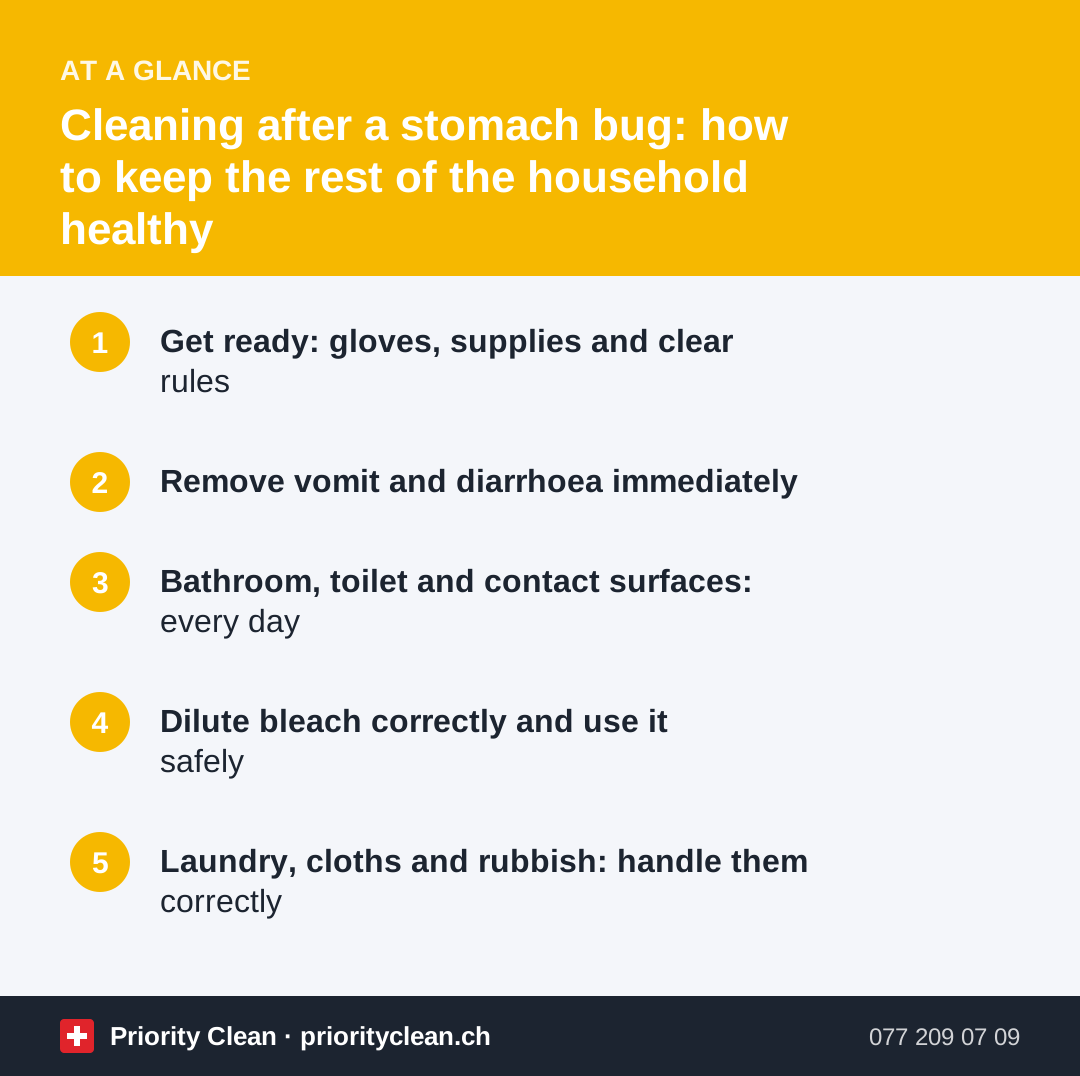
1. Get ready: gloves, supplies and clear rules
- Keep disposable gloves, kitchen roll, rubbish bags and cloths ready – cloths you will wash hot or throw away after use.
- Use a separate bucket and cloths for the bathroom only.
- If you have a second toilet, only the person who is ill uses it. Otherwise, clean the toilet after every use.
- Everyone has their own towel; paper towels by the washbasin are best.
- People who are ill should not prepare meals – the FOPH recommends this too.
- If possible, someone who is healthy does the cleaning.
2. Remove vomit and diarrhoea immediately
If there is an accident on the toilet rim, on the floor or in bed, proceed like this:
- Open the window, keep other people and pets away, put on gloves.
- Pick up the worst with kitchen roll or a card, working from the outside in, without smearing.
- Put everything straight into a bag, tie it and put it out with the household rubbish.
- Clean the spot with water and a cleaning product, then disinfect it as described in step 4.
- Take off the gloves, throw them away and wash your hands thoroughly with soap.
Don't vacuum up fresh residue: the airflow can stir up particles. How to treat carpets, sofas and mattresses is explained in our guide on vomit on carpet, sofa or mattress.
3. Bathroom, toilet and contact surfaces: every day
As long as someone is ill, the bathroom and toilet need cleaning once a day – and every time there has been an accident.
- Toilet: close the lid before flushing. Clean the seat, lid, rim, flush button and the floor around the bowl with cloths used only for this. For hinges and edges, see how to clean a toilet seat.
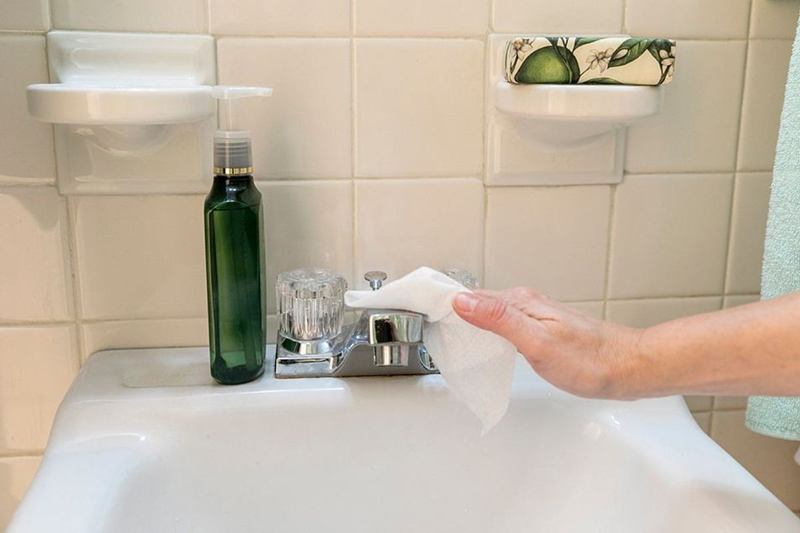
- Washbasin and taps: wipe the tap, soap dispenser, shelf and the tiles around the basin.
- Contact surfaces: door handles, light switches, banisters, fridge handle, phone and remote control. Wipe electronics only with a damp cloth, never a wet one.
Always work from clean to dirty: from the washbasin to the taps, with the toilet last. That way you won't carry the virus into the rest of the flat.
4. Dilute bleach correctly and use it safely
After cleaning, the FOPH recommends disinfecting objects and surfaces that have been in contact with stool or vomit, for example with bleach (Javel water) diluted to 0.1 %. As an example, it gives 2½ dl of household bleach with 2.5 % active ingredient in 6 litres of water. Check the concentration on the label: if it is higher, you need less; if in doubt, follow the instructions for use.
- Clean first, then disinfect: bleach hardly works on a dirty surface.
- Mix it fresh: make up a new solution every day, in a labelled bucket.
- Suitable surfaces: toilet ceramics, tiles, plastic and other hard, light-coloured surfaces. Bleach discolours fabrics, wood and coloured surfaces; wipe metal parts with clean water afterwards.
- Alternatives: for delicate surfaces, ask at the pharmacy or chemist's for a product whose packaging says it works against norovirus.
Other dangerous combinations are covered in our guide on mixing cleaning products.
5. Laundry, cloths and rubbish: handle them correctly
- The patient's laundry: collect bed linen, towels, pyjamas and clothes separately, don't shake them out, and wash them at 60 °C or more with a universal detergent if the care label allows. Remove the worst with kitchen roll first, then dry everything completely in the tumble dryer or on the line.
- Shared laundry room: carry the laundry down in a closed bag, wash your hands after loading the machine and wipe the door handle and buttons.
- Cloths and microfibre: wash them hot after use in the bathroom, or use disposable cloths.
- Rubbish: gloves, kitchen roll and nappies go in a closed bag with the household rubbish.
Keep up the daily cleaning for a few days after the symptoms have gone, then finish with a thorough clean of the bathroom, kitchen and contact surfaces.
Common mistakes
- Disinfecting instead of cleaning: without cleaning first, no disinfectant works reliably.
- Hand gel instead of soap: the FOPH stresses thorough handwashing with soap. Don't rely on hand sanitiser alone.
- One cloth for everything: it carries the virus from the toilet to the kitchen.
- Neat or mixed bleach: solutions that are too strong damage materials and irritate the airways.
- Stopping too soon: stop cleaning on the first good day and you risk another round.
Frequently asked questions
How long does norovirus stay infectious on surfaces?
More than twelve days, according to the FOPH. So clean contact surfaces daily while someone is ill and plan a thorough final clean at the end.
Do I need to disinfect the whole flat after a stomach bug?
No. What matters are surfaces that have been in contact with stool or vomit, plus the bathroom, toilet and frequently touched spots. Clean them first, then disinfect. Everywhere else, normal cleaning is enough.
What temperature should I wash laundry at?
Wash the patient's bed linen, towels and clothes at 60 °C or more with a universal detergent, if the care label allows. Wash delicates as hot as the label permits and let them dry completely.
How do I dilute bleach correctly?
The FOPH gives the example of 2½ dl of household bleach with 2.5 % active ingredient in 6 litres of water, which comes to roughly 0.1 %. Check the concentration on the label, wear gloves and never mix bleach with other cleaning products.
Thanks for your feedback! Feel free to share the guide.
Thanks! What was missing? Drop us a line – we will improve the guide. WhatsApp