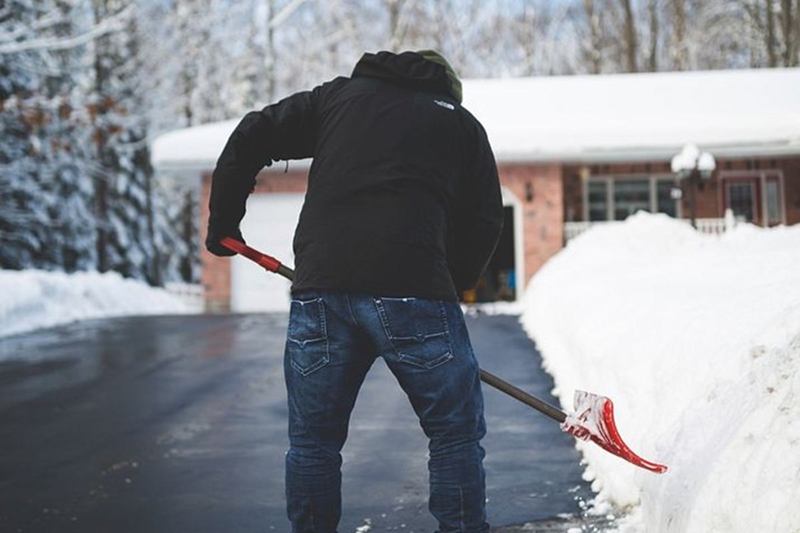
It snowed overnight, the path to the front door is white and the outside steps are glazed with ice. Who picks up the shovel? The question of snow clearing – tenant or landlord? sparks debate in many apartment buildings every winter, yet the answer is usually quick to find once you know where to look.
This guide explains the general principles in Switzerland: the lease and house rules, the owner's liability, and the right way to clear and grit. It is not legal advice – what counts is your lease, the house rules and the regulations of your commune.
Snow clearing: the tenant's job or the landlord's?
The starting point is the owner. According to the legal service of the Swiss Council for Accident Prevention (BFU), owners have a duty to maintain the access to their buildings. If someone slips on an icy step, for example, they can be held liable as the owner of the structure under Art. 58 of the Swiss Code of Obligations (rules for winter maintenance of house access). This covers the area in front of the entrance, private footpaths and driveways – and snow on the roof.
The owner can delegate the work: to a caretaker, to a company or, by contract, to the tenants. Towards third parties, however, the owner generally remains responsible and must make sure the clearing actually gets done. How liability is shared in a specific case is a legal question.
| Situation | Who clears the snow? |
|---|---|
| Apartment building with a caretaker | The caretaker or a company hired by the owner |
| Lease or house rules oblige the tenants | The tenants, for example on a rota |
| Rented detached house | Whatever the lease says; without a rule, the landlord |
| Condominium ownership (Stockwerkeigentum) | The owners' community organises it, the owners pay |
| Public roads and pavements | Public winter service; your commune says whether adjoining owners must help |
1. Check your lease and the house rules
Whether you have to clear snow as a tenant is set out in your lease, its annexes or the house rules. Note: according to the Swiss German tenants' association (Mieterinnen- und Mieterverband), house rules are only binding if they were made part of the lease (tips on neighbours and house rules). For stairwell cleaning, the association states that tenants only have to clean if the lease says so. The starting point for snow clearing is similar: without an agreement, it is the landlord's job.
Look for terms such as "winter service", "snow clearing", "outdoor maintenance" or "caretaking". If there is an obligation, it should also be clear which areas it covers and who provides the shovel and salt. If anything is unclear, ask the property management – ideally before the first snowfall.
2. What needs clearing – and when
The BFU stresses that the duty applies within reasonable limits: what is technically possible, during the usual hours of pedestrian traffic rather than around the clock, and at a proportionate cost. In return, everyone using the path must take a minimum of care. Where elderly or disabled people can be expected, special measures are needed.
These areas come first:
- the building entrance and outside steps
- the path from the pavement to the front door
- access to the letterboxes, rubbish containers and bike room
- the private driveway to the garage or underground car park
Clear the snow in the morning before the first residents leave for work, and several times a day if it keeps snowing. Forecast freezing rain is especially tricky: according to the BFU, claims succeed when reasonable measures were omitted despite a recognisable danger and the injured person was not at fault.
3. Clear it properly: push first, then grit
- Start early: fresh, loose snow is much easier to push than trampled snow.
- Work in strips and pile the snow at the edge of the property – not on the pavement, the road, the neighbour's land or fire hydrants.
- Clear the outside steps one by one and free the step edges.
- Keep gutters and drains clear so meltwater can run off instead of refreezing.
- Only then spread salt or grit in a targeted way where it stays slippery.
Snow clearing is physical work. Lift small loads using your legs, wear non-slip shoes and take breaks. If your health is fragile, it is better to get help.
4. Use salt and grit sparingly
- Road salt works against black ice but harms plants along the path, can attack natural stone and concrete, and irritates dogs' paws. Use it sparingly and only where it is really needed, such as on steps and ramps.
- Grit (fine chippings) makes the ground less slippery straight away, but has to be swept up in spring and scratches floors when it is carried indoors.
Ask your commune whether there are recommendations or rules for gritting on private ground. How to deal with wet floors, grit and salt marks indoors is explained in our guide on slippery stairs in winter.
5. Get organised: rota, holidays and stand-ins
If snow clearing is the tenants' job, clear arrangements are essential. A rota on the noticeboard shows who is on duty and when. Anyone going on holiday or falling ill arranges a swap. Elderly neighbours can often be relieved by the rest of the building.
In condominium ownership, the community decides whether the caretaking service or a company does the clearing. According to the homeowners' association HEV Schweiz on condominium ownership, the owners share maintenance and running costs, such as caretaking, in proportion to their shares.
Common mistakes when clearing snow
- Assuming the caretaker will come anyway: clarify in advance who is responsible.
- Pushing snow onto the pavement or road: it gets in other people's way; your commune decides what is allowed.
- Salting fresh snow instead of clearing it first: it turns to slush that freezes again.
- Burying the gutters: meltwater freezes into sheets of ice.
- Leaving grit lying around: it gets carried into the stairwell and scratches the floors.
Who has to clean inside the building is covered in our guide Stairwell cleaning in Switzerland: who is responsible?
Frequently asked questions
Do tenants have to clear snow in Switzerland?
Only if the lease, or house rules that form part of the lease, say so. Without such an agreement, snow clearing is the owner's job, usually handed to a caretaker or a company.
Who is liable if someone slips in front of the building?
As a rule the owner, who is responsible for maintaining the access as the owner of the structure under Art. 58 of the Code of Obligations. In each case the circumstances matter, including how careful the person who fell was. For a specific case, get legal advice.
By what time must the snow be cleared in the morning?
There is no fixed time that applies to everyone. According to the BFU, clearing must be done during the usual hours of foot traffic, not around the clock. House rules or the commune may set specific times.
Salt or grit – which is better?
Grit makes flat surfaces less slippery straight away and spares plants, but has to be swept up afterwards. Salt helps against black ice on steps and ramps but should be used sparingly. Ask your commune whether any rules apply.
Thanks for your feedback! Feel free to share the guide.
Thanks! What was missing? Drop us a line – we will improve the guide. WhatsApp