As soon as March turns milder, the first green shoots appear between garden slabs, block paving and on the driveway. When it comes to weeds in paving, many people immediately think of a weedkiller from the DIY store. On paths, squares and patios, however, it is banned in Switzerland – for private individuals too.
Fortunately, there are effective alternatives. This guide shows five legal methods, explains why vinegar and salt are no solution either, and who is responsible for the outdoor areas of a rented building.
Why weeds love the joints in paving
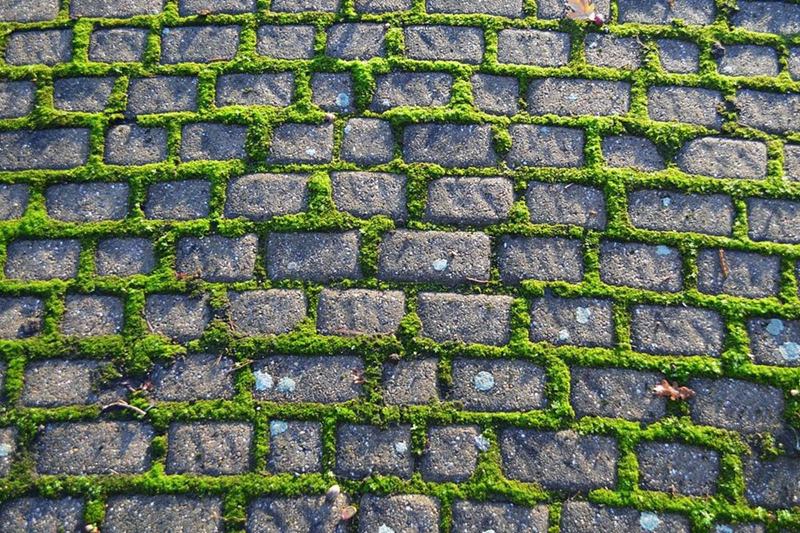
The wind carries seeds into every crack. Dust, leaves and soil collect in the joints and gradually turn into humus that stays damp for a long time. Green growth spreads fastest in shady, little-used corners and wherever a pressure washer has blasted the sand out of the joints. Dandelions and plantains grow long taproots, while moss and grasses spread out in mats.
The earlier in the year you start, the less work you will have: young plants come out easily and have not yet set seed.
What is banned – even for private individuals
The Chemical Risk Reduction Ordinance (ORRChem) bans herbicides and products against algae and moss on and along roads, paths and squares, on paved surfaces, patios and roofs, including a 50-centimetre green strip alongside these areas. For herbicides the ban has applied since 2001, and it expressly covers private individuals. The reason: rain washes residues into rivers and lakes.
Household remedies are no loophole either. Vinegar or salt water spread against weeds are weedkillers too. Salt also damages the soil and plants along the edges, and vinegar attacks concrete, natural stone and jointing mortar. On top of that, in a separate sewer system, rainwater from roads, squares and patios flows untreated into rivers and streams. Whatever ends up on your forecourt can go straight into a watercourse.
| Method | Works against | Effort | Take care |
|---|---|---|---|
| Joint scraper, patio knife | Plants with roots, moss | Medium | Top up the sand afterwards |
| Joint brush | Seedlings, moss, grasses | Low to medium | Wear safety glasses |
| Boiling water | Young plants | Low | Risk of scalding |
| Flame weeding | Young plants | Low | Risk of fire |
| Jointing sand | New seedlings | Once, then top up | Only brush in dry |
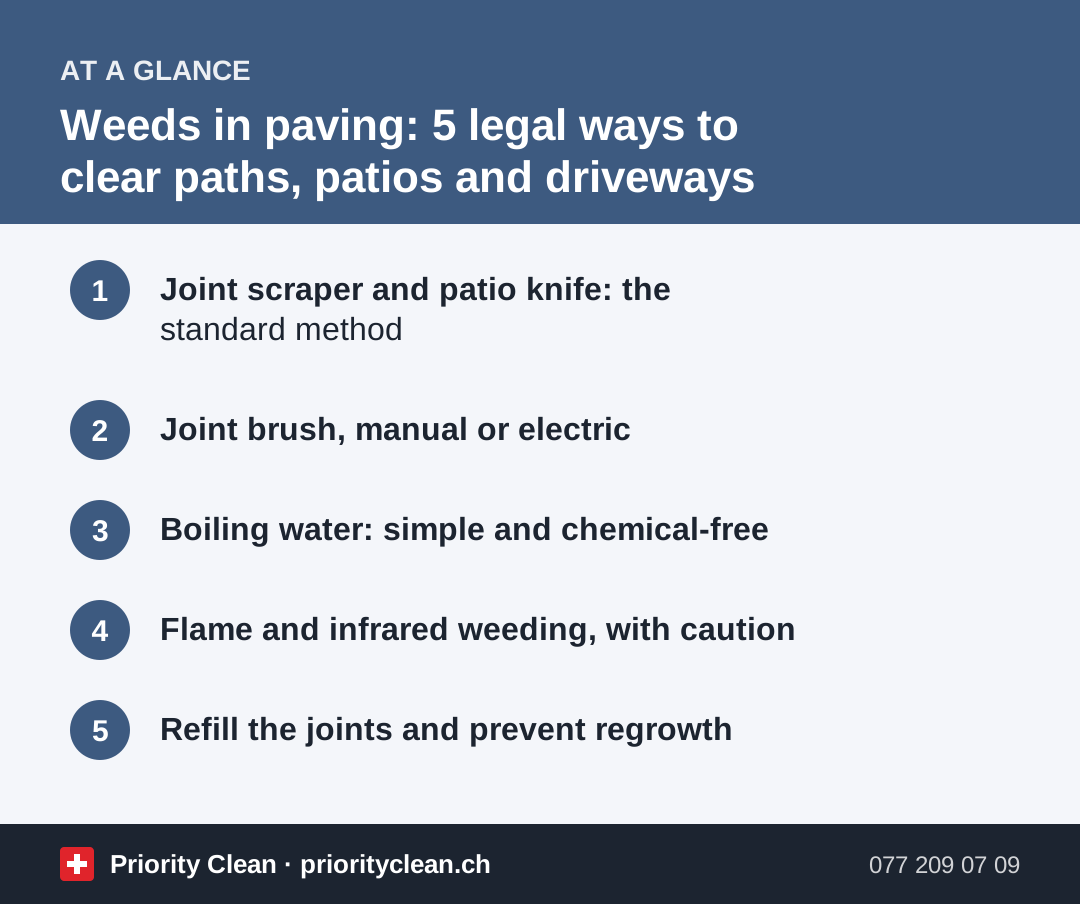
1. Joint scraper and patio knife: the standard method
A joint scraper pulls moss, grasses and seedlings out of the joint together with the upper roots. For dandelions and other plants with a taproot, use a narrow patio knife or a weed puller to lift out the root as completely as possible. If it stays in the ground, the plant grows back.
Then sweep up everything you have scraped out and put it in the green waste or on the compost – plants that have gone to seed are better off in the general waste.
2. Joint brush, manual or electric
For larger areas of paving, a joint brush is more practical. Manual brushes with steel bristles clean even narrow joints, while electric models save effort. On soft stone and delicate concrete, use nylon bristles instead so the surface doesn't get scratched.
Brushing sends sand, grit and sometimes bits of bristle flying. For gardening work, the Swiss Council for Accident Prevention (BFU) recommends safety glasses, gloves and closed shoes with good tread, and using electrical tools outdoors only on a socket protected by a residual current device. Unplug the tool during breaks.
3. Boiling water: simple and chemical-free
Boiling water bursts the cells of young plants, and the leaves wilt within hours. The water from cooking potatoes or pasta works well – but only if it is unsalted. Pour it slowly and precisely into the joints, and wear closed shoes so you don't scald yourself.
Deep-rooted weeds often grow back, so the treatment works best when repeated and on young plants. Don't add anything to the water: even biodegradable cleaning products harm rivers and lakes if they reach a street drain without being treated.
4. Flame and infrared weeding, with caution
Gas flame weeders and electric hot-air or infrared devices work on the same principle as boiling water: a heat shock of a few seconds is enough, and the plant doesn't need to be charred. After a few days the green dies off. For stubborn weeds, repeat the treatment several times a season.
5. Refill the joints and prevent regrowth
Where you have removed weeds, sand is usually missing. Brush dry jointing sand into the cleaned joints, water lightly and top up until they are full. So-called weed-inhibiting jointing sand makes it harder for seeds to germinate. If you want to close the joints permanently, ask a specialist retailer about jointing mortar – although sealed joints let less rainwater soak away.
Prevention is half the job: sweep paths and patios regularly so leaves and soil don't collect in the joints, and never aim a pressure washer straight into the joints of your paving. Our guide How to clean patio slabs shows how to clean them gently. For slippery green films, see Remove green algae from paving.
Common mistakes
- "Just a little" weedkiller: on paths, squares and patios, any amount is banned.
- Pouring out vinegar or salt: harms the soil, rivers and the paving.
- Aiming a pressure washer into the joints: it blasts out the sand and makes room for new weeds.
- Flame weeding in a dry spell: hedges and leaves catch fire quickly.
- Starting too late: once weeds have set seed, next year means double the work.
Frequently asked questions
Is weedkiller allowed on garden paving?
No. Herbicides must not be used on or along paths, squares, patios and other paved surfaces, not even by private individuals. Mechanical and thermal methods are allowed: joint scrapers, brushes, boiling water or flame weeding.
Can I use vinegar or salt against weeds?
No, we strongly advise against it. Spread against weeds, vinegar and salt act as a herbicide, get into the soil and water with the rain, and attack paving and joints.
What keeps weeds out of paving in the long run?
Remove them early and regularly, sweep paths and keep the joints well filled with sand. If you want a longer-lasting fix, jointing mortar can close the joints – ask a specialist retailer for advice.
As a tenant, do I have to remove the weeds?
Only if your lease or the house rules say so. In an apartment building, the caretaker usually takes care of it on behalf of the property management. Your contract documents always take precedence.
Thanks for your feedback! Feel free to share the guide.
Thanks! What was missing? Drop us a line – we will improve the guide. WhatsApp