After winter it is plain to see: green streaks below the window sills, a dark film on the north side, splash marks along the base. Many people reach straight for a pressure washer or an algae remover – and both can do more harm than good. If you want to clean a facade without damaging render and paint or polluting rivers and lakes, what you need most is patience, low pressure and clear limits.
This guide shows what owners can do themselves, what is not allowed and when a specialist firm is the better choice.
Why facades turn green
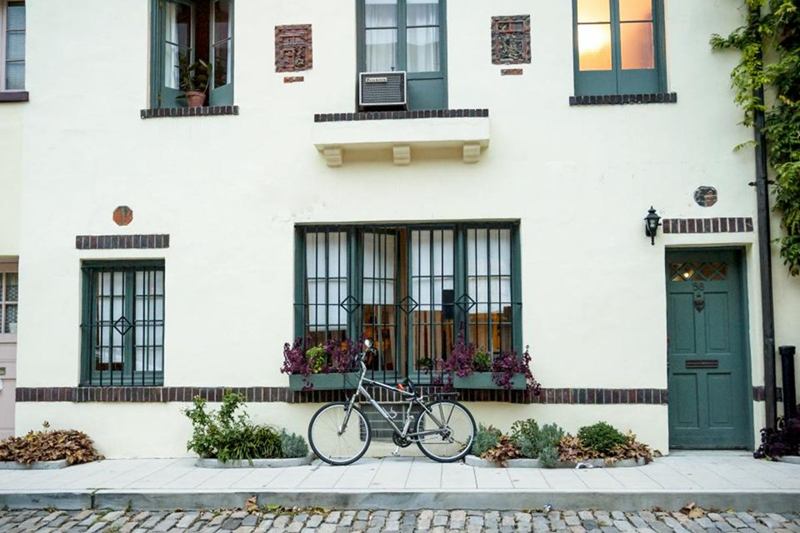
Algae and fungi grow wherever a surface stays damp for a long time. Typical spots are north- and west-facing walls, which get little sun and a lot of rain, areas shaded by trees and hedges, and patches below dripping window sills or leaking gutters.
Rendered external wall insulation is particularly prone to it. The thin layer of render on top of the insulation cools down sharply on clear nights, so condensation forms and dries only slowly in the morning. The growth is mostly a cosmetic problem. But if it stays for years, it keeps the surface damp and can wear down paint and render over time.
| Type of facade | Suitable cleaning | Take care |
|---|---|---|
| Rendered external wall insulation | Water and a soft brush, large areas by a specialist | No hard jet – the render is thin |
| Mineral or synthetic render, painted | Water and a soft brush | Check for cracks and flaking paint first |
| Exposed brick, clinker | Brush and water | Don't wash out the joints |
| Timber cladding | Soft brush along the grain, water | No pressure washer – the wood roughens |
| Fibre cement, metal | Soft brush, water | Follow the manufacturer's instructions |
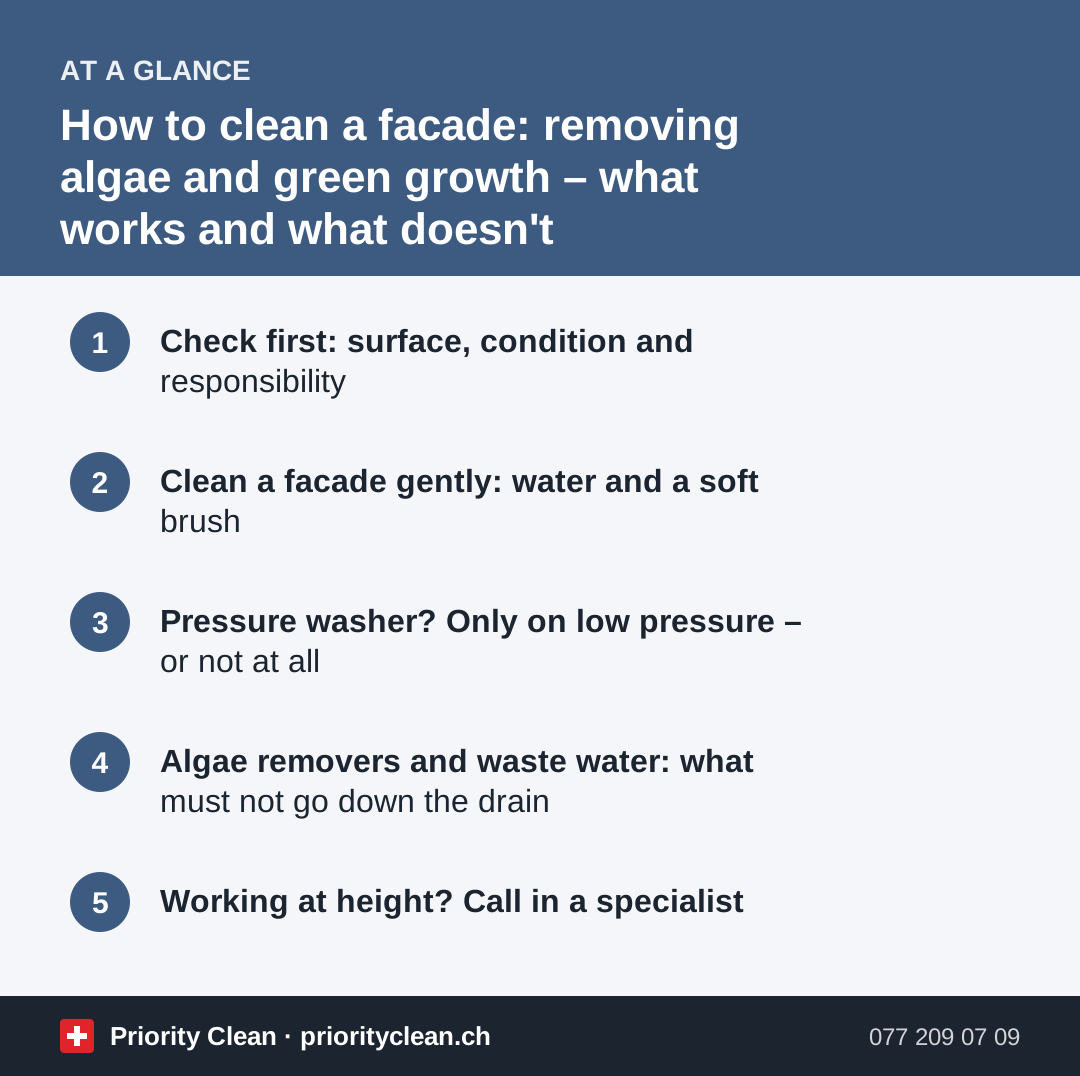
1. Check first: surface, condition and responsibility
Before the first bucket of water, work out what kind of wall you are dealing with. If the render sounds hollow when you tap it with a knuckle, there is often insulation underneath. Look for cracks, hollow patches and flaking paint: water gets in there during washing, and such damage should go to a painter or plasterer first.
2. Clean a facade gently: water and a soft brush
For light green growth within reach, the simplest approach is often enough: water and a soft brush on a telescopic pole.
- Close the windows, raise the blinds and move plants, bikes and furniture away from the wall.
- Wet the surface with a garden hose, without pressure.
- Work section by section from top to bottom with the soft brush.
- Rinse with a little water and check that the growth has come off.
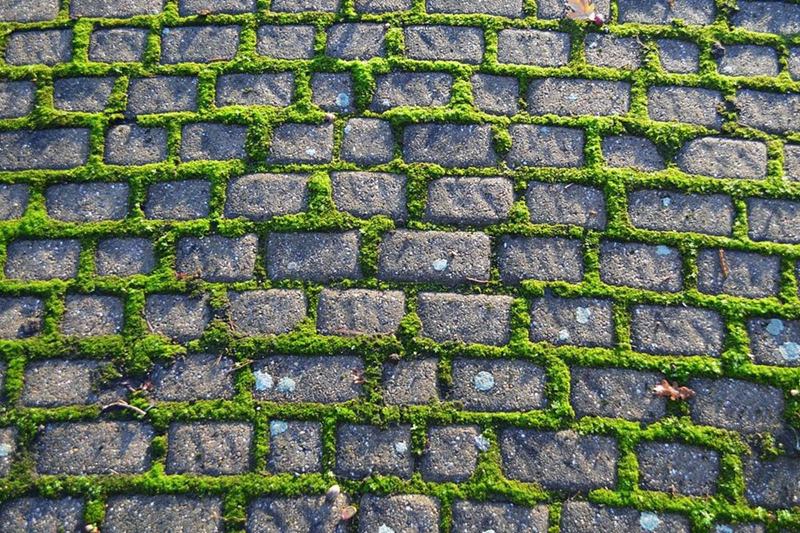
Skip cleaning products wherever you can. To clear green growth from the paths and seating areas at the foot of the house, see our guide Remove green algae from paving.
3. Pressure washer? Only on low pressure – or not at all
A pressure washer removes algae quickly, but a hard jet roughens render and paint, strips colour and forces water into cracks, joints and insulation. The roughened surface then gets dirty faster than before. Rotary nozzles should never be used on a facade.
On rendered external wall insulation, avoid a hard jet altogether. Specialist firms use gentle low-pressure methods and suitable products there. If you need a machine for the patio or driveway, our guide Pressure washer: rent or buy? has tips on using it safely.
4. Algae removers and waste water: what must not go down the drain
Whatever runs down the wall ends up on paths, seating areas and in drains. In a separate sewer system, rainwater from roofs, roads and patios flows untreated into rivers and streams, and even readily biodegradable cleaning products harm the water there. So collect any wash water that contains detergent and pour it into an indoor drain, such as a utility sink – never into the drain on the forecourt or into a downpipe.
Under the Chemical Risk Reduction Ordinance, products against algae and moss must not be used on paths, squares, patios and roofs or in gutters – exactly where the water from the wall ends up. The ban also applies to private individuals. Leave biocidal facade treatments to specialist firms that protect the surroundings and collect the waste water. Bleach is no solution either: it harms plants and paint and must never come into contact with acidic cleaners.
5. Working at height? Call in a specialist
Only clean what you can reach from the ground or from a secure step ladder. The Swiss Council for Accident Prevention (BFU) recommends step ladders with deep, non-slip treads, non-slip feet and a lock that stops them folding up.
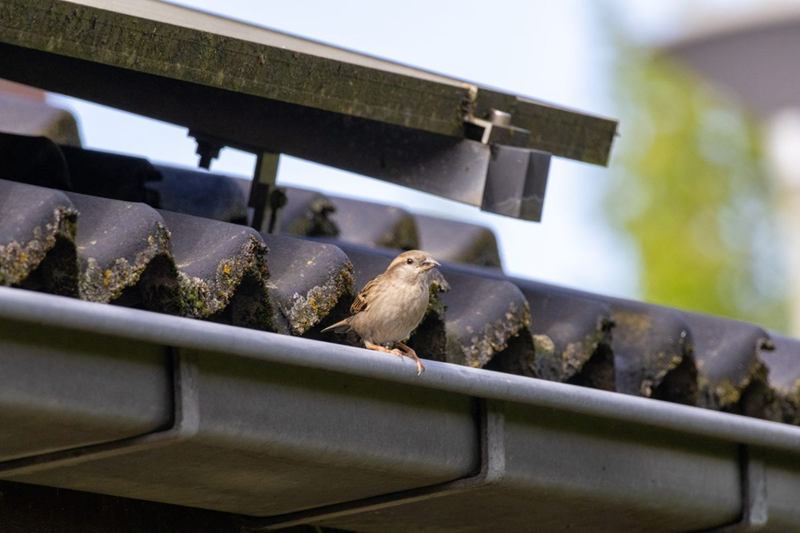
For large areas, insulated facades and anything above ground-floor level, get quotes from painters or specialist facade cleaners. Ask about the method, how windows and plants are protected and how the waste water is collected. To stop the growth coming straight back, prevention pays off: keep hedges and shrubs at a distance, have leaking downpipes repaired and check the gutters regularly – see our guide How to clean gutters.
Common mistakes
- Pressure washing at close range: damages render, paint and insulation.
- Applying algae removers or bleach yourself: harms plants and water and attacks the paint.
- Letting dirty water run into the drain: it reaches rivers without treatment.
- Working on a wobbly ladder: wet surfaces increase the risk of falling.
- Cleaning without prevention: as long as the damp remains, the growth comes back.
Frequently asked questions
How do I remove algae from the outside walls of my house?
In easy-to-reach places, with water and a soft brush, without strong pressure. For large areas, insulated facades or work at height, it is better to hire a specialist firm that works gently and collects the waste water.
Can I clean my facade with a pressure washer?
Only with great care, plenty of distance and low pressure – and preferably not at all on rendered external wall insulation. A hard jet can damage render and paint and force water into cracks.
Why is the north side of the house green?
It gets little sun and dries slowly after rain or dew. Insulated facades also cool down sharply at night, so condensation forms – ideal conditions for algae.
As a tenant, do I have to clean the facade?
As a rule, no. The facade is part of the building, and its upkeep is the owner's responsibility. Report heavy growth to the property management, ideally with a photo.
Thanks for your feedback! Feel free to share the guide.
Thanks! What was missing? Drop us a line – we will improve the guide. WhatsApp