It sits quietly in the cellar, the storage cupboard or the laundry room and supplies hot water for the shower, kitchen and basin every day: the water heater, known in Switzerland simply as the Boiler. In much of the country the water is hard, and when it is heated some of the lime settles in the tank and on the heating element. Arranging water heater descaling before the layer gets thick saves energy and extends the appliance's life.
But how often is it needed, who pays, and what can you do yourself? This guide explains the essentials for tenants and owners alike – no spanner required, because the descaling itself is a job for a professional.
Why limescale in a water heater costs energy
Hard water contains a lot of dissolved lime. When it is heated, some of it comes out of solution and settles on the heating element and the bottom of the tank. This layer acts like insulation: heat passes into the water less easily, the element has to run for longer and gets hotter itself.
EnergieSchweiz, the Swiss federal energy programme, sums up the consequences: limescale worsens heat transfer, raises energy use, reduces the storage volume and can harbour bacteria. So limescale doesn't cost you through a bill of its own, but through higher electricity or heating consumption, less hot water and a shorter life for the appliance.
| Sign | What may be behind it |
|---|---|
| Rumbling, crackling or popping when heating | Scale on the heating element or tank floor |
| Hot water runs out sooner than it used to | Usable volume reduced by limescale |
| Heating up takes longer | Poorer heat transfer |
| White flakes in the tap aerator or shower head | Lime particles from pipes or tank |
| Water no longer gets properly hot | Scale, faulty element or thermostat – professional needed |
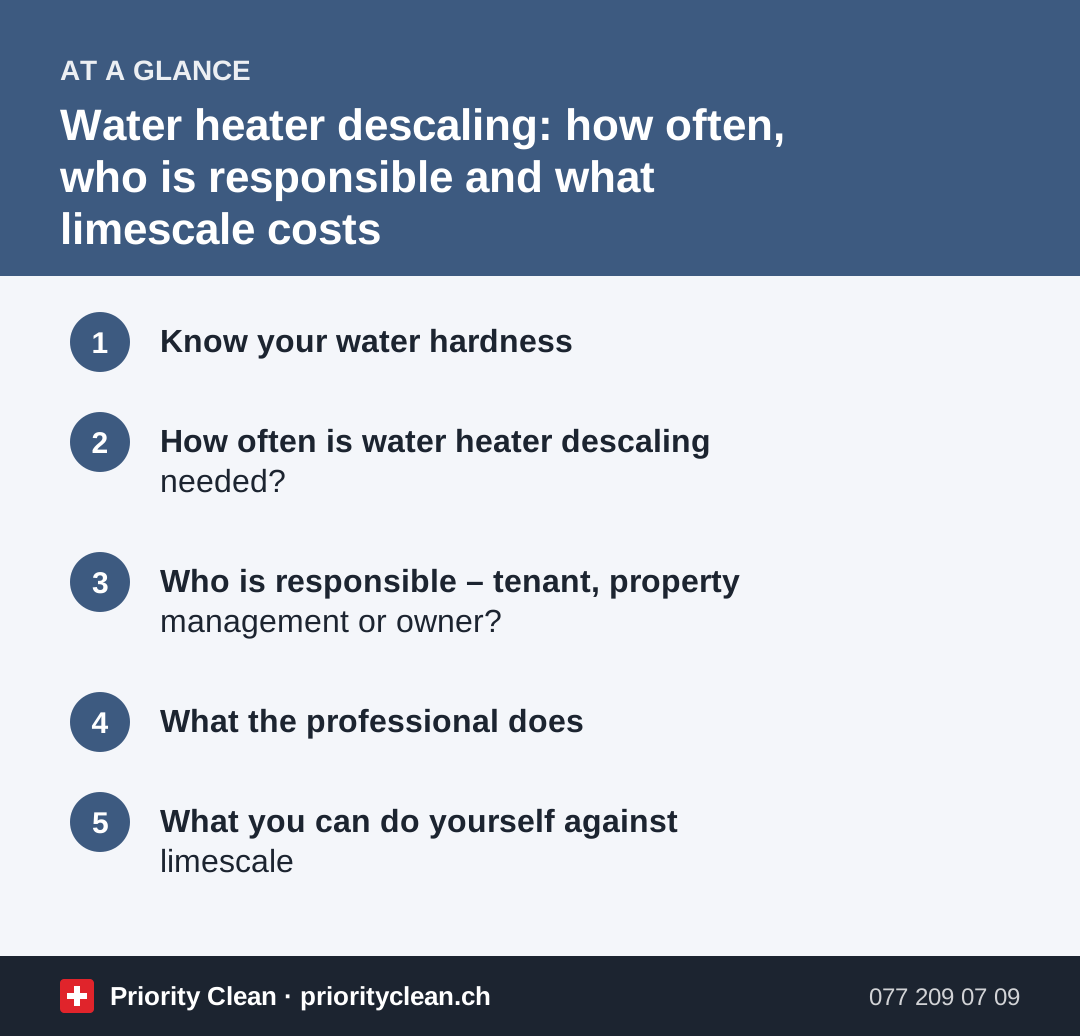
1. Know your water hardness
How quickly scale forms depends first of all on water hardness, which varies from commune to commune. On the platform of the Swiss gas and water association SVGW you can look up the water hardness by the postcode of where you live. The commune, the water supplier or the caretaker can also tell you. If the building has a water softener, the water in the house may be softer than the mains supply.
As a rule of thumb: the higher the French degrees of hardness (°fH), the more often a water heater needs descaling. The hardness ranges are explained in our guide to water hardness in Switzerland.
2. How often is water heater descaling needed?
There is no single figure that applies to every tank. Besides water hardness, other factors play a part:
- Consumption: a large household or a tank serving several flats heats more water – and builds up more scale.
- Temperature: the hotter the water is stored, the more lime comes out.
- Type: tanks with an electric element, heat-pump water heaters and cylinders connected to the heating system scale up differently.
- Water softener: it lengthens the intervals but needs servicing itself.
The professional sets the right interval, ideally after a first inspection: opening the tank shows how much scale has formed since last time. Many property management companies have service contracts with plumbing or electrical firms. If you are an owner, ask when the tank was last descaled and note the date.
3. Who is responsible – tenant, property management or owner?
In a rented flat the water heater belongs to the building. Under the Swiss Code of Obligations, tenants must remedy at their own cost defects that can be fixed by minor cleaning or repairs. Descaling a water heater, however, is not minor cleaning: it takes expertise, tools and work on the water and electricity connections. As a rule, property management therefore organises the servicing. Whether the cost is passed on through the service charges depends on your lease.
Your job as a tenant is to report the signs early – ideally in writing, with a short description: since when, what kind of noise, how long the hot water lasts. If you own a house or a flat with its own water heater, you hire the professional yourself. For a shared tank in a condominium, the community's administrator is responsible.
4. What the professional does
Descaling is skilled work. The professional disconnects the tank from the power supply, drains it, opens the flange and removes the scale mechanically. According to EnergieSchweiz, they also check the anode, seals and thermostat. The anode protects enamelled tanks against corrosion and wears away over time.
The tank is then resealed, refilled, bled and put back into operation. For you, that means a few hours without hot water and keeping access to the tank clear.
5. What you can do yourself against limescale
Even without tools you can help:
- Descale tap aerators and shower heads: they scale up quickly and are easy to unscrew. Our guides on how to descale a shower head and removing limescale from taps show you how.
- Save hot water: less heated water means less scale in the tank. EnergieSchweiz advises, among other things, washing your hands in cold water, showering instead of bathing and fitting flow limiters – in a rented flat, in agreement with property management.
- Note anything unusual: noises, hot water running out sooner or lime flakes, with the date, and report them.
The most common mistakes with water heaters
- Doing it yourself: a water heater is not a kettle. Opening and descaling it is a job for a professional.
- Waiting too long: a thick layer of scale wastes energy for years and can damage the heating element.
- Turning up the temperature "against germs": EnergieSchweiz recommends regular servicing instead.
- Not reporting problems: without a report, property management won't know about noises or missing hot water.
Frequently asked questions
How often should a water heater be descaled?
It depends on water hardness, consumption, temperature and type of appliance. With hard water it is needed more often than with soft water. The professional sets the right interval after an inspection.
Can I descale the water heater myself as a tenant?
No. Descaling takes expertise and work on the water and electricity connections. Report the signs to property management, who organise the servicing.
How can I tell if a water heater is full of limescale?
Typical signs are noises when heating, hot water running out sooner, longer heating times and lime flakes in tap aerators or shower heads.
Why does limescale in a water heater cost money?
The layer of scale slows down heat transfer. The tank needs more energy to heat the water, its usable volume shrinks and the appliance ages faster.
Thanks for your feedback! Feel free to share the guide.
Thanks! What was missing? Drop us a line – we will improve the guide. WhatsApp