After you brush your teeth, the water sits in the basin for minutes, the kitchen sink gurgles, or a musty smell rises from the plughole. Most of the time the dirt is not deep in the pipe but right under the bowl. Learning how to clean a sink trap saves you chemicals and a plumber's call-out: all you need is a bucket, gloves and about a quarter of an hour.
This guide shows step by step how to open, clean and refit the trap under your bathroom basin (known in Switzerland as the Lavabo) and kitchen sink so that it stays watertight. It also tells you honestly when a professional is the better choice.
What a sink trap does – and why it gets dirty
The trap is the curved or cup-shaped section of pipe directly below the plughole. The water that always stands in it, the water seal, stops gases from the sewer rising into your bathroom or kitchen. The downside: anything heavier than water or sticking to the walls stays right there.
In the bathroom it is mainly hair and traces of soap and toothpaste; in the kitchen, grease, coffee grounds and small food scraps. Over time a greasy film builds up that narrows the pipe and starts to smell.
| Sign | Likely cause |
|---|---|
| Water drains slowly | Hair or grease narrowing the trap |
| Gurgling as it drains | Partial blockage in the trap or further along |
| Musty or rotten-egg smell | Film in the trap, the waste fitting or the overflow |
| Water does not drain at all | Plug of debris in the trap or deeper in the pipe |
Under a bathroom basin you will often find a bottle trap with an unscrewable cup and a dip tube inside; under a kitchen sink, frequently a U-bend (tubular trap), sometimes with an extra connection for the dishwasher. Both can usually be opened without tools.
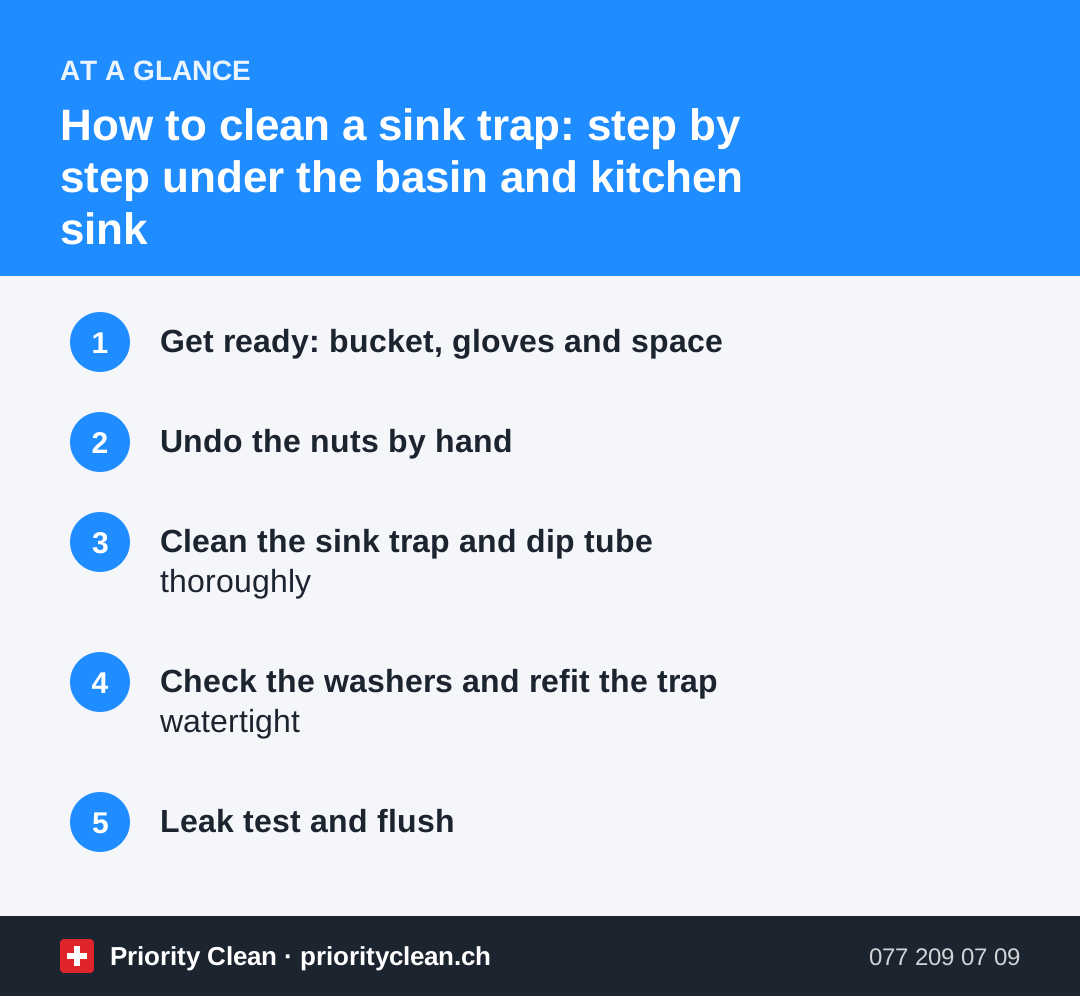
1. Get ready: bucket, gloves and space
Empty the cupboard under the basin or sink and spread some old towels on the floor. Then have ready:
- a bucket or shallow bowl that fits under the trap
- rubber gloves
- a bottle brush and an old toothbrush
- warm water with a little washing-up liquid
- a torch and some kitchen roll
Until everything is back together, the basin, sink and dishwasher are out of bounds – otherwise the water ends up in the cupboard.
2. Undo the nuts by hand
- Place the bucket directly under the trap.
- On a bottle trap, first unscrew the cup at the bottom anticlockwise. The standing water and the worst of the dirt drop into the bucket.
- Then undo the nut under the plughole and the one at the wall connection.
- On a U-bend, undo both nuts and lower the bend out.
- Put any washers that fall out to one side straight away – they are easily lost in the bucket.
Work by hand only: a pipe wrench can crush plastic nuts or damage the threads. If a nut is stuck, a dry cloth gives you a better grip. Chrome designer traps sometimes need a tool – protect the finish with a cloth if so.
3. Clean the sink trap and dip tube thoroughly
Put hair clumps and lumps of grease in the rubbish with some kitchen roll, or they will simply travel into the next drain. Then clean the parts in warm soapy water:
- Cup or U-bend: scrub the inside with the bottle brush until you can no longer feel a greasy film.
- Dip tube: this short pipe inside a bottle trap reaches down into the water seal and is often thickly coated with hair and soap. Brush it inside and out.
- Waste fitting: lift the plug out from above, remove the hair and clean the fitting with the toothbrush.
- Wall connection: reach in with the bottle brush as far as you can, without forcing it.
Pour the dirty water from the bucket down the toilet – never into a street drain, a gully in the courtyard or the garden. Where rainwater is drained separately from sewage, run-off from roads and roofs flows untreated into rivers and streams, and every cleaning product harms the water there, even readily biodegradable ones. The cantonal energy and environment offices explain this on their page what goes down a street drain can end up straight in the river.
4. Check the washers and refit the trap watertight
Flat and cone washers should be flexible, free of cracks and not squashed flat.
- Wipe the washers and check them for cracks, distortion and hardening.
- Replace damaged washers – take the old one to the DIY store or a plumbing supplier so you get the right size.
- Put each washer back in the position it was in before; the photo helps here.
- Line the pipes up straight and screw the nuts on by hand without cross-threading them.
- Tighten firmly by hand and don't finish off with a tool, or you will squash the washer.
5. Leak test and flush
- Run the tap gently at first, then at full flow.
- Fill the basin a third full and pull the plug – the rush of water shows whether everything is watertight.
- Hold a dry sheet of kitchen roll under the joints: every drip shows up immediately.
- If it drips, tighten the nut concerned slightly or reseat the washer.
- Check again the next day, then put everything back in the cupboard.
If the water still drains poorly afterwards, the blockage is further along the pipe. Our guide to a blocked drain explains what to do next.
Common mistakes
- Reaching for the pipe wrench: plastic nuts crack or the thread gets damaged.
- Overtightening: a squashed washer leaks even more.
- Forgetting a washer or fitting it the wrong way round: the trap will leak.
- Pouring in drain unblocker, then opening the trap: there is a risk of chemical burns.
- Emptying dirty water into a street drain: it reaches streams and rivers untreated.
If the smell persists even with a clean trap, our guide to a smelly drain covers the other causes.
Frequently asked questions
How often should you clean a sink trap?
At the latest when the water drains more slowly or a smell rises from the plughole. For a busy kitchen sink or a family bathroom, a check every few months is worthwhile. Basins that are rarely used mainly need a little water regularly so the trap does not dry out.
Can you remove a sink trap without tools?
Yes, most plastic traps have nuts that can be undone by hand. Only chrome-plated metal traps sometimes need a tool, used with care.
Why does the trap leak after cleaning?
Usually a washer is crooked, missing or damaged, or a nut has been screwed on at an angle. Open the joint concerned, seat the washer straight and tighten by hand; replace any hardened washers.
Will bicarbonate of soda and vinegar do instead?
Bicarbonate of soda and vinegar loosen light deposits but do little against clumps of hair or solid grease. If the water drains noticeably more slowly, cleaning the trap by hand is more effective.
Thanks for your feedback! Feel free to share the guide.
Thanks! What was missing? Drop us a line – we will improve the guide. WhatsApp