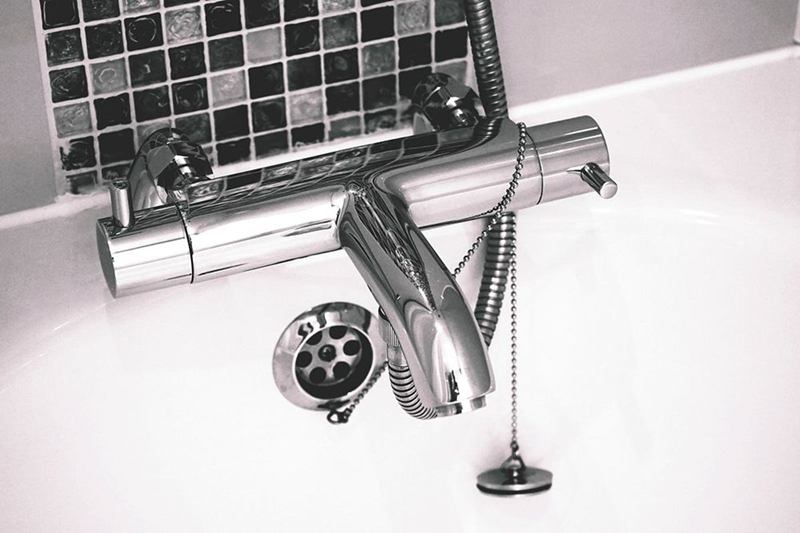
The washbasin tap, the shower riser rail, the towel rail or the frame of a cantilever chair: chrome shines like a mirror – which is exactly why it shows every drop of water, every fingerprint and every ring of limescale. When it comes to how to clean chrome, gentle products are the key. The shiny layer is extremely thin, and scratches cannot be polished away.
In winter, surface rust often joins in: on the bike that has been ridden through slush and road salt, or on chair legs that get wet every time the floor is mopped. These five tips keep the finish bright in the bathroom, kitchen and living room.
Why chrome turns dull and spotty
Chrome-plated items usually have a core of brass, steel, die-cast zinc or plastic, covered by a very thin layer of chromium. The metal itself is hard and does not rust, but the layer is so fine that harsh products damage it – until the base material shows through.
Limescale is the most common reason for a dull finish: water evaporates and the minerals stay behind as white rings. The platform of the Swiss Gas and Water Association (SVGW) lets you look up your water hardness by postcode. The harder your water, the more it pays to dry surfaces after use.
| Problem | Typical spot | What helps |
|---|---|---|
| Water spots | Taps, riser rail | Buff dry with microfibre |
| White limescale rings | Tap base, lever, shower head | Diluted citric acid, briefly |
| Grey film | Shower, bath | Soapy water, then dry |
| Fingerprints | Handles, tubular steel furniture, lamps | Damp microfibre cloth |
| Brown rust dots | Bike, chair legs, older towel rails | Aluminium foil and water |
Soap and shower gel residue combine with limescale to form a grey film. Surface rust, on the other hand, only appears on chrome-plated steel: moisture or salt reaches the iron underneath through tiny pores and scratches.
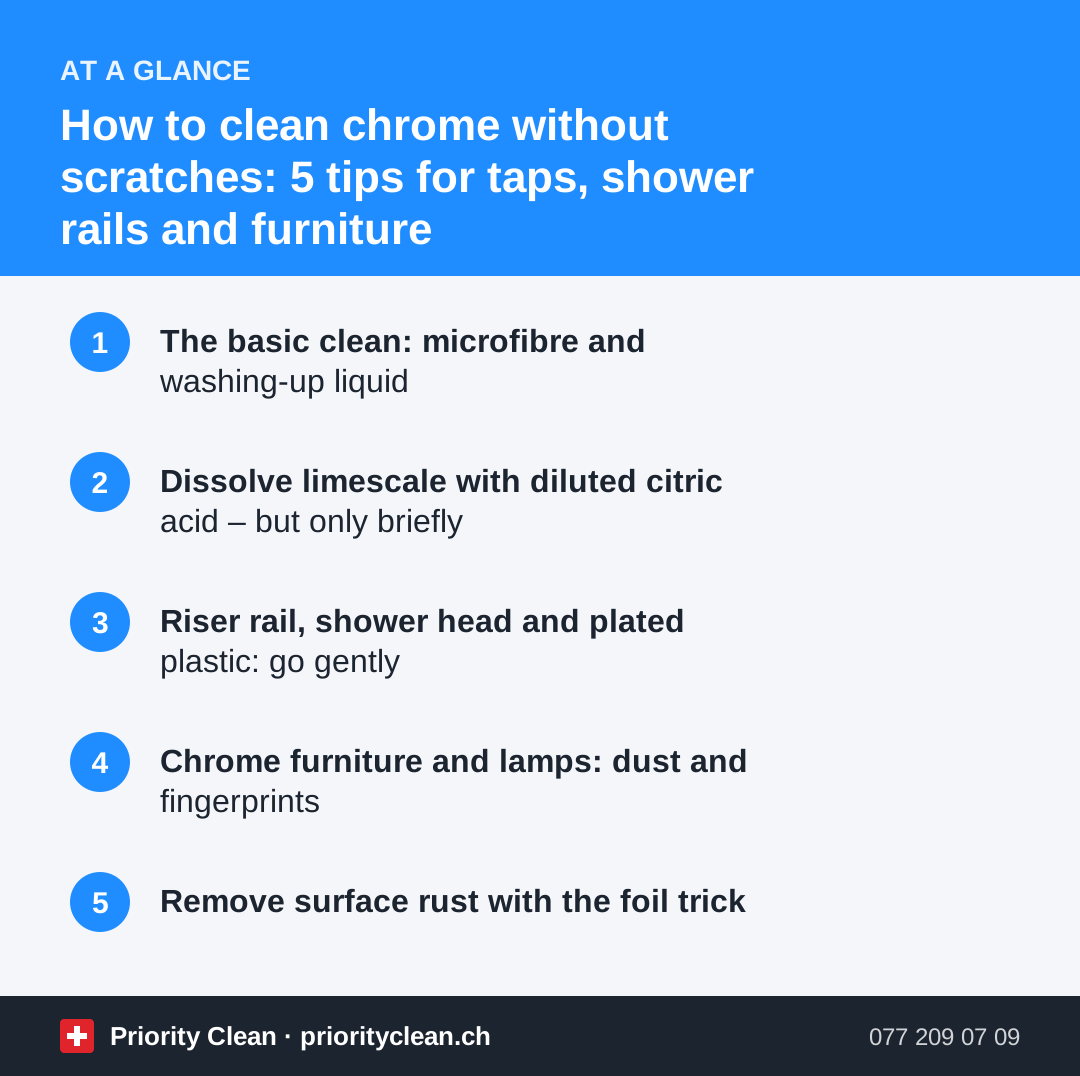
1. The basic clean: microfibre and washing-up liquid
Chrome hardly needs special products. The Swiss consumer protection foundation (Stiftung für Konsumentenschutz) recommends relying on a few household remedies such as citric acid and on the right cleaning tools rather than lots of special cleaners. For chrome, that means washing-up liquid, diluted citric acid and two good microfibre cloths.
- Mix warm water with a drop of washing-up liquid.
- Wipe with a damp microfibre cloth or a soft sponge.
- Clean the gaps around levers and cover plates with a soft toothbrush.
- Wipe over with clean water.
- Dry and buff with a second, dry microfibre cloth.
2. Dissolve limescale with diluted citric acid – but only briefly
White rings at the base of the tap or on the shower head dissolve with a mild acid. The dose is what matters: weak and short is better than strong and long.
- Dissolve one to two tablespoons of citric acid powder in half a litre of lukewarm water.
- Apply it to the limescale with a cloth or a spray bottle.
- Leave it for just a few minutes, then wipe with a soft sponge.
- Rinse thoroughly with clean water and buff dry.
Household vinegar works in a similar way but smells stronger. Undiluted vinegar concentrate is too harsh for taps. For thick crusts and a clogged aerator, our guide on how to remove limescale from taps explains the wrap trick.
3. Riser rail, shower head and plated plastic: go gently
In the shower, many parts that look like metal are actually chrome-plated plastic: shower heads, handles, drain covers or soap dishes. They are light and feel less cold to the touch. Their plating is particularly delicate.
- Wipe the riser rail once a week with soapy water from top to bottom, including the slider and brackets.
- Clean plastic parts only with washing-up liquid and a brief citric acid treatment – never scrub.
- Limescale on glass screens and tiles needs different methods: see our guide on how to remove limescale in the shower.
4. Chrome furniture and lamps: dust and fingerprints
Cantilever chairs, bar stools, table frames and lamps with a chrome finish mainly need regular dusting.
- Remove dust with a dry microfibre cloth.
- Wipe off fingerprints with a barely damp cloth and a drop of washing-up liquid, then dry.
- Don't get leather or fabric parts of the furniture wet.
- Switch lamps off and let them cool down before cleaning.
- Dry chair and table legs after mopping the floor so that rust doesn't form at the bottom.
5. Remove surface rust with the foil trick
Small brown dots on chrome-plated steel – on handlebars, wheel rims or chair legs, for example – can be removed with aluminium foil. Aluminium is softer than chromium and works like a very fine polish.
- Clean the part first with soapy water and dry it.
- Scrunch a piece of aluminium foil into a ball and dip it in water.
- Rub the rust spots with light pressure until they disappear.
- Wipe off the brownish residue with a damp cloth and dry everything thoroughly.
- Protect handlebars or chair legs with a very thin layer of care wax – never the braking surfaces of rims or discs.
If the plating is flaking or blistering, the rust is underneath it, and no amount of cleaning will help. More methods are in our guide on how to remove rust, and full bike care is covered in how to clean a bike.
Common mistakes when cleaning chrome
- Scouring cream or powder: the fine scratches make the surface dull, and limescale clings even better afterwards.
- Steel wool or abrasive sponges: even against rust, they scratch the plating and create new weak spots.
- Acid too strong or left too long: this can leave marks and attack seals or coatings.
- Not drying: every drop leaves a limescale ring.
- Treating plated plastic like metal: the thin layer comes off more quickly.
Frequently asked questions
What is the best way to clean chrome?
Warm water, a drop of washing-up liquid and a soft microfibre cloth. Limescale rings come off with diluted citric acid that you leave on only briefly. Always rinse and buff dry afterwards.
Can you clean chrome with vinegar?
Yes, diluted household vinegar dissolves limescale on chrome. Leave it on only briefly, rinse thoroughly and dry. Avoid undiluted vinegar concentrate, long soaking times and contact with natural stone.
How do I get rust off chrome?
On chrome-plated steel, rub off surface rust with scrunched-up, wet aluminium foil and light pressure. Then wipe, dry and protect with a thin layer of wax. If the plating is already flaking, cleaning will no longer fix it.
Why does chrome go dull?
Usually because of limescale, soap residue or fine scratches from abrasive products. Regular cleaning and drying take care of limescale and soap. Scratches, however, cannot be polished away.
Thanks for your feedback! Feel free to share the guide.
Thanks! What was missing? Drop us a line – we will improve the guide. WhatsApp