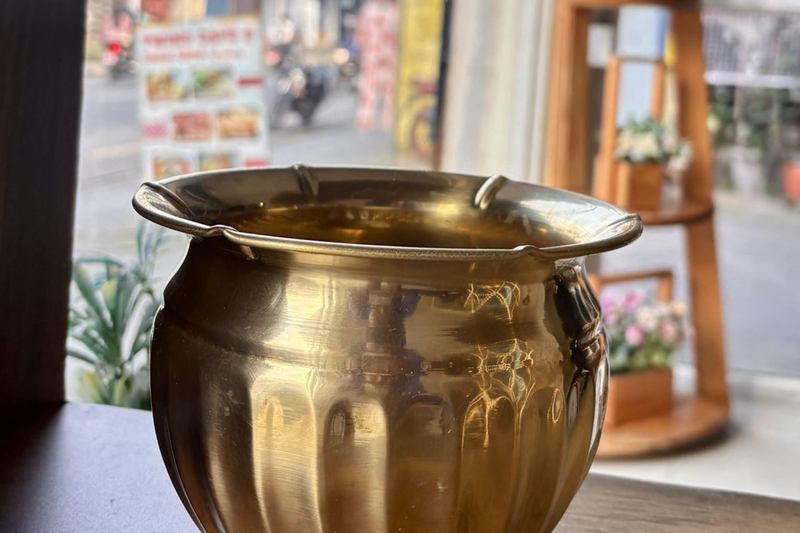
Candlesticks, door handles, lamp bases or an inherited bowl: brass has a warm golden glow – until it slowly turns dull, blotchy and dark brown. Knowing how to clean brass saves you buying a special polish: lemon, salt, vinegar and even ketchup dissolve the tarnish reliably, as long as you go about it the right way.
After the festive season, when candlesticks and Christmas decorations go back into storage, is a good moment. First, though, do a quick test: many brass items are lacquered and must be neither polished nor treated with acid.
Why brass tarnishes
Brass is an alloy of copper and zinc. Exposed to air, its surface reacts with oxygen, moisture and sulphur compounds, forming a thin oxide layer that makes the metal look dull at first, then brownish and eventually almost black. Fingerprints speed this up, because sweat contains salt and grease.
If brass stays damp for long periods – in a cellar, next to the washbasin or under a flowerpot – verdigris can form as well: a green to bluish crust that likes to settle in hollows and crevices.
| What you see | Likely cause | Suitable home remedy |
|---|---|---|
| Dull, with fingerprints | Early tarnish, skin grease | Mild soapy water |
| Brownish to dark, patchy | Established oxide layer | Lemon and salt, vinegar paste |
| Dark areas on curved parts | Tarnish in hard-to-reach spots | Ketchup |
| Green or bluish crusts | Verdigris caused by moisture | Vinegar, wearing gloves |
| Milky patches under a glossy layer | Damaged lacquer | Don't polish – ask a specialist |
Brass is a close relative of copper, so many of the tips in our guide on how to clean copper apply here too.
First: is your brass lacquered?
Door handles, lamps and modern decorative brass often have a clear protective lacquer. It stops the metal tarnishing – until it gets scratched. Treat it with acid or salt and the lacquer turns dull or peels off.
How to find out:
- Its history: if an item has shone evenly for years without ever tarnishing, it is very probably lacquered.
- The cloth test: on a hidden spot, rub with a white cotton cloth and a drop of lemon juice. If the cloth turns grey or black, the metal is bare. If it stays clean, there is probably lacquer – wipe the spot straight away.
- Dark patches under the shine: where the lacquer is damaged, the metal underneath tarnishes in blotches. These patches cannot be polished away.
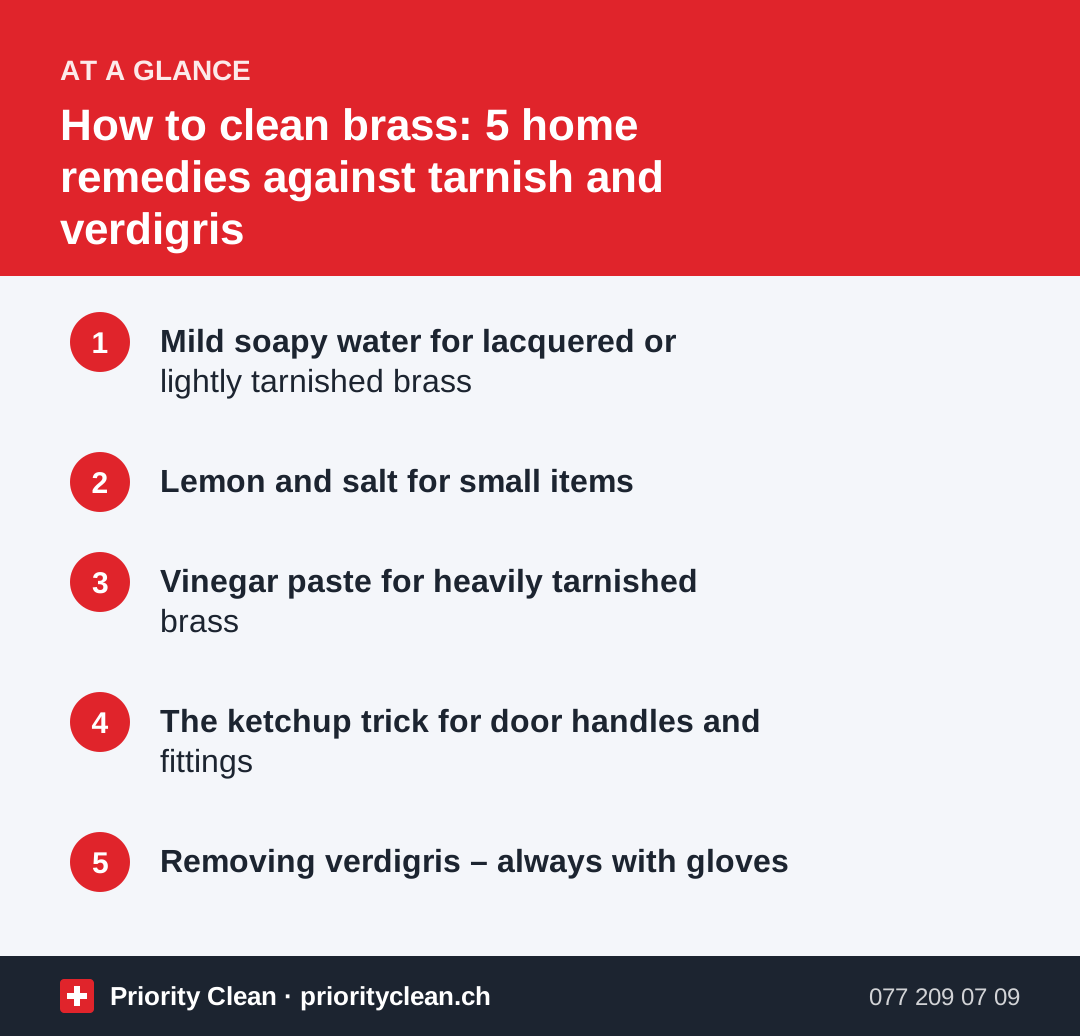
1. Mild soapy water for lacquered or lightly tarnished brass
For lacquered pieces and routine care, warm water with a drop of washing-up liquid is all you need.
- Dip a soft cloth in the soapy water and wring it out well.
- Wipe the item and clean crevices with a soft toothbrush.
- Go over it with a cloth dampened in clean water, then dry immediately.
Fingerprints and dust disappear and the lacquer stays intact. Taps with a brass or gold finish are usually coated, so follow the manufacturer's care instructions – our guide on how to remove limescale from taps explains more.
2. Lemon and salt for small items
On unlacquered brass, this is the quickest method. The lemon juice dissolves the oxide layer and the salt works as a fine abrasive. Lemon, vinegar and salt are among the simple household remedies that the Swiss consumer protection foundation (Stiftung für Konsumentenschutz) recommends instead of lots of special products.
- Cut a lemon in half and dip the cut side in fine salt.
- Rub the tarnished surface in small circles, adding more salt as needed.
- Rinse thoroughly with warm water.
- Dry immediately with a soft cotton cloth and buff.
This suits candlesticks, bowls, bells and fittings. Remove any wax first – our guide on how to remove wax from candle holders shows how to do it without scratches.
3. Vinegar paste for heavily tarnished brass
On large, dark surfaces a paste clings better than juice.
- Mix equal parts salt and flour.
- Add household vinegar until you have a spreadable paste.
- Apply a thin layer and leave it for 10–15 minutes.
- Rub off with a soft cloth, working a soft toothbrush into any recesses.
- Rinse thoroughly and buff dry at once.
Never leave acid on for hours: brass can turn blotchy or take on a pinkish tone. It is better to repeat the treatment once more.
4. The ketchup trick for door handles and fittings
Ketchup contains vinegar and fruit acids, and its thick texture lets it cling to vertical and curved surfaces – ideal for door handles, knobs and hinges.
- Spread on a thin layer, after covering the surrounding wood or door paint with masking tape.
- Leave it for about 15 minutes, a little longer for heavy tarnish.
- Wipe it off with a damp cloth, go over it with clean water and dry.
In fine engravings, however, ketchup is fiddly to get out.
5. Removing verdigris – always with gloves
Verdigris often sits in recesses and on areas that stayed damp for a long time. Treat it in a targeted way:
- Put on household gloves and work with the window open.
- Loosen crusts with a soft brush – don't sand them off dry.
- Soak a cloth in vinegar, lay it on the spot and leave it for about 10 minutes.
- Follow up with a toothbrush or the vinegar paste, rinse well and dry.
- Put cloths and paste residue in the household rubbish and wash your hands.
Only use bowls, cups or mortars affected by verdigris for food again once the crust has been completely removed. If rough, pitted areas remain, ask a specialist.
Keeping the shine: how to slow down tarnishing
- Dry every item completely right after cleaning.
- Dust regularly with a dry microfibre or cotton cloth.
- Store brass somewhere dry, not in a damp cellar or attic.
- Don't stand decorative pieces on wet surfaces or next to flowerpots.
Common mistakes when cleaning brass
- Polishing lacquered brass: the lacquer turns dull, blotchy or flakes off.
- Steel wool, scouring cream or abrasive sponges: fine scratches make the metal tarnish faster.
- Letting acid dry on: leftover lemon, vinegar or ketchup leaves new marks.
- Letting it air-dry: water spots and faster tarnishing follow.
- Putting brass in the dishwasher: harsh detergents and heat can discolour the metal and damage the lacquer.
Frequently asked questions
What is the best way to clean brass?
For unlacquered brass, the easiest options are lemon and salt, a paste of vinegar, salt and flour, or ketchup. Lacquered brass should only be wiped with mild soapy water. Either way, rinse afterwards and buff dry straight away.
How can I tell if brass is lacquered?
Lacquered brass stays evenly shiny for years and hardly tarnishes. In the test with a white cloth and a drop of lemon juice on a hidden spot, the cloth stays clean. If it turns grey, the metal is bare.
How do I remove verdigris from brass?
Wearing gloves, brush off any loose crusts, lay a vinegar-soaked cloth on the spot for a short while and follow up with a soft toothbrush. Rinse well, dry, and only use vessels for food again once no crust is visible.
Can brass go in the dishwasher?
Better not. The detergents and heat in a dishwasher can discolour brass and damage a protective lacquer. Wash it by hand and dry it immediately.
Thanks for your feedback! Feel free to share the guide.
Thanks! What was missing? Drop us a line – we will improve the guide. WhatsApp