You press the flush and, instead of draining away, the water rises alarmingly in the bowl. A blocked toilet always strikes at the worst moment – just before guests arrive or late on a Sunday. The good news: in most cases you can clear it yourself with simple tools.
Here are five methods in the right order, from the gentlest to the most effective, and an honest word on when to call a plumber or your property management instead.
Why toilets get blocked
Toilet paper is designed to break down quickly in water; almost nothing else is. Most blockages are therefore caused by things that should never go down the toilet, or by too much paper at once. Less often, the problem lies further down the pipe.
| Put it in the bin | Why |
|---|---|
| Wet wipes, even "flushable" ones | break down far more slowly than toilet paper |
| Kitchen roll, tissues, cotton pads | are tear-resistant and barely dissolve |
| Sanitary towels, tampons, nappies | swell up and block the pipe |
| Cotton buds, dental floss, hair | snag and catch more debris |
| Food waste, fat, cat litter | stick or clump together |
| Medicines | pollute wastewater – take them back to a pharmacy |
Limescale and urine scale can also narrow the outlet over time. Our guide on how to remove limescale from a toilet shows how to deal with it.
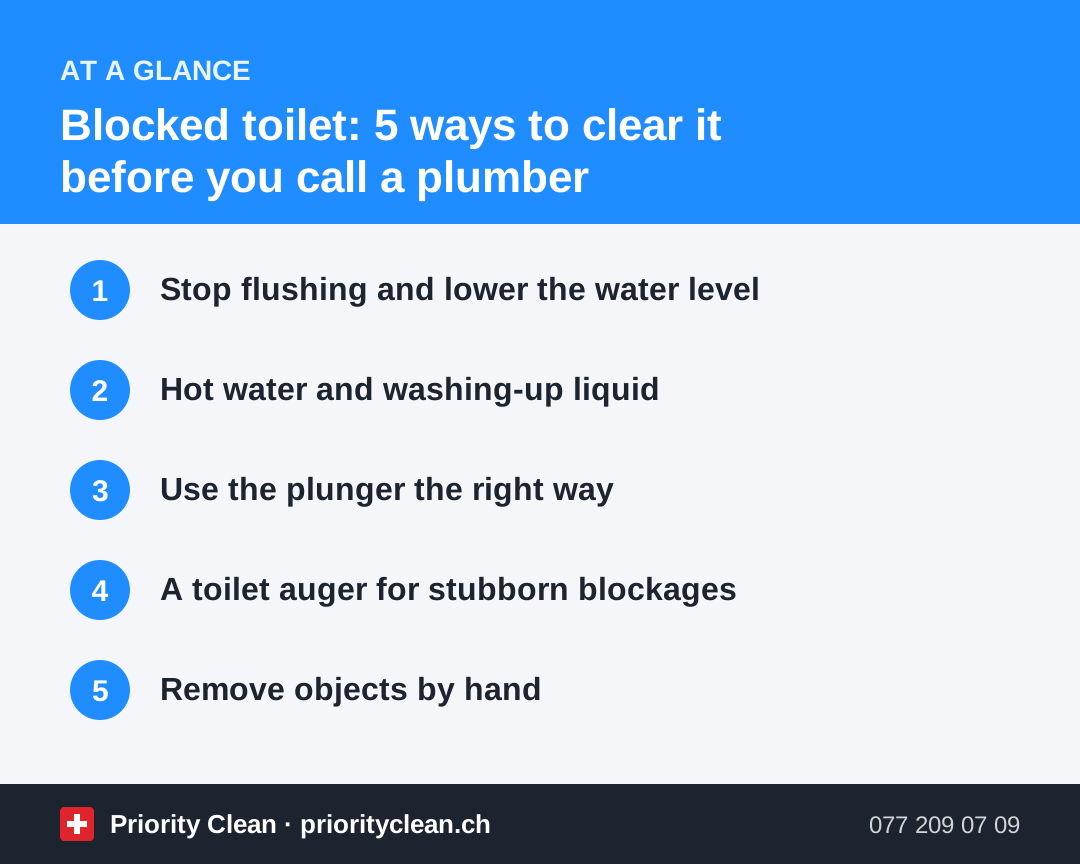
1. Stop flushing and lower the water level
The most important step is one you don't take: don't flush again. Every flush sends several litres of water into a bowl that isn't draining – until it overflows.
- Put on rubber gloves and lay old towels on the floor around the toilet.
- If the bowl is full to the brim, scoop some water into a bucket with a cup.
- To stop anyone flushing by mistake, turn off the water supply: at the isolation valve for an exposed cistern, usually behind the flush plate for a concealed cistern.
- Be patient: if the blockage is only toilet paper, it often softens on its own.
2. Hot water and washing-up liquid
For paper blockages, warmth is often enough: hot water softens the plug and washing-up liquid makes everything slippery.
- Squeeze a generous amount of washing-up liquid into the bowl.
- Fill a bucket with hot, but not boiling, water.
- Pour it in one go from a little height, without letting the bowl overflow.
- Leave it for half an hour. If the level drops, the way is clear – flush once and watch.
Never use boiling water: the sudden temperature change can crack the ceramic and damage seals and plastic pipes.
3. Use the plunger the right way
A plunger alternates pressure and suction, which clears most blockages. For toilets, choose one with an extra rubber flange that fits into the outlet; flat sink plungers don't seal properly.
- There should be enough water in the bowl to cover the rubber cup – water transmits pressure better than air.
- Insert the plunger at an angle to let air escape, then seat it firmly over the outlet.
- Push gently at first, then plunge vigorously several times, pulling up sharply.
- Lift the plunger and check whether the water drains. Repeat if necessary.
4. A toilet auger for stubborn blockages
If the plunger doesn't work, the blockage is often further back in the toilet's trap. Now it's time for a toilet auger from a DIY store: a flexible cable with a crank handle, usually with a protective sleeve so it won't scratch the ceramic.
- Feed the auger into the outlet until you feel resistance.
- Turn the handle while slowly pushing the cable forward.
- Work it back and forth until the blockage breaks up or catches on the auger.
- Pull the auger out slowly, bin whatever has wound around it and rinse with a bucket of warm water.
Don't use force. A wire coat hanger is no substitute: it scratches the glaze and can damage seals.
5. Remove objects by hand
Has a toy, toothbrush or phone fallen into the toilet? A plunger or auger would only push it further in. Put on long gloves, remove as much water as possible and retrieve the object by hand or with grabbing tongs. If it is stuck or has disappeared into the pipe, stop and call a professional.
Chemical drain cleaners: best avoided
Chemical drain cleaners often contain highly corrosive alkalis or acids. They do little against wet wipes, sanitary products or objects, and in a blocked toilet they simply sit in the standing water in the bowl.
Our guide on mixing cleaning products explains the most dangerous combinations. Leftover drain cleaner is hazardous waste: according to the Federal Office for the Environment, it should be returned to the retailer, a collection point or a municipal collection day.
When to call a plumber
- When you flush, water rises in the shower, bath or basin, or other drains gurgle.
- Several drains are slow – the blockage is then further down the pipe.
- Sewage backs up or there is a strong sewer smell.
- An object is stuck.
- A plunger and auger haven't helped after several attempts.
- You have already used a chemical drain cleaner and the water is still standing.
If you rent, report recurring blockages or ones that affect several flats to the property management or caretaker – the cause is then often the shared soil stack. Who pays depends on the cause; clarify this with the property management before you hire anyone. This is not legal advice: if in doubt, a tenants' association can help.
Common mistakes
- Flushing again and again: the bowl overflows instead of clearing.
- Boiling water: it can crack the ceramic.
- Several products in a row: dangerous reactions in the standing water.
- "Flushable" wipes: they belong in the bin too.
Frequently asked questions
What should I do if my toilet is blocked?
Don't flush, remove excess water and first try hot, not boiling, water with washing-up liquid. If that doesn't help, use a toilet plunger, then a toilet auger.
Will a blocked toilet unblock itself?
If the blockage is only toilet paper, often yes – the paper softens over time. Wet wipes, sanitary products or objects, however, won't dissolve.
Can I use drain cleaner in a toilet?
We advise against it. Chemical drain cleaners are highly corrosive, do little against typical toilet blockages and must never be mixed with other cleaners. If you have already used one, don't plunge and tell the professional.
When do I need a plumber?
When several drains are affected, water comes up in the shower or basin, an object is stuck or a plunger and auger don't help. If you rent, inform the property management or caretaker first.
Thanks for your feedback! Feel free to share the guide.
Thanks! What was missing? Drop us a line – we will improve the guide. WhatsApp