You step into the bathroom and there it is again: a sour, musty or even sewer-like odour rising from the shower or basin. A smelly drain is one of the most common complaints we hear from people in rented flats, and it is rarely a sign of a major plumbing problem. In most cases, the cause is a dried-out trap, a build-up of hair and soap, or a dirty overflow that nobody thinks of cleaning.
Below you will find the five most likely causes, how to recognise each one and what to do about it – without aggressive chemicals.
Why drains start to smell
Every drain has a trap (also called a siphon or U-bend) directly under the plughole. It holds a small amount of water that acts as a barrier: air from the sewer pipes cannot pass through it. When this water barrier is missing, or when organic residue starts to decompose inside the pipe, the smell comes up into the room.
The type of odour is a useful clue. A sewer or rotten-egg smell points to a missing water seal or a ventilation problem. A musty, sour smell usually comes from residue in the trap, the overflow or under the drain cover.
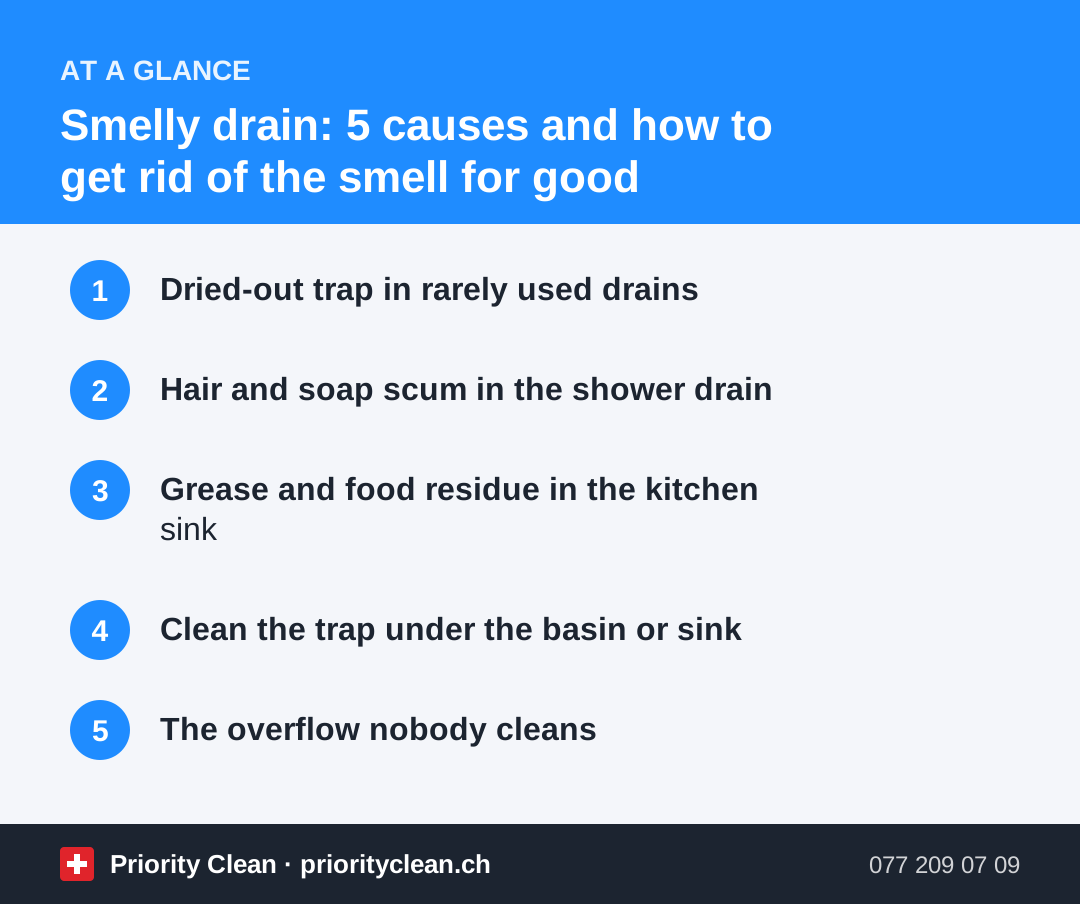
1. Dried-out trap in rarely used drains
Guest bathrooms, floor drains in laundry rooms and showers that are not used for weeks lose their water seal through evaporation. This is especially common after the summer holidays or in heated rooms in winter.
The fix: Run water into every drain for about a minute. For drains you rarely use, repeat this once a week. In a floor drain that is used very seldom, a small splash of cooking oil on top of the water slows down evaporation.
2. Hair and soap scum in the shower drain
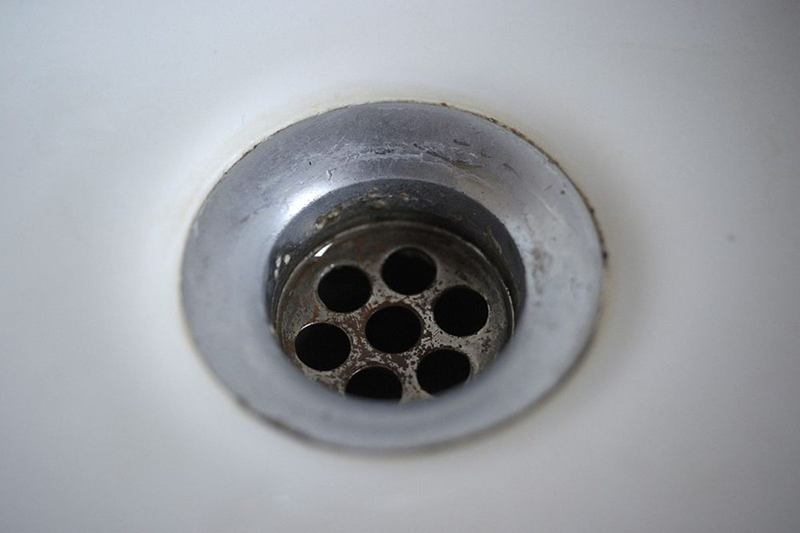
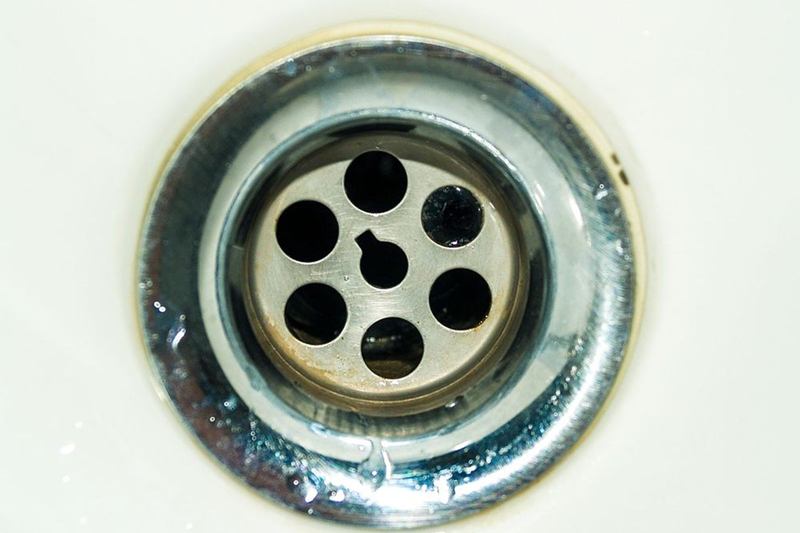
In showers, the smell nearly always comes from a mat of hair mixed with soap, shampoo and skin cells, sitting just below the drain cover.
- Remove the drain cover (usually lifts off or is held by one screw).
- Pull out the hair trap or insert and remove the clump with gloves or a drain hair-removal tool from the DIY store.
- Scrub the insert and the visible pipe section with an old toothbrush and washing-up liquid.
- Rinse with plenty of hot tap water.
Doing this every two to four weeks usually keeps a shower drain odour-free. If water drains slowly as well, see our guide to unblocking a drain with home remedies.
3. Grease and food residue in the kitchen sink
Kitchen drains smell sour when grease cools in the trap and binds food particles. Hot water alone moves the grease further down, where it sets again.
- Wipe greasy pans with kitchen paper before washing them.
- Never pour frying oil down the sink – let it cool and dispose of it with household waste or at a collection point.
- Once a week, pour a kettle of hot (not boiling) water with a squirt of washing-up liquid down the drain.
- If the smell persists, unscrew and clean the trap under the sink (see step 4).
4. Clean the trap under the basin or sink
Under most basins and kitchen sinks the trap can be unscrewed by hand. This is the most effective way to deal with a persistently smelly drain.
- Put a bucket and an old towel under the trap.
- Unscrew the lower part or the connecting nuts by hand.
- Empty the contents into the bucket and dispose of solid residue in the rubbish.
- Scrub the parts with washing-up liquid and a bottle brush, rinse and check the seals.
- Screw everything back hand-tight and run water to check for leaks.
If the nuts are stuck or the pipes look fragile, stop and ask your property manager or caretaker – damage caused by force can become your responsibility.
5. The overflow nobody cleans
Basins and bathtubs have an overflow opening near the top. Water, soap and toothpaste run into it, but it is never flushed properly – a classic source of a musty smell that seems to come from "the drain".
- Pour a little warm water with washing-up liquid into the overflow.
- Clean the inside with a narrow bottle brush or a special overflow brush.
- Finish with a jug of clear water.
A solution of citric acid in lukewarm water can also help with limescale in the overflow; rinse well afterwards.
Home remedies, drain cleaners and safety
Many people reach for baking soda and vinegar. The fizz can loosen light deposits, but it does not dissolve hair and is no substitute for mechanical cleaning. Enzyme-based drain cleaners from the supermarket can help with organic residue if you follow the label.
Chemical drain openers are strongly caustic or acidic. Use them only as directed, never together with other products, and never after you have already poured something else in.
When a smelly drain needs a plumber
Some odours are not a cleaning problem. Contact your property management if:
- The smell is like sewage even though all traps hold water.
- Several drains in the flat smell at the same time.
- You hear gurgling when you drain water, which can indicate a ventilation problem in the pipes.
- There is moisture or a stain around the pipe.
In a rented flat in Switzerland, these issues are generally for the landlord to handle. Report them in writing so there is a record.
| Smell | Likely cause | First step |
|---|---|---|
| Sewer, rotten eggs | Dried-out trap, venting problem | Run water; if it persists, call the property management |
| Musty, sour | Hair, soap scum, overflow | Clean the drain insert and overflow |
| Rancid | Grease in the kitchen trap | Clean the trap, stop pouring fat away |
Common mistakes with a smelly drain
- Pouring in more and more products: It masks the smell briefly but does not remove the residue.
- Boiling water on plastic pipes: Hot tap water is enough; boiling water can damage seals.
- Forgetting the overflow: It often causes the smell you blame on the plughole.
- Using air freshener: It covers the problem instead of solving it.
Frequently asked questions
Why does my bathroom drain smell like sewage?
Most often the water seal in the trap has evaporated because the drain was not used for a while. Run water for a minute. If the smell stays, the pipe ventilation may be affected and you should inform the property management.
How do I get rid of a smelly shower drain?
Remove the drain cover, pull out the hair and soap residue, scrub the insert with washing-up liquid and rinse with hot tap water. Repeat every few weeks to prevent the smell from coming back.
Does baking soda and vinegar help a smelly drain?
It can loosen light residue, but it does not remove hair or grease reliably. Mechanical cleaning of the trap and drain insert is much more effective.
Is a smelly drain the landlord's responsibility in Switzerland?
Small cleaning jobs such as clearing hair from a drain are generally the tenant's task. Problems with pipes, ventilation or recurring sewer smells are usually for the landlord – check your lease and report the problem in writing.
Thanks for your feedback! Feel free to share the guide.
Thanks! What was missing? Drop us a line – we will improve the guide. WhatsApp