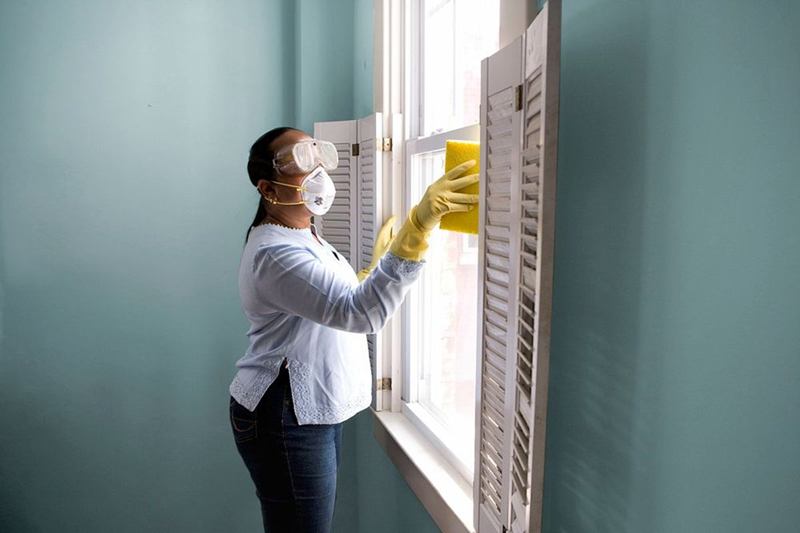
It starts with the first cold nights in October: you open the blinds in the morning and the bedroom windows are dripping wet. Water collects on the sill, the seals feel slimy and after a few weeks small black dots appear in the corners. Condensation on windows on the inside is common in Swiss flats during the heating season – but it's a signal worth taking seriously.
Here's why it happens, and five practical ways to reduce it and prevent mould on frames and seals.
Why condensation on windows forms
Air always contains water vapour. Warm air can hold more of it than cold air. When warm indoor air touches a cold surface – such as a window pane on a frosty night – it cools down, and the moisture it can no longer hold settles as droplets.
People add moisture to indoor air all the time: breathing, showering, cooking, drying laundry and watering plants. Bedrooms are affected most, because we breathe out moisture all night with the door closed, and the room is often kept cool.
The Federal Office of Public Health explains in its information on damp and mould that moisture problems should be dealt with quickly and that the cause must always be found and fixed.
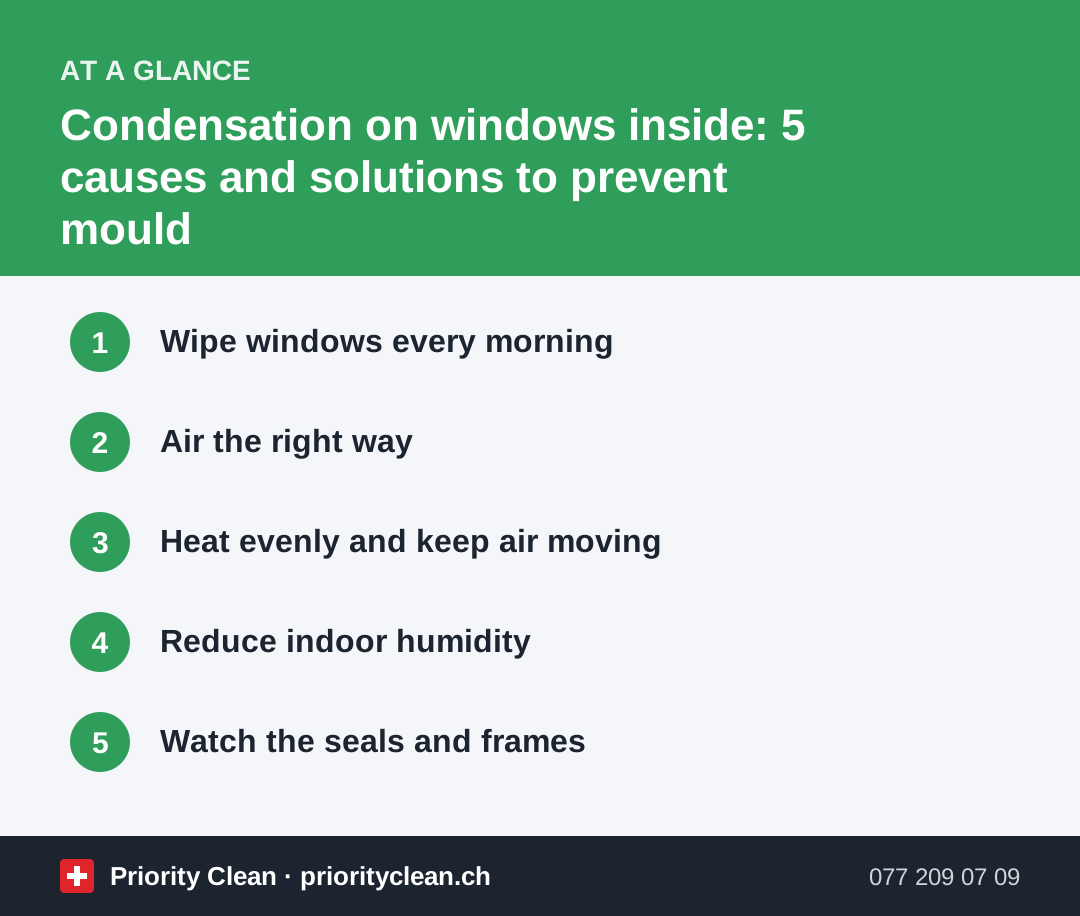
1. Wipe windows every morning
The simplest measure is often the most effective.
- Open the blinds and check the windows first thing in the morning.
- Remove water from the glass with a small window squeegee or an absorbent cloth.
- Wipe the bottom of the frame, the rebate and the window sill – water collects there.
- Wring out the cloth into the sink, not onto a plant or back into the room.
- Air the room afterwards so the remaining moisture can escape.
2. Air the right way
Airing removes humid air and replaces it with drier outside air – cold outside air contains little moisture, even if it feels damp.
- Shock airing: Open windows fully for 5–10 minutes, several times a day. EnergieSchweiz recommends airing three times a day with shock or cross ventilation instead of tilted windows.
- Cross ventilation: Open windows on opposite sides of the flat at the same time for faster air exchange.
- After moisture peaks: Air right after showering, cooking or getting up.
- No permanently tilted windows: They cool the wall around the window and waste heating energy, without exchanging much air.
The BAG's guidance on airing and heating correctly also stresses opening windows fully, for at least a few minutes in the heating season.
3. Heat evenly and keep air moving
Cold surfaces attract condensation. A few adjustments help:
- Don't let bedrooms cool down too much – very cold rooms with warm air flowing in from the rest of the flat are prone to condensation.
- Keep radiators under windows free: long curtains, furniture and deep window-sill decorations block warm air from rising along the glass.
- Leave a gap between large furniture and exterior walls.
- Keep interior doors to cooler rooms closed, so warm, humid air from the kitchen or bathroom doesn't spread into them.
4. Reduce indoor humidity
| Source of moisture | What helps |
|---|---|
| Drying laundry in the flat | Use the building's drying room or a tumble dryer if possible; otherwise air more often |
| Cooking | Use lids and the extractor hood; air afterwards |
| Showering | Squeegee the shower, air the bathroom, keep the door closed |
| Many houseplants | Fewer plants in the bedroom; don't overwater |
| Aquariums, humidifiers | Check whether they're really needed in winter |
A simple hygrometer shows you the relative humidity in each room. In the heating season, many advice sheets recommend a range of around 30–50 %. If the values are regularly higher, air more often and look for the source.
5. Watch the seals and frames
Black spots on rubber seals, in the corners of the pane or on silicone joints are often the first sign of mould.
- Clean seals regularly with warm water and a little washing-up liquid.
- Dry them thoroughly afterwards.
- Check whether windows close tightly; draughts and damaged seals can create cold spots.
- Report persistent condensation, damaged seals or recurring mould to the property management in writing.
Common mistakes with condensation
- Leaving water on the sill: Wooden sills swell and seals start to go black.
- Tilting windows all day: Cools the reveals and makes condensation worse around the window.
- Drying laundry in the bedroom: Adds a lot of moisture exactly where it's coolest.
- Heavy curtains over radiators: Block warm air from reaching the glass.
- Ignoring black spots: Small spots are easy to clean; established mould isn't.
Condensation in winter is closely linked to airing habits – read more in our guides on ventilating in winter and removing mould from window seals.
Frequently asked questions
Why is there condensation on the inside of my windows?
Warm, humid indoor air cools down when it touches the cold glass, and the moisture condenses into droplets. It's most common in bedrooms and in the heating season.
Is condensation on windows bad?
Occasional condensation is normal in winter, but water that stays on frames, seals and sills regularly can lead to mould and damage. Wipe it off and air the room.
How do I stop condensation on my windows in the morning?
Air the bedroom well before sleeping and after getting up, avoid drying laundry there, keep the radiator free and don't let the room get too cold. Wipe away any remaining condensation.
Should I tell my landlord about window condensation?
If condensation is persistent despite good airing, or if seals are damaged or mould appears, inform the property management in writing so the cause can be checked.
Thanks for your feedback! Feel free to share the guide.
Thanks! What was missing? Drop us a line – we will improve the guide. WhatsApp