Grey-black dots in the corner of the bedroom, dark patches behind the curtain or around the window: finding mould is unsettling. The first impulse is to grab a spray and scrub it away. But before you remove mould from walls, it is worth pausing for a moment, because what matters most is not just the cleaning – it is how large the affected area is, what caused it and who is responsible for fixing it.
This guide takes you through five steps: from assessing the problem to safe cleaning of small spots, and the point at which a professional and, in a rented flat, the landlord need to be involved.
Why mould on walls needs attention
Mould grows where moisture stays on a surface for a long time – often on cold outside walls, in corners, around windows and behind furniture. The Federal Office of Public Health describes mould in homes as unhealthy and advises removing it quickly and always finding and fixing the cause of the moisture.
People with allergies, asthma or weakened immune systems, as well as babies and older people, may be more sensitive. If you have health concerns, talk to your doctor. This guide covers the practical side only.
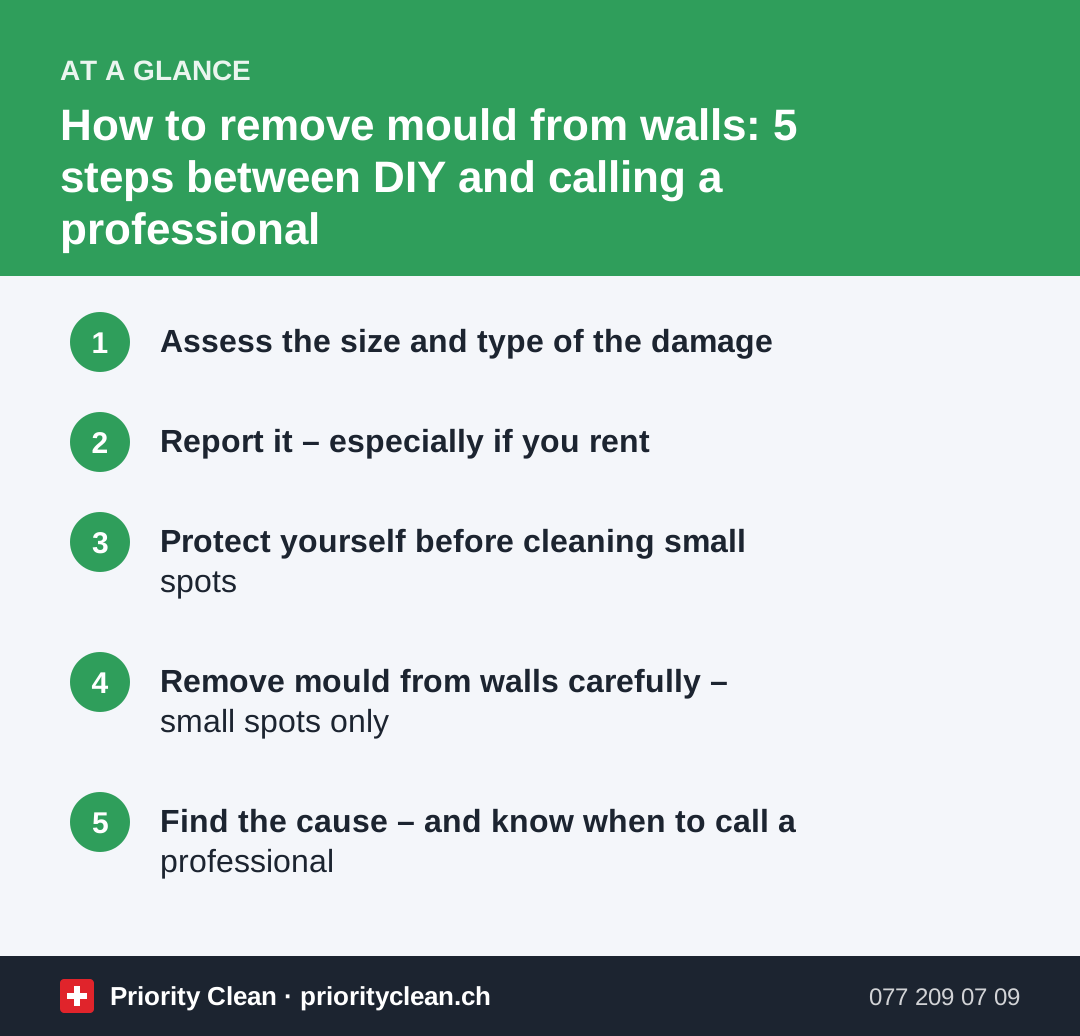
1. Assess the size and type of the damage
Before you do anything, look closely and take photos with a ruler or coin for scale.
- Small and superficial: a few spots on a smooth, painted surface, clearly limited, no bigger than about the size of your hand. This is the kind of case where careful DIY cleaning may be reasonable.
- Larger or recurring: patches bigger than that, mould that comes back after cleaning or appears in several rooms.
- Deep in the material: mould under wallpaper, in plaster, in silicone joints that are black right through, or with visible damp stains and flaking paint.
- Hidden: a musty smell without visible mould, for example behind panelling or built-in furniture.
Only the first category is suitable for do-it-yourself cleaning. Everything else needs a professional assessment.
2. Report it – especially if you rent
In a rented flat in Switzerland, you should inform the landlord about mould. Do this before or at the same time as any cleaning, so the cause can be investigated.
- Take dated photos of the affected area.
- Write to the property management describing where and since when the mould has appeared.
- Keep a copy of your letter or email.
The tenants' association explains that mould is legally considered a defect, that the landlord has to prove the tenant caused it and that hours of airing every day cannot be demanded. Your lease and the specific circumstances are decisive; for individual advice, contact your local tenants' association.
3. Protect yourself before cleaning small spots
Cleaning mould releases spores into the air. Even for a small area, take precautions:
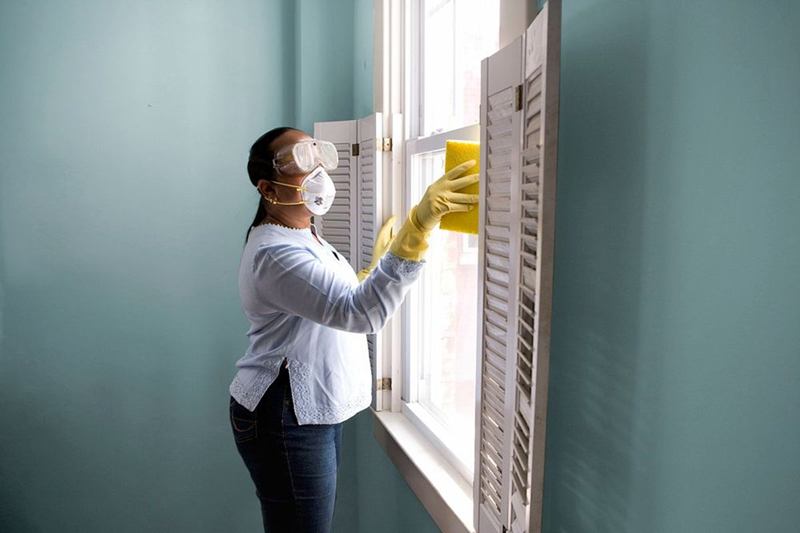
- Wear disposable gloves, safety glasses and a well-fitting FFP2 mask.
- Wear old clothes that you can wash straight afterwards.
- Keep children, pets and people with respiratory conditions out of the room.
- Open the window, but close the door to other rooms.
- Cover the floor below with a plastic sheet or old towel.
4. Remove mould from walls carefully – small spots only
For small areas on smooth, painted, non-absorbent surfaces, ethanol at around 70 % (available from pharmacies and drugstores) is widely used because it works on the surface and evaporates without leaving moisture behind.
- Do not dry-brush or vacuum with a normal vacuum cleaner – it spreads spores.
- Moisten a disposable cloth with the alcohol and dab the area gently from the outside inwards.
- Use a fresh part of the cloth for each wipe so you do not spread the mould.
- Put used cloths directly into a plastic bag, tie it shut and dispose of it with household waste.
- Let the area dry well and air the room thoroughly.
- Wash your clothes and hands afterwards.
The homeowners' association HEV also recommends cleaning and disinfecting affected surfaces as part of dealing with mould.
Avoid pouring vinegar on plaster or chalk-based paint – it can react with lime and does not reliably remove mould from porous surfaces. Chlorine bleach is not suitable for walls either: it bleaches the stain but may not reach mould in the material, and the fumes are harmful.
5. Find the cause – and know when to call a professional
Cleaning only removes what is visible. Without fixing the cause, the mould comes back.
Typical causes you can influence:
- High humidity from drying laundry, cooking or showering.
- Insufficient or incorrect airing, for example permanently tilted windows.
- Furniture directly against cold outside walls – see our guide on preventing mould behind furniture.
- Rooms that are left very cold.
Causes that need a professional:
- Thermal bridges and poor insulation.
- Leaking pipes, roofs or windows.
- Rising damp or water damage.
Call in the property management and, through them, a building specialist or mould remediation company if the area is larger than a small spot, the mould is inside the material, it keeps returning or there are signs of water damage.
| Situation | What to do |
|---|---|
| A few small spots on a painted wall | Protect yourself, clean with 70 % alcohol, find the cause |
| Mould returns after cleaning | Report to landlord, investigate the cause |
| Larger area or under wallpaper | Do not touch – professional assessment |
| Damp stains, flaking paint | Possible water damage – inform landlord immediately |
Common mistakes
- Dry brushing or scraping: Releases large amounts of spores.
- Painting over mould: Hides it for a short time but does not remove it.
- Using bleach on walls: Removes the colour, not necessarily the mould, and creates harmful fumes.
- Not reporting it: In a rented flat, this can make later discussions more difficult.
- Cleaning without protection: Even small areas deserve gloves and a mask.
Frequently asked questions
Can I remove mould from walls myself?
Only small, superficial spots on smooth surfaces – no bigger than about the size of your hand – are suitable for careful DIY cleaning with protection. Larger areas, mould under wallpaper or recurring mould need a professional.
What kills mould on walls?
For small areas on non-absorbent surfaces, ethanol at around 70 % is widely used. It does not replace fixing the cause of the moisture, and larger or deeper mould should be handled by professionals.
Should I tell my landlord about mould in Switzerland?
Yes. Report it in writing with photos. According to the tenants' association, mould is legally a defect and the landlord must prove the tenant caused it. Your lease and the circumstances are decisive.
Why does mould keep coming back on my wall?
Because the cause of the moisture has not been fixed. This can be high humidity and airing habits, but also structural issues such as thermal bridges or leaks, which the landlord needs to investigate.
Thanks for your feedback! Feel free to share the guide.
Thanks! What was missing? Drop us a line – we will improve the guide. WhatsApp