You move the wardrobe to hang a picture – and discover grey-black spots on the wall behind it. Mould behind furniture is one of the most common damp problems in flats, and it usually starts in autumn, when windows stay closed and the heating comes on. The good news: in many cases, a few simple habits and a little space between furniture and wall make a clear difference.
This guide explains why mould forms in exactly these spots, five measures to prevent it and what tenants in Switzerland should do if they find it.
Why mould grows behind wardrobes and sofas
Indoor air always contains moisture from breathing, cooking, showering and drying laundry. When that air reaches a cold surface, the moisture condenses. Outside walls are colder than inside walls, especially in corners and in older buildings.
A large wardrobe or sofa pushed directly against an outside wall makes things worse: it blocks warm room air from reaching the wall, so the surface behind it stays even colder and damper. With dust as food, mould has ideal conditions – and nobody sees it for months.
The Federal Office of Public Health describes mould as unhealthy and stresses that it should be removed quickly and that the cause of the moisture must always be found and fixed.
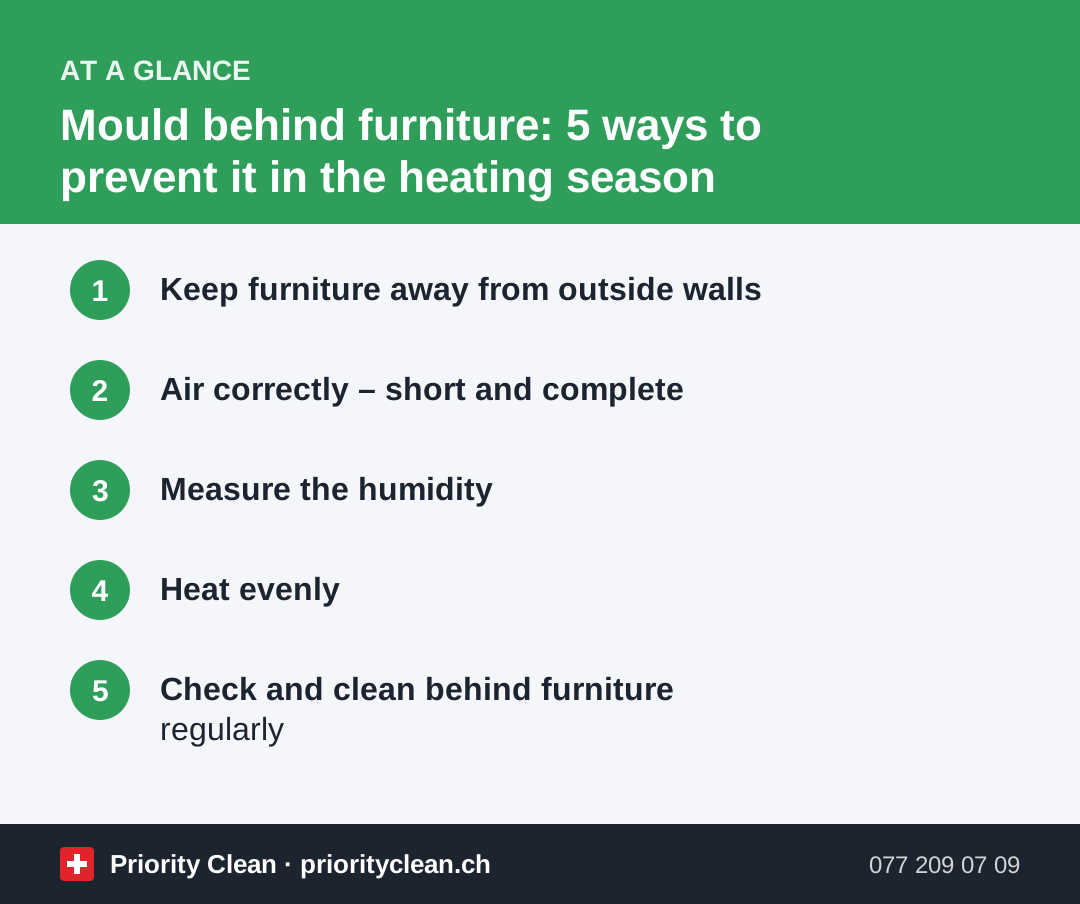
1. Keep furniture away from outside walls
The simplest measure is also one of the most effective.
- Place large wardrobes, bookshelves and beds against inside walls where possible.
- If a piece of furniture must stand against an outside wall, leave a gap of several centimetres – enough for air to circulate behind it.
- Avoid placing furniture tightly into corners of outside walls, which are often the coldest spots.
- Choose furniture with legs or a raised base so air can flow underneath.
2. Air correctly – short and complete
Airing removes humid air and replaces it with drier outside air. How you air matters more than how long.
- Open windows fully for a few minutes, ideally with a cross-draught.
- Do this several times a day, especially in the morning, after cooking, showering and drying laundry.
- Avoid leaving windows permanently tilted in winter: it cools the walls around the window without exchanging much air.
The homeowners' association HEV recommends airing three times a day for 5–10 minutes with a draught and avoiding permanently tilted windows. Once a week, open wardrobe doors while you air so the inside and back wall dry out too.
3. Measure the humidity
You cannot feel whether the humidity is too high – but an inexpensive digital hygrometer from the DIY store can show you.
- Place it in the bedroom and in rooms with problem walls, away from windows and radiators.
- Check it in the morning and in the evening for a week.
- According to the HEV, the relative humidity in the heating season should be between 30 and 50 %, and below 40 % on very cold days.
If the values are regularly higher, look for the sources: laundry drying indoors, many plants, long showers without airing, or cooking without the extractor hood.
4. Heat evenly
Cold rooms are more prone to mould because the walls stay cold and moisture condenses more easily.
- Do not let individual rooms cool down completely, particularly bedrooms with outside walls.
- Keep doors to cooler rooms closed so warm, moist air from the kitchen or bathroom does not flow into them.
- Do not cover radiators with furniture or long curtains – the warm air must be able to circulate.
Heating and airing work together: first air briefly and thoroughly, then heat. Our guide on reducing humidity in your apartment goes into more detail.
5. Check and clean behind furniture regularly
Mould is easiest to deal with when you find it early.
- Move large furniture away from outside walls at least once or twice a year, ideally at the start and middle of the heating season.
- Vacuum dust from the wall and the back of the furniture.
- Look for dark spots, discoloured wallpaper or a musty smell.
- Check the back panels of the furniture too – mould can grow there as well.
What to do if you find mould
Small, superficial spots can sometimes be cleaned by the occupant, but the underlying cause must be addressed. Our guide on mould on walls explains when you can act yourself and when a professional is needed.
Common mistakes
- Pushing the bed against the outside wall: A warm body and cold wall create condensation overnight.
- Leaving windows tilted all day: Cools the walls and wastes heating energy.
- Drying laundry in the bedroom: Adds large amounts of moisture where you sleep.
- Using anti-mould paint without fixing the cause: The problem comes back.
- Ignoring a musty smell: It is often the first sign of hidden mould.
Frequently asked questions
Why is there mould behind my wardrobe?
Usually because the wardrobe stands directly against a cold outside wall, blocking warm air. Moisture from the room condenses on the cold wall behind it, and mould grows where nobody sees it.
How far should furniture be from the wall to prevent mould?
A gap of several centimetres from outside walls helps air circulate. The colder the wall and the higher the humidity, the more important this gap becomes.
Is mould behind furniture the tenant's fault?
Not automatically. Mould is legally a defect, and according to the tenants' association the landlord must prove that the tenant caused it. Report it in writing and let the property management check the cause.
What humidity is ideal in winter?
According to the homeowners' association HEV, relative humidity in the heating season should be between 30 and 50 percent, and below 40 percent on very cold days. A hygrometer helps you check.
Thanks for your feedback! Feel free to share the guide.
Thanks! What was missing? Drop us a line – we will improve the guide. WhatsApp