In most Swiss apartment buildings, every flat has its own cellar compartment – a practical place for suitcases, winter tyres, seasonal clothes and the things you might need one day. Open the door after a few months, though, and you are often greeted by a heavy, damp odour. A musty cellar smell is caused by moisture, and it does not stay in the cellar: it gets into stored textiles, books and boxes and comes back up to your flat with them.
Here are five ways to get rid of the smell – and what property owners and tenants can each do about it.
Why cellars smell musty
Cellars are partly or fully below ground. Their walls and floors are cool and can absorb moisture from the surrounding soil. When warmer, more humid air enters and meets those cool surfaces, moisture condenses. Add poor ventilation and materials such as cardboard, wood, paper and textiles, and mould and bacteria find ideal conditions. The typical musty smell comes from their metabolic products.
Older buildings with uninsulated cellar walls are more affected than new buildings, but even modern cellars can smell if they are aired incorrectly or overfilled.
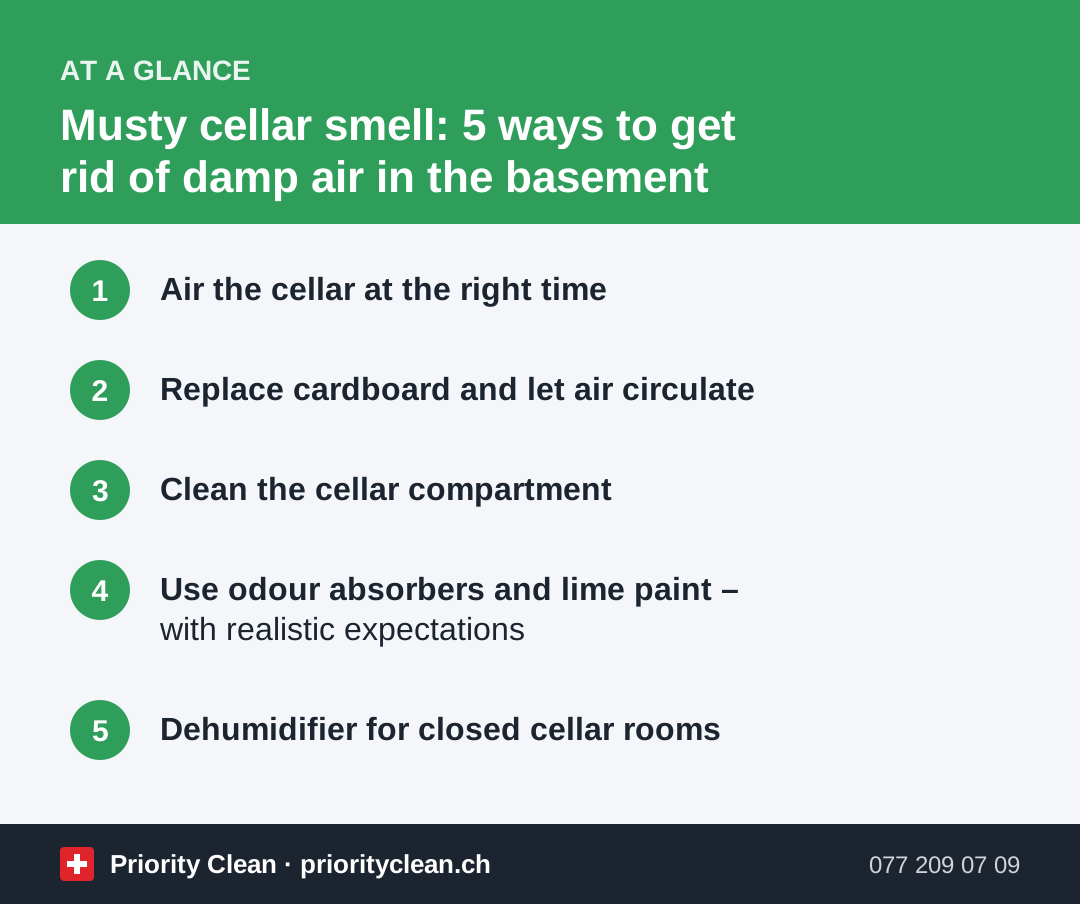
1. Air the cellar at the right time
Airing is the most important measure – but in cellars, timing is everything.
- In the cool season and on cool, dry days: Air regularly. Cool outside air holds less moisture and dries the cellar.
- In summer: Avoid airing during warm, humid afternoons. Warm air carries more moisture, which condenses on the cool cellar walls. Air in the early morning or at night instead.
- Keep windows closed during warm, humid weather.
The homeowners' association HEV lists airing cellars correctly as part of preventing mould. In a shared cellar, coordinate airing with the caretaker or property management – cellar windows are often part of the building's rules.
2. Replace cardboard and let air circulate
Cardboard boxes absorb moisture, provide food for mould and smell musty quickly. They are one of the most common reasons why cellar compartments smell.
- Replace cardboard with closed plastic boxes with lids.
- Use shelves so nothing stands directly on the floor.
- Keep a gap between shelves and walls so air can circulate.
- Do not overfill the compartment – air needs space.
- Throw away items that already smell strongly or show mould.
Clearing out regularly helps too. Our guide on clearing out the cellar and attic explains how to sort and dispose of things properly in Switzerland.
3. Clean the cellar compartment
After clearing out, a thorough clean removes dust and residues that hold odours.
- Empty the compartment completely.
- Remove cobwebs and dust from walls and ceiling with a broom or vacuum.
- Sweep or vacuum the floor.
- Wipe shelves and plastic boxes with warm water and washing-up liquid, then let them dry fully.
- Put everything back only when all surfaces are dry.
If you see visible mould on walls, do not scrub it dry. Report it to the property management and read our guide on mould on walls. The Federal Office of Public Health advises finding and fixing the cause of the moisture whenever mould appears.
4. Use odour absorbers and lime paint – with realistic expectations
Some simple remedies help reduce the smell once the moisture is under control.
- Baking soda: Open bowls absorb odours in small spaces. Replace every few weeks.
- Dried coffee grounds: Can mask and absorb odours for a while; make sure they are completely dry, or they can go mouldy themselves.
- Activated charcoal: Available as odour absorbers in shops.
- Moisture absorber boxes: Granule boxes collect some moisture in small, closed areas.
For owners, a breathable lime-based paint on cellar walls is a traditional option: it is alkaline, which is unfavourable for mould, and it lets walls breathe. In a rented flat, painting walls is a matter for the landlord – ask first.
5. Dehumidifier for closed cellar rooms
An electric dehumidifier can be effective in closed cellar rooms, hobby rooms or drying rooms.
- Choose a model suitable for low temperatures, as some dehumidifiers work poorly in cool cellars.
- Keep doors and windows closed while it runs.
- Empty the tank regularly or connect a drain hose where possible.
- In shared cellars, a power socket and permission from the property management are needed.
Storing clothes in the cellar
Textiles absorb odours particularly easily, and wool can attract moths.
- Store only clean and completely dry clothes – body oils and stains attract pests.
- Use closed plastic boxes or vacuum bags rather than cardboard.
- Check stored woollens regularly: the city of Zurich's fact sheet explains that clothes moth larvae feed on animal fibres such as wool.
- Air clothes outdoors before wearing them again.
- Where possible, store delicate textiles in the flat rather than in the cellar.
Common mistakes
- Airing on hot summer days: Brings in moisture that condenses on cool walls.
- Storing everything in cardboard: It soaks up moisture and smells quickly.
- Placing items directly against walls: No air circulation, damp spots.
- Masking the smell with fragrances: The cause remains.
- Storing damp items: Garden cushions, wet tents or ski clothes bring moisture in.
Frequently asked questions
How do I get rid of a musty smell in my cellar?
Find and reduce the moisture first: air on cool, dry days, replace cardboard with plastic boxes, keep items away from walls and clean the compartment. Odour absorbers and a dehumidifier can help once the moisture is under control.
Should I air the cellar in summer?
Only when the outside air is cooler and drier than the cellar air, typically at night or early in the morning. Warm, humid summer air can condense on cool cellar walls and make the cellar damper.
Can I store clothes in the cellar?
Yes, if they are clean and completely dry and stored in closed plastic boxes or vacuum bags. Check them regularly, especially woollens, and air them before wearing.
Who is responsible for a damp cellar in a rented flat?
Structural damp, leaks or rising damp are generally a matter for the landlord. Report the problem in writing with photos. Keeping your own compartment tidy and aired correctly is usually the tenant's part.
Thanks for your feedback! Feel free to share the guide.
Thanks! What was missing? Drop us a line – we will improve the guide. WhatsApp