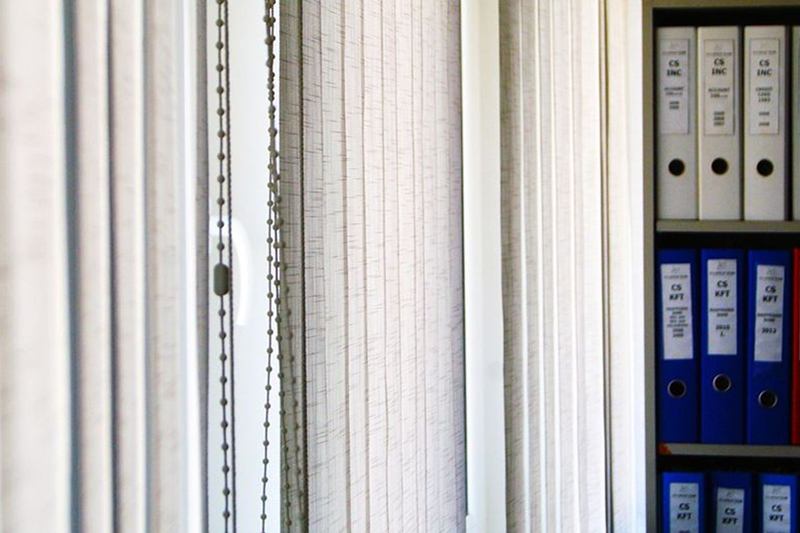
In front of office windows, vertical blinds keep glare off the screen – and collect dust, fingerprints and the odd coffee splash along the way. Learning how to clean vertical blinds does not usually mean dismantling them: the headrail stays on the ceiling, and the louvres are cleaned while hanging or unhooked one at a time.
In January the low sun shows up every layer of dust. These five methods explain how to get fabric and PVC louvres clean again, and what to watch out for on the stepladder.
Why vertical blinds need regular cleaning
Vertical louvres hang freely in the room and offer a large surface area. Dust from the air and paper fibres settle on both sides. Where windows are opened for airing, pollen and street dust are added, and at the bottom there are fingerprints from pushing the louvres aside. Over time, light fabrics turn grey.
For employers the rule is clear: rooms and workplaces must be kept clean and in good working order, with the necessary cleaning equipment available, as SECO's guidance on Art. 37 of Ordinance 3 to the Employment Act states. Even so, vertical blinds are easily forgotten in everyday maintenance cleaning. For horizontal and pleated blinds, see our separate guide to clean pleated blinds, venetian and roller blinds.
| Material | How to recognise it | Cleaning |
|---|---|---|
| Fabric | Textile, weights at the bottom, often a linking chain | Vacuum, dab, wash only if the manufacturer allows |
| PVC | Smooth, stiff, slightly shiny | Wipe damp, if needed one by one in the shower |
| Aluminium | Thin, metallic | Wipe damp, do not bend |
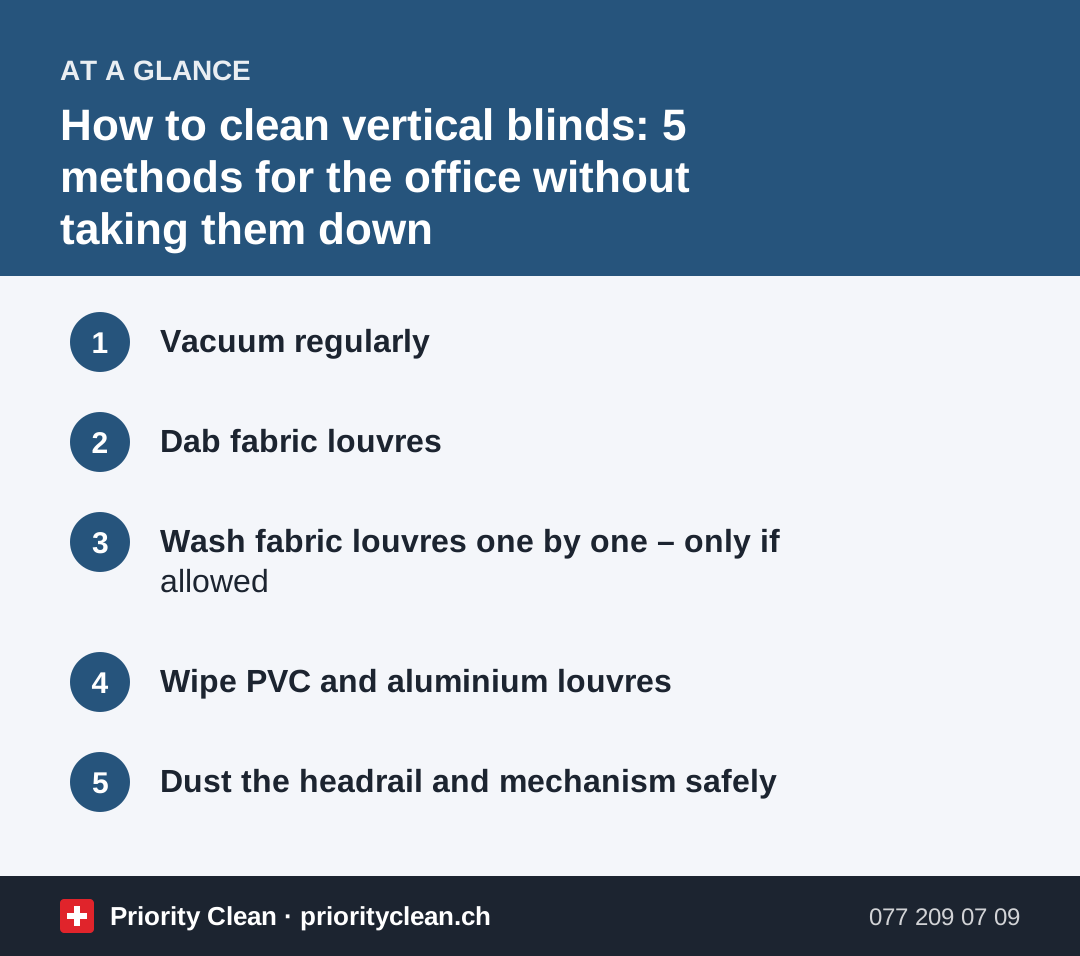
1. Vacuum regularly
The most important care is dry and only takes a few minutes:
- Close the louvres so they form a continuous surface.
- Vacuum from top to bottom with the brush nozzle on a low setting, holding the bottom of each louvre lightly.
- Turn the louvres the other way and treat the back in the same way.
A duster or a dry microfibre cloth also picks up dust. As a rule of thumb, vacuuming the louvres every few weeks as part of periodic cleaning is enough, and more often in dusty locations.
2. Dab fabric louvres
Treat stains and fingerprints on fabric while the louvres are hanging:
- Test first on an inconspicuous spot, for example right at the top of the louvre.
- Dip a light-coloured microfibre cloth in lukewarm water with a little delicates detergent and wring it out well.
- Dab the stain from the outside in – do not rub.
- Dab again with clean water, then with a dry cloth.
Many fabric louvres have a finish that keeps them stiff and smooth. Too much water and rubbing can weaken it: the louvre becomes wavy or is left with rings.
3. Wash fabric louvres one by one – only if allowed
The manufacturer's care instructions tell you whether fabric louvres are washable. If there is no information, do not wash them and stick to methods 1 and 2. For special fabrics, such as flame-retardant or blackout-coated ones, follow the manufacturer's instructions without exception.
- Remove the linking chain and the bottom weights.
- Unhook the louvres one by one from the hangers on the headrail – the manual explains how this works on your system.
- If the louvres are different lengths, mark their order with masking tape.
- Roll up several louvres loosely and put them in a laundry bag.
- Wash on a delicate or hand-wash programme at the stated temperature, without spinning or with a very gentle spin.
- Rehang the louvres while still damp, refit the weights and chain and let them dry hanging. No tumble dryer.
General rules on programmes and detergent are covered in our guide on how to wash curtains.
4. Wipe PVC and aluminium louvres
Smooth louvres are easy to care for. Wipe them from top to bottom with a damp microfibre cloth and a little mild soapy water, holding the bottom of the louvre. Then go over them with a dry cloth, otherwise water marks remain.
Heavily soiled PVC louvres can be unhooked one by one and cleaned in the shower with lukewarm soapy water and a soft brush. Scouring products and solvents make the surface dull or brittle. Do not bend aluminium louvres: a kink stays visible.
5. Dust the headrail and mechanism safely
Dust builds up on the headrail and trickles down when you turn the louvres. Wipe the rail dry or with a barely damp cloth and vacuum the hangers with the crevice tool. Do not oil the mechanism unless the manual says so, and do not let water run into the rail. If a louvre jams, that is a job for a specialist.
Working at height needs a sturdy stepladder. The Swiss Council for Accident Prevention (BFU) names deep treads with non-slip grooves, non-slip feet and a lock against folding as key criteria, along with the EN 131 or EN 14183 standards – details in its advice on stepladders.
Our office cleaning checklist shows how to fit periodic jobs like these into everyday cleaning.
Common mistakes
- Rubbing wet: fabric louvres lose their shape and rings appear.
- Washing without approval: non-washable louvres curl up or warp.
- Using the tumble dryer: heat can deform the louvres.
- Forgetting the weights: without them, the louvres hang crooked.
Frequently asked questions
Can vertical blinds go in the washing machine?
Only if the manufacturer states that the fabric louvres are washable. In that case, remove the chain and weights, wash the rolled-up louvres in a laundry bag on a delicate programme, spin as little as possible and rehang them damp. PVC louvres do not go in the machine.
How do you clean vertical blinds without taking them down?
Close the louvres and vacuum them from top to bottom with the brush nozzle, then do the other side. Dab stains on fabric while the louvres hang, using a well-wrung cloth, and wipe PVC louvres with a damp cloth.
How often should vertical blinds be cleaned?
Vacuuming every few weeks keeps dust under control, and more often in dusty locations. A more thorough clean by dabbing or washing usually makes sense once or twice a year.
What if fabric louvres curl after washing?
Rehang them while still damp with their weights so they pull straight. If they still curl, the fabric's finish is often damaged – then replacement through a specialist dealer is usually the only option.
Thanks for your feedback! Feel free to share the guide.
Thanks! What was missing? Drop us a line – we will improve the guide. WhatsApp