A client walks into your office, glances at the reception desk, uses the toilet before the meeting and sits down at a table with coffee rings. Within minutes, they have formed an impression of your business. Your employees notice the same details every day – at their desks, in the kitchen and in the washrooms. An office cleaning checklist helps small and medium-sized businesses keep these areas consistently clean, without anyone having to think about it.
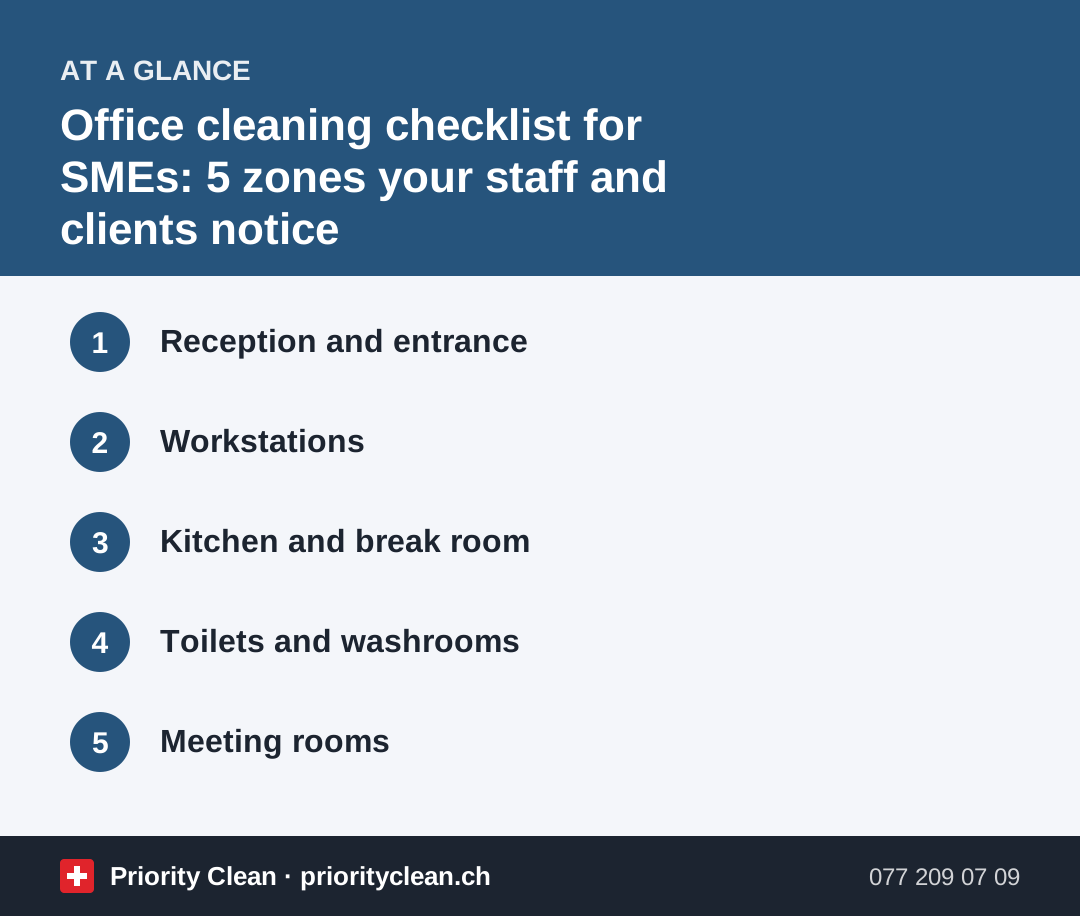
This guide breaks the office down into five zones, suggests realistic intervals and explains what to consider when cleaning is done by staff or by an external company.
Why an office cleaning checklist pays off
In many SMEs, cleaning grows organically: someone empties the bins, someone else wipes the kitchen when it gets too bad, and the toilets are "done on Fridays". This works until someone is on holiday – or until a client notices.
Swiss labour law also sets a basic standard. The SECO guidance on Art. 37 of Ordinance 3 to the Employment Act states that buildings, rooms, workplaces and sanitary facilities must be kept clean and in good working order, with the necessary cleaning equipment available. A checklist is the simplest way to show that this is organised.
1. Reception and entrance
The entrance is your business card. Dirt here is noticed by everyone.
- Daily: Vacuum or sweep the floor, empty bins, wipe the reception desk and door handles.
- Several times a week: Clean the glass entrance door and fingerprints on glass partitions.
- Weekly: Dust decorations, plants and furniture; clean the doormat.
- Monthly: Clean skirting boards, light switches and signage.
In autumn and winter, a larger doormat catches wet dirt before it spreads into the office.
2. Workstations
Desks, keyboards and phones are touched constantly, but are often only cleaned when someone spills coffee.
- Daily: Empty bins and paper baskets, vacuum floors in walkways.
- Weekly: Wipe clear desk surfaces, clean phones and headsets with suitable wipes, vacuum under desks.
- Monthly: Dust monitor stands, cable trays, shelves and window sills.
For computer equipment, agree with your team who cleans keyboards and screens. Many companies let employees do this themselves with suitable screen cleaning wipes.
3. Kitchen and break room
The office kitchen is often the most critical zone for hygiene – shared sponges, forgotten food in the fridge and a coffee machine that nobody feels responsible for.
- Daily: Wipe worktops, sink and tables; clean the coffee machine exterior and drip tray; empty bins and separate recycling; load and run the dishwasher.
- Weekly: Clean the microwave inside, wipe cupboard fronts and handles, clear out the fridge.
- Monthly: Clean the fridge thoroughly, descale the kettle and coffee machine according to the manufacturer, clean the dishwasher filter.
Set a clear rule for the fridge: for example, everything without a name and date is removed on Friday afternoon.
4. Toilets and washrooms
Clean toilets matter more to employees and visitors than almost anything else. This zone needs the highest frequency.
- Daily: Clean and disinfect toilets, urinals and washbasins; wipe taps, flush buttons and door handles; refill soap, paper towels and toilet paper; empty bins; mop the floor.
- Weekly: Descale taps and tiles, clean mirrors thoroughly, wipe partitions and doors.
- Monthly: Clean ventilation grilles, lights and tiles to full height.
5. Meeting rooms
Meeting rooms are where clients spend the most time – and where traces of the last meeting are most embarrassing.
- After every meeting (by users): Remove cups, bottles and papers; wipe the whiteboard.
- Daily: Wipe tables, empty bins, tidy chairs.
- Weekly: Vacuum, clean chair armrests, remote controls and screens, clean glass walls.
- Monthly: Dust lamps, blinds and technical equipment.
Office cleaning checklist at a glance
| Zone | Daily | Weekly | Monthly |
|---|---|---|---|
| Reception | Floor, bins, desk, door handles | Glass, decorations, doormat | Skirting boards, switches |
| Workstations | Bins, walkways | Desks, phones, under desks | Shelves, window sills |
| Kitchen | Worktops, sink, coffee machine, dishwasher | Microwave, fronts, fridge clear-out | Fridge, descaling, filters |
| Toilets | Sanitary ware, refills, floor | Descaling, mirrors, partitions | Vents, tiles to full height |
| Meeting rooms | Tables, bins, chairs | Vacuum, screens, glass | Lamps, blinds, technology |
These intervals are guidelines. The right rhythm depends on the number of employees, client traffic and the type of business – a medical practice, for example, has stricter requirements than a small design studio.
In-house or external cleaning?
Many small businesses start by sharing cleaning among staff. This can work for very small teams, but often leads to uneven results and frustration. Signs that it is time for an external company:
- Cleaning tasks regularly get postponed.
- Employees spend working time on cleaning instead of their actual job.
- Clients or staff comment on cleanliness.
- The office has grown, or you have more client visits.
A professional service usually works outside business hours – early morning or evening – so your team is not disturbed and floors can dry. Our guide on finding a good cleaning company lists the criteria to check before you sign.
Common mistakes
- No clear responsibilities: "Everyone" means nobody.
- Same interval for all zones: Toilets weekly and meeting room glass daily is the wrong way round.
- Cluttered desks: Prevent thorough cleaning.
- Cleaning during office hours: Disruptive, and wet floors are a slip hazard.
- No feedback loop: Without a checklist, nobody notices what is missed.
Frequently asked questions
What should an office cleaning checklist include?
The main zones – reception, workstations, kitchen, toilets and meeting rooms – with specific tasks and intervals (daily, weekly, monthly) for each. It should also state who is responsible.
How often should an office be cleaned?
Toilets and kitchens usually need daily cleaning, workstations and floors daily or several times a week, and details such as shelves, lights and vents monthly. The right interval depends on the number of people and client traffic.
Is office cleaning a legal requirement in Switzerland?
Swiss labour law requires employers to keep workplaces, rooms and sanitary facilities clean and in good working order. How this is organised is up to the company.
Should office cleaning be done during working hours?
Ideally not. Cleaning early in the morning or in the evening avoids disrupting staff and gives floors time to dry, which reduces the risk of slips.
Thanks for your feedback! Feel free to share the guide.
Thanks! What was missing? Drop us a line – we will improve the guide. WhatsApp