A workshop is for working, not cleaning – or so many people think. Yet sawdust under the workbench, an oil stain in front of the lift or boxes in the gangway aren't just unsightly; they are a safety risk. Workshop cleaning therefore follows different rules from the office: dust is vacuumed rather than stirred up, oil is absorbed rather than smeared, and waste is separated rather than piled together.
Whether it's a joinery, a bike workshop, a caretaker's room or a storeroom on an industrial estate, the following five steps apply wherever people work with machines, materials and chemicals.
Why a clean workshop is a safer workshop
In workshops and storerooms, many accidents happen not at the machine but next to it: people slip on oil or shavings, trip over cables and crates, or fall while reaching for the top shelf. In its checklist on building cleaning, Suva, the Swiss accident insurer, names hazardous substances, slippery floors, ladders and mobile scaffolds, and work with a risk of falling as key risks.
Then there's dust and fire. Fine wood, metal or mineral dust irritates the airways and settles on machines and electrics. Shavings and oily rags also burn easily. And order saves time: if you can find your tools straight away, you work faster and more safely.
| Hazard | Typical cause | Countermeasure |
|---|---|---|
| Slipping | Oil, coolant, shavings, wet floors | Absorb at once, degrease, warning sign |
| Tripping | Cables, crates, offcuts in the way | Keep routes clear, route cables |
| Dust | Sawing, sanding, sweeping | Vacuum, mask, good ventilation |
| Fire | Oily rags, shavings, solvents | Soak rags in water, empty shavings |
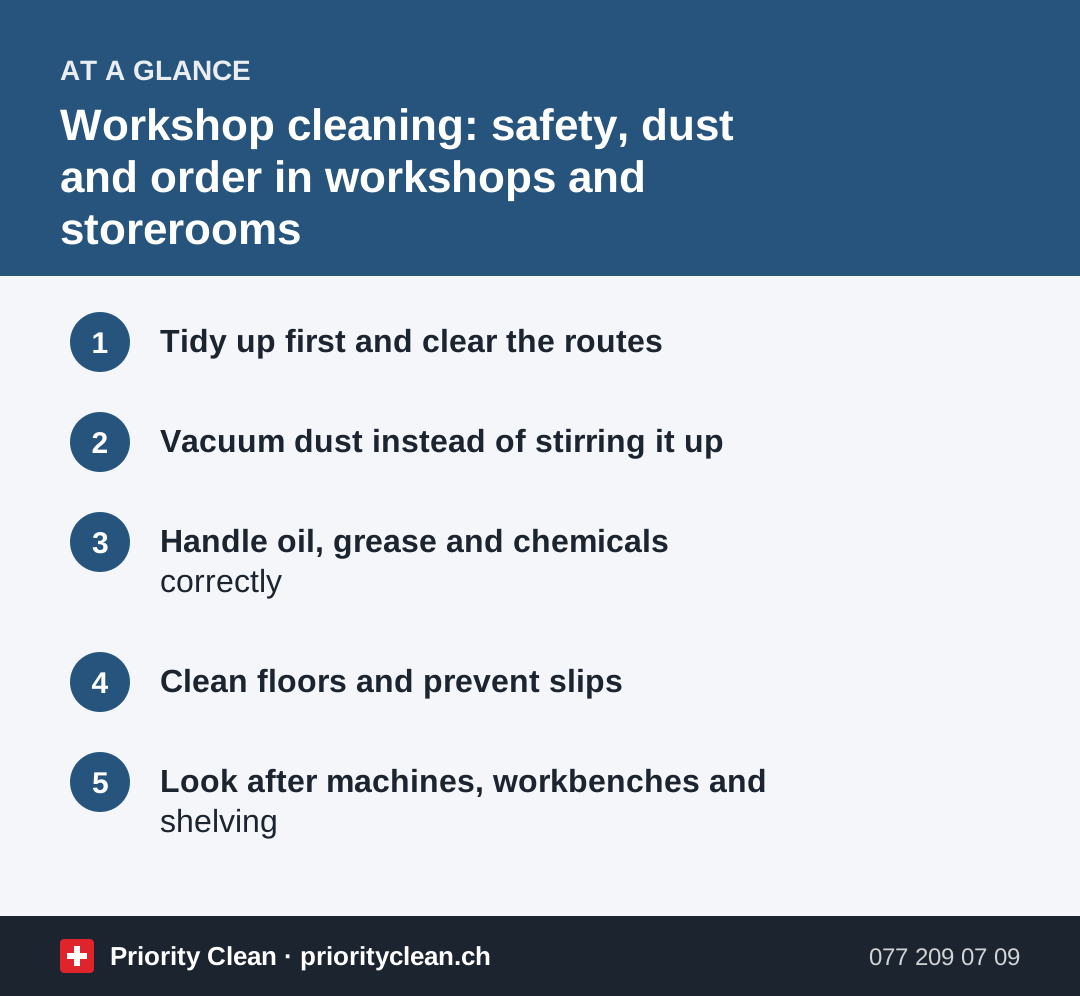
1. Tidy up first and clear the routes
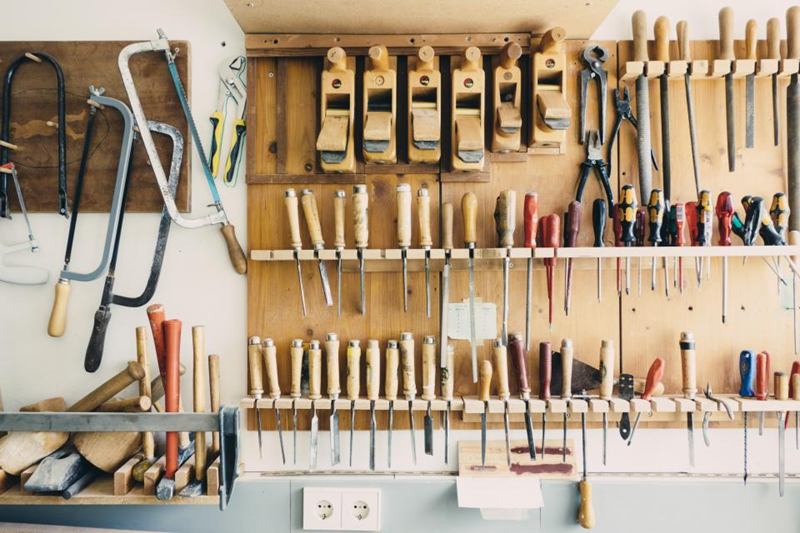
Before you clean, make space. Tools go back to their fixed place, materials back on the shelf, waste into the right containers. Labelled shelves and a tool wall with outlines help keep things tidy after the working day, too.
Traffic routes, emergency exits, fire extinguishers and electrical distribution boards must always stay accessible. Don't put pallets or boxes in front of them, not even "just for a moment". Heavy items go on the lower shelves, light ones higher up.
2. Vacuum dust instead of stirring it up
In a workshop, the broom is only for coarse shavings. Sweeping stirs up fine dust, which ends up in the air you breathe. Compressed air is even worse: it blows dust into every crack and spreads it around the whole room.
- Use an industrial vacuum cleaner: with a dust class suited to the material – if in doubt, ask your supplier. A household vacuum is usually unsuitable for workshop dust.
- Run machines with extraction: wherever possible, capture dust directly at the source.
- Work from top to bottom: vacuum shelves, lamps and machines first, then the floor.
- Wear a mask: for very dusty work, a suitable respiratory mask protects you.
The same principle applies after conversions and renovations – more in our guide on cleaning after renovation.
3. Handle oil, grease and chemicals correctly
Absorb spilled oil, hydraulic fluid or coolant immediately with an oil binder instead of spreading it with water. The saturated binder is swept up and disposed of separately. Then treat stubborn oil stains on the floor with a suitable industrial cleaner as directed by the manufacturer.
Store cleaners, thinners and degreasers closed, in their original packaging, in a well-ventilated place and away from ignition sources. Never mix products. Storage tips are in our guide on storing cleaning products safely. If you suspect poisoning, Tox Info Suisse can be reached around the clock on 145.
4. Clean floors and prevent slips
After vacuuming, the floor is wet-cleaned. For concrete, industrial floors and tiles, use a cleaner that dissolves oil and grease. Work in sections and let the area dry before anyone walks on it again – according to Suva, wet floors are a typical accident risk.
- Check walkways and the areas in front of machines every day.
- For large areas, a scrubber-dryer that scrubs and vacuums in one pass is worthwhile.
- Put out a warning sign during wet cleaning.
- Report worn or slippery floor coatings to the property management or the owner.
5. Look after machines, workbenches and shelving
Only clean machines when they are switched off and, where possible, unplugged. Follow the operating instructions, especially for guards, ventilation slots and filters. Workbenches are cleared and wiped every day; drawers and tool trolleys once a month.
For high shelves and lamps, use a stable ladder or platform – never crates or chairs. At the same time, check that shelving is firmly anchored and not overloaded.
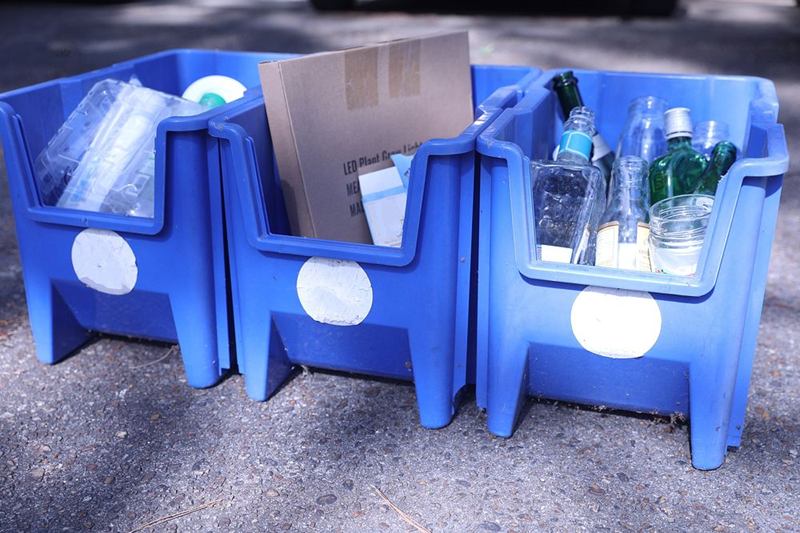
Separate the waste: a workshop produces many different kinds of waste. The Federal Office for the Environment (FOEN) states that paints, varnishes, acids, alkalis, solvents, thinners and spray cans are hazardous waste to be returned to specialist retailers, collection points or special collection days of the municipality or canton.
| Waste | Disposal |
|---|---|
| Metal offcuts | Collect separately, scrap metal |
| Wood offcuts, shavings | Depending on how the wood was treated, as the municipality or disposal firm specifies |
| Cardboard and paper | Bundled, for cardboard collection |
| Paints, solvents, spray cans | Hazardous waste: specialist retailer or collection point |
| Oily rags, oil binder | Separately, in a closed metal container, disposed of properly |
| Batteries and electrical appliances | Return to shops or collection points |
Common workshop cleaning mistakes
- Blowing things clean with compressed air: dust spreads through the whole room – and into your lungs.
- Wiping oil up with water: the stain gets bigger and the floor more slippery.
- Oily rags in the bin: fire risk from self-ignition.
- Hazardous waste in the rubbish: paints, thinners and spray cans belong at the collection point.
Offices and break rooms next to the workshop need a plan too – you'll find ideas in our office cleaning checklist.
Frequently asked questions
How often should a workshop be cleaned?
Workbench, shavings and walkways daily; the floor, depending on use, once a week with a damp, degreasing clean; machines, shelves and lamps weekly to monthly. Very dusty businesses need more.
Why shouldn't workshop dust be blown away?
Compressed air stirs up fine dust, which is then inhaled and settles again everywhere. An industrial vacuum with a suitable dust class picks it up instead of spreading it.
How do you dispose of oily rags?
Oil-soaked rags can ignite spontaneously. Soak them completely in water, let them dry outdoors and dispose of them separately, for example in a closed metal container.
Where do leftover paint and solvents go?
They are hazardous waste. Return them to a specialist retailer, a collection point or a collection day run by your municipality or canton – never down the sink or in the rubbish bag.
Thanks for your feedback! Feel free to share the guide.
Thanks! What was missing? Drop us a line – we will improve the guide. WhatsApp