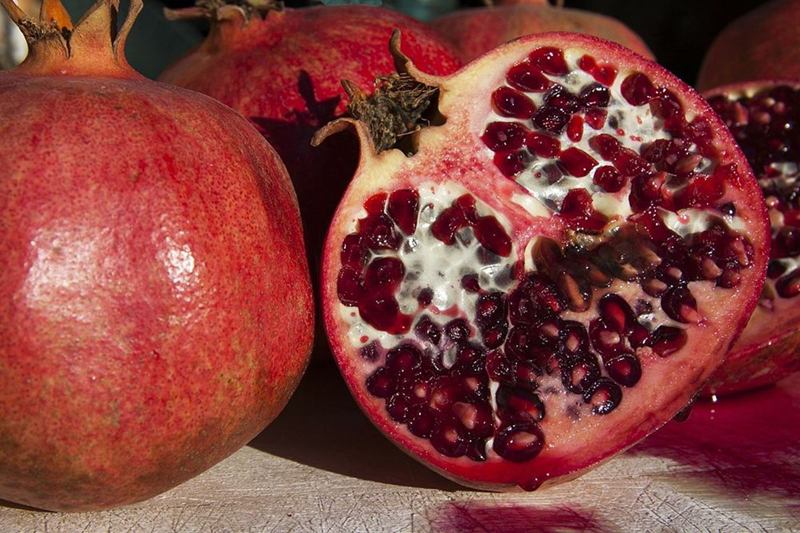
In a winter salad, as a mid-morning snack (the Swiss Znüni) or on top of a dessert: pomegranates are in season when it is cold outside. When you pop out the seeds, though, the deep red juice loves to splash onto jumpers, tablecloths and worktops. To get rid of pomegranate stains, you need to be quick and, above all, work cold – heat can set the dye in the fabric.
With simple household products such as gall soap, lemon juice and bicarbonate of soda, fresh splashes usually come out. The five methods below cover coloured and white fabrics, wooden chopping boards and stained hands.
Why pomegranate stains are so stubborn
The red colour comes from anthocyanins, natural plant pigments also found in blueberries, cherries and red wine. They quickly soak into natural fibres such as cotton and linen. On top of that, tannins bind more and more firmly to the fibre over time and with heat. The longer a stain dries and the hotter it is washed or dried, the harder it becomes to remove.
The good news: a fresh stain usually disappears completely if you follow the right order – rinse cold first, then pre-treat, and only then wash. The approach is similar to red wine, as our guide on red wine stain removal explains.
| Material | First aid | Next step |
|---|---|---|
| Coloured cotton, blends | Rinse with cold water | Gall soap, wash according to the label |
| White cotton, linen | Rinse with cold water | Lemon juice or oxygen-based stain remover |
| Wool, silk | Blot only, cold | Wool detergent, if in doubt a dry cleaner |
| Wooden chopping board | Rinse immediately | Bicarbonate paste or salt and lemon |
| Hands, nails | Wash | Lemon juice, nail brush |
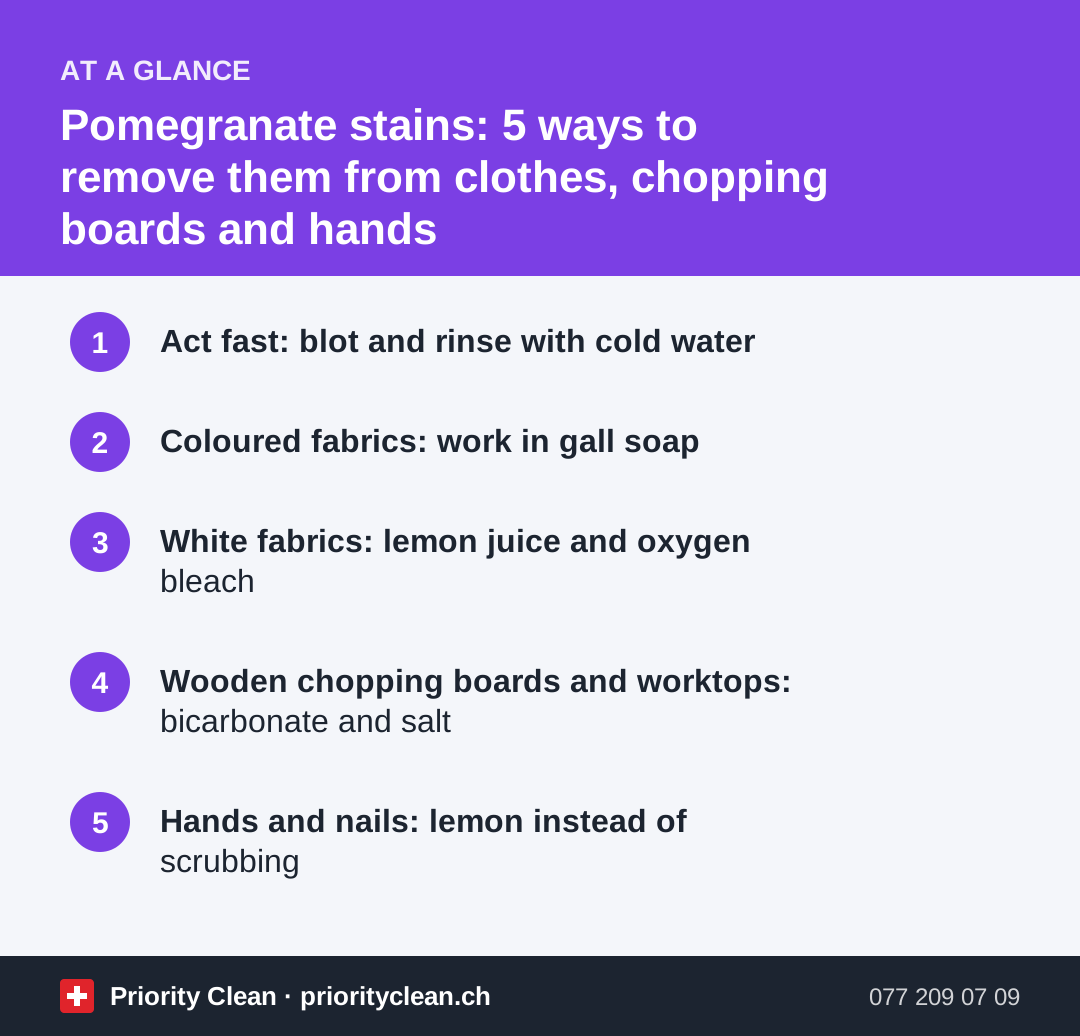
1. Act fast: blot and rinse with cold water
The first few minutes make all the difference:
- Lift off seeds and juice with a spoon without smearing them.
- Blot with kitchen roll or a light-coloured cloth, always from the outside towards the centre.
- Turn the garment inside out and rinse the stain from the back under cold running water. This pushes the dye out of the fabric rather than further in.
- No hot water, no hairdryer and no iron.
- When you are out, dab the stain with cold water and carry on treating it as soon as you get home.
2. Coloured fabrics: work in gall soap
Gall soap is a tried-and-tested remedy for fruit and plant stains and is sold as a bar or liquid in chemists' shops and supermarkets.
- Keep the rinsed stain wet.
- Apply the gall soap and work it in gently with your fingers or a soft brush.
- Leave it for 15 to 30 minutes without letting the fabric dry out.
- Rinse with cold water and check; repeat if necessary.
- Only then machine-wash the item according to the care label.
- Check before drying: if a shadow remains, skip the tumble dryer and treat it again.
3. White fabrics: lemon juice and oxygen bleach
With white cotton and linen, you have more options. The Swiss consumer protection foundation lists lemon juice among the household remedies that can replace many special products.
- Lemon juice: drip freshly squeezed juice onto the damp stain, leave it for 10 to 15 minutes and rinse with cold water.
- Oxygen-based stain remover: use a stain-removing salt or oxygen bleach for whites, following the pack instructions exactly.
- No chlorine bleach: it can weaken fibres and leave yellowish patches.
For plum, peach and other fruit stains, see our guide to fruit stains.
4. Wooden chopping boards and worktops: bicarbonate and salt
Untreated wood soaks up red juice like a sponge, so deal with it right after cutting:
- Rinse the board with cold water straight away.
- Mix a little bicarbonate of soda with very little water to make a thick paste.
- Spread the paste over the stain, leave it for a few minutes and scrub with a brush along the grain.
- Alternatively, sprinkle on coarse salt and rub it in with half a lemon.
- Rinse thoroughly and let the board dry standing upright – never in the dishwasher.
Once dry, treat the board now and then with a little cooking oil. Our guide on how to clean a wooden chopping board has all the details. On marble or limestone worktops, use neither lemon nor vinegar, as acid attacks the stone – simply wipe with water and a little washing-up liquid.
5. Hands and nails: lemon instead of scrubbing
Red fingers and stained nails are annoying but harmless:
- Rub your hands with a little lemon juice, leave it briefly, then wash with soap and water.
- Clean nails and cuticles with a nail brush and lemon juice or a little bicarbonate paste.
- Keep lemon juice away from small cuts or chapped skin, as it stings.
- Whatever is left fades on its own after a few hand washes.
Next time, thin kitchen gloves will protect your hands.
Common mistakes
- Hot water: it can set the dye instead of dissolving it.
- Rubbing: the stain spreads and sinks in deeper.
- Tumble dryer or iron too soon: after heat, a permanent shadow often remains.
- Chlorine bleach on colours: it leaves pale patches and damages the fibres.
- Several products at once: it doesn't work better and can be dangerous.
Frequently asked questions
Do pomegranate stains come out?
Fresh stains usually do, if you rinse them straight away with cold water and pre-treat them with gall soap. It is harder if the stain has dried or has been washed and dried hot. Then it often takes several rounds of pre-treatment and, on whites, an oxygen-based stain remover.
Why does a pomegranate stain turn blue?
The red dye reacts to soap and detergent, which are slightly alkaline, and can turn bluish. A little lemon juice usually turns it reddish again; then carry on treating it as usual.
Does lemon juice remove pomegranate stains?
On white cotton and linen it often does: leave it on briefly and rinse with cold water. On coloured or delicate fabrics, test it on a hidden spot first, as acid can lighten colours.
How do you open a pomegranate without splashing?
Cut off the crown, score the skin and break the fruit open in a bowl of water. Under water, the seeds come loose without the juice splashing onto clothes and walls.
Thanks for your feedback! Feel free to share the guide.
Thanks! What was missing? Drop us a line – we will improve the guide. WhatsApp