Warm, soft and almost essential in a Swiss winter, sheepskin boots have one weak spot: slush, road salt and rain quickly leave dark tide marks and white lines on them. If you are wondering how to clean UGG boots without ruining them, the answer is mostly a soft brush, a little patience and doing things in the right order. Water and heat, on the other hand, need care, because both can permanently stain the suede or make it stiff.
The five steps below apply to UGGs and to any sheepskin boots with a velvety outer surface – from everyday dirt and water stains to salt and odour.
Why UGG boots need careful cleaning
Classic UGG boots and similar models are made of sheepskin: the dense wool sits on the inside, while the tanned hide on the outside is buffed to a suede or velour finish. This velvety surface soaks up water, grease and dirt very quickly. If it dries unevenly, dark rings remain; if it dries too fast in the heat, the leather stiffens and can shrink.
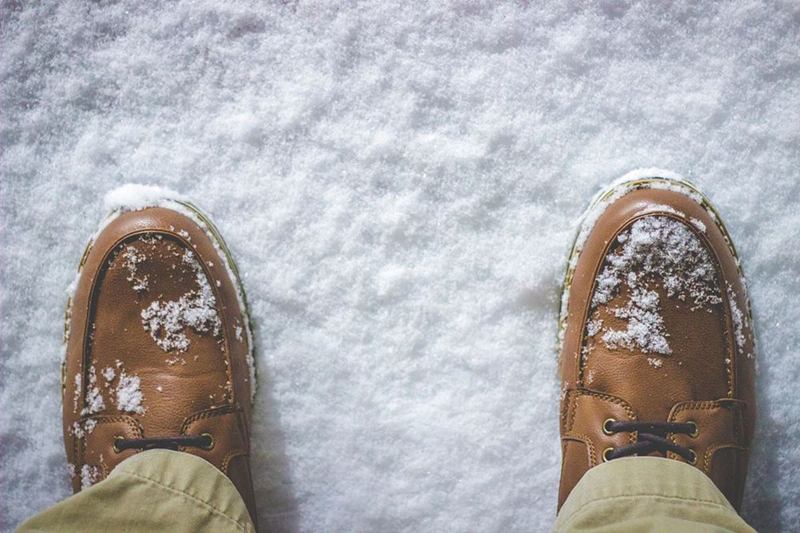
Winter adds road salt to the mix. Dissolved in slush, it soaks into the leather, is left behind on the surface as a white line when the water evaporates, and draws oils out of the material. And because many people wear their boots without socks, the wool lining absorbs sweat – the most common cause of odour.
| Problem | Typical cause | What helps |
|---|---|---|
| Dark rings, water stains | Moisture, uneven drying | Dampen the whole surface evenly, dry slowly |
| Wavy white lines | Road salt in slush | Brush out, dab with diluted vinegar |
| Dark grease marks | Oil, grease, hand cream | Cover with cornflour, leave to work, brush off |
| Musty smell | Sweat in the lining, too little airing | Air, bicarbonate of soda, wear socks |
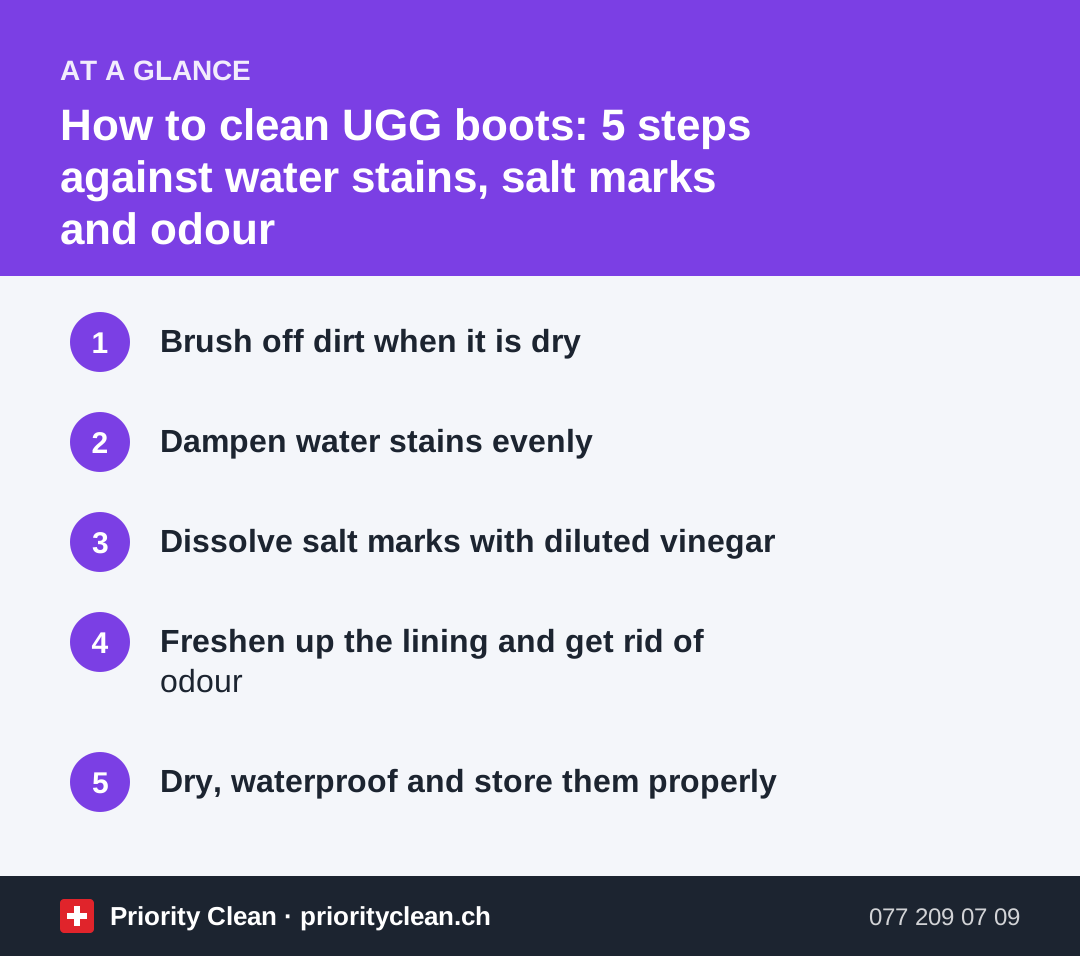
1. Brush off dirt when it is dry
Never brush dirt off while it is wet, or you will work damp soil deep into the fibres. Let the boots dry completely first.
- Remove coarse dirt from the sole and edge with an old brush.
- Brush the suede in one direction with a soft suede brush or a crepe brush.
- Lift flattened, shiny patches with small circular movements.
- Rub small marks with a suede eraser or a clean white eraser. Coloured erasers can leave colour behind.
- Cover grease marks with a thick layer of cornflour, leave it for a few hours or overnight, then brush it off.
For more on brushes, erasers and grease on nubuck and suede, see our guide on how to clean suede.
2. Dampen water stains evenly
It sounds contradictory, but water is what removes water stains – as long as you use it the right way. The ring forms where wet and dry leather meet. So rather than dampening just the stain, dampen the entire panel up to the next seam.
- Dip a clean sponge in cold or lukewarm water and squeeze it out well.
- Dab the affected side evenly from seam to seam until it is uniformly dark. Do not rub and do not soak it.
- For heavier dirt, use a sheepskin or suede cleaner as directed, or a little wool detergent, well diluted.
- Go over it again with a second sponge dampened with clean water only.
- Stuff the boots and let them dry slowly (see step 5).
3. Dissolve salt marks with diluted vinegar
White salt lines are easiest to remove while they are fresh. You rarely need an expensive special product: the Swiss consumer protection foundation lists vinegar among the household remedies that can replace many special cleaners.
- Let the boots dry completely and brush out the salt crystals thoroughly.
- Add a splash of household vinegar to lukewarm water.
- Dampen a soft cloth or sponge with the mixture and wring it out well.
- Dab the salt marks and, just as with water stains, dampen the whole panel evenly up to the seam.
- Go over it with clean water, stuff the boots and let them dry slowly.
- Finally, raise the nap with the brush.
To get road salt off smooth leather, canvas trainers or the doormat, read our guide on how to remove salt stains from shoes and carpet.
4. Freshen up the lining and get rid of odour
The sheepskin inside is good at balancing warmth and moisture, but it also absorbs sweat. To keep it fresh:
- Air them: after wearing, leave the boots open in a well-ventilated spot and, if possible, give them a day's rest.
- Bicarbonate of soda: sprinkle about a tablespoon into each boot, leave it overnight, then shake it out thoroughly or vacuum it up.
- Spot-clean: dab discoloured areas of the wool with a barely damp cloth and a little wool detergent, go over them with clean water and fluff up the wool once it is dry.
- Wear socks: thin wool socks absorb sweat and are easy to wash.
To wash a whole sheepskin gently, see our guide on how to wash a sheepskin rug.
5. Dry, waterproof and store them properly
Drying is where the cleaning succeeds or fails:
- Stuff the boots with newspaper so they keep their shape and the moisture is absorbed. If the wool is light-coloured, use plain unprinted paper or kitchen roll instead, as printing ink can rub off.
- Replace the paper as soon as it is damp.
- Let them dry at room temperature – not on the radiator, not next to the fireplace or stove, not in direct sunlight and never in the tumble dryer or with a hairdryer. Allow one to two days.
- Once dry, brush the boots in the direction of the nap.
Only waterproof your boots when they are clean and completely dry, using a spray for suede or sheepskin applied evenly from the distance stated on the can. Renew the protection as soon as water stops beading off.
In spring, store the boots clean, dry and stuffed in a cotton bag or a cardboard box – never in plastic and not in a damp cellar.
Common mistakes
- Drying on the radiator: heat makes the leather hard and brittle or causes it to shrink.
- Wetting only the stain: a new tide mark appears right next to it.
- Shoe polish or leather grease: both clog the velvety surface and leave dark patches.
- Machine washing without the manufacturer's approval: the risk of stiff, misshapen boots is high.
Frequently asked questions
Can you put UGG boots in the washing machine?
Only if the manufacturer explicitly allows it. Otherwise, cleaning by hand with a brush, a sponge and a little special cleaner is gentler, because suede can stiffen and lose its shape in the machine.
How do I get water stains out of UGG boots?
Dampen the whole affected panel up to the seam with a damp sponge, so there is no border between wet and dry leather. Then stuff the boots, let them dry slowly and brush them.
What helps against smelly UGG boots?
Air them regularly, wear socks and, if needed, sprinkle in a little bicarbonate of soda overnight and shake it out thoroughly the next day.
How often should you waterproof UGG boots?
Before wearing them for the first time and then whenever water no longer beads off – more often in a snowy winter. Only waterproof clean, dry boots, and always outdoors.
Thanks for your feedback! Feel free to share the guide.
Thanks! What was missing? Drop us a line – we will improve the guide. WhatsApp