On the sofa, while reading or for an afternoon nap – in winter, the cosy throw is in constant use. Over time it collects dust, skin flakes, crumbs and pet hair. If you are wondering how to wash a fleece blanket, take a little care: too much heat, fabric softener or an overfilled drum can quickly turn soft plush into rough, matted fabric.
Most cosy blankets are made of polyester, for example as fleece, coral fleece or sherpa (teddy fleece). These synthetic fibres are easy to care for but sensitive to heat and friction. Five rules keep your blanket fluffy.
Why fleece blankets go hard after washing
Fleece and plush are made of countless fine synthetic fibres and loops. They are what make the blanket so soft – and they are also what suffers from the wrong care:
- Heat: too much heat, especially in the tumble dryer or on the radiator, can make the fine fibres stick together. The surface becomes flat, straggly or matted.
- Fabric softener: it coats the fibres with a film that glues them together and makes the blanket a little less soft with every wash.
- Too much detergent: residue gets trapped in the dense plush and makes it stiff.
- Friction: in a full drum or together with towels, the fibres rub against each other. Bobbles form and cotton fluff gets caught in them.
| Blanket type | Temperature (as per label) | What to watch |
|---|---|---|
| Fleece, coral fleece | often 30 or 40 °C | Little detergent, no fabric softener |
| Sherpa, teddy fleece | often 30 °C | Fold plush side in, gentle spin |
| Faux fur | often 30 °C or hand wash | No hot drying, brush afterwards |
| Knitted wool or cashmere throw | Wool programme or hand wash | Wool detergent, dry flat |
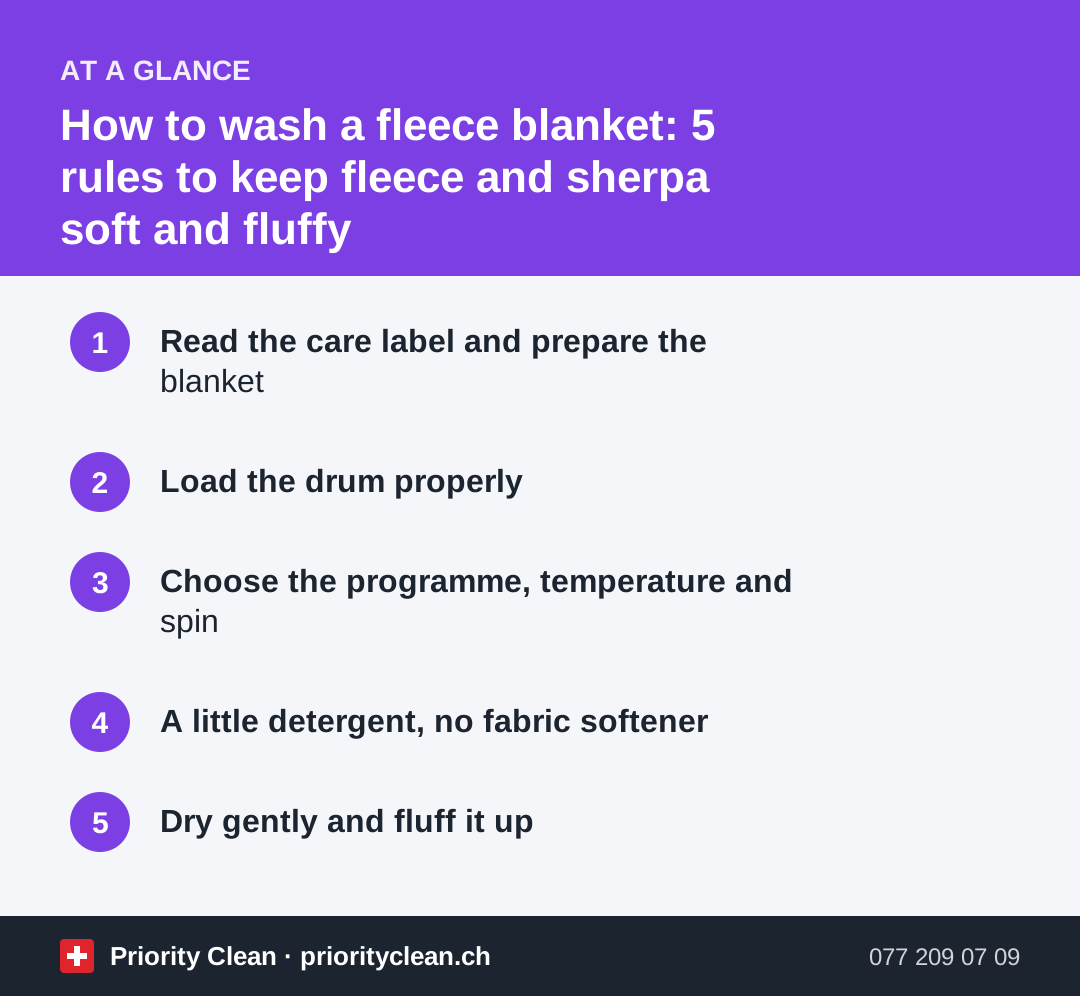
1. Read the care label and prepare the blanket
The number in the washtub symbol is the maximum temperature. Bars underneath indicate gentler programmes: GINETEX's guide to care symbols explains that with these gentle cycles you should put less in the drum. A crossed-out tub means: do not wash.
To prepare the blanket:
- Give it a good shake outdoors or on the balcony.
- Remove pet hair with a lint roller, a slightly damp rubber glove or the vacuum's upholstery nozzle. Otherwise it spreads around the drum and gets caught in the plush.
- Pre-treat stains with a little liquid detergent or gall soap; on coloured fabric, test on a hidden spot first.
- Close zips and hook-and-loop fasteners, for example on blankets with sleeves or a foot pocket.
2. Load the drum properly
Fleece and plush need room to move so that water and detergent reach everywhere and the fibres don't rub against each other.
- Wash large blankets on their own and small ones with similar synthetic items such as fleece jackets.
- Don't add towels, bathrobes or cotton that sheds fluff.
- Fold the blanket loosely, with the fluffy side of sherpa facing inwards.
- If a very large blanket only fits into the drum when squashed, the machine is too small. The shared laundry room sometimes has a bigger model.
For down or synthetic duvets, see our guide on how to wash a duvet.
3. Choose the programme, temperature and spin
Pick the synthetics, easy-care or delicates programme and stick to the temperature on the label – 30 °C is usually enough. SwissEnergy (EnergieSchweiz) recommends low temperatures of 20 to 30 °C and eco programmes anyway – without increasing the detergent dose at low temperatures. So it is best to wash a small blanket together with other synthetics rather than running the machine half empty.
- Spin: a medium to low spin speed is gentle on the fibres and prevents deep creases.
- Extra rinse: if your machine offers it, it is worth using. It flushes detergent residue out of dense plush.
- Higher temperatures: only if the label explicitly allows them.
4. A little detergent, no fabric softener
When it comes to detergent, less is more:
- Use a liquid detergent for delicates or colours. It dissolves well at 30 °C and leaves no powder residue in the plush.
- Dose sparingly, rather following the amount for lightly soiled laundry. Our guide on laundry detergent dosage explains how to find the right amount.
- No fabric softener, not even "just a little".
- No bleach, which can attack colours and fibres.
Some people add a splash of vinegar to the softener compartment instead. A few washing machine manufacturers advise against this because of the seals – if in doubt, check your manual.
5. Dry gently and fluff it up
Drying is where it all comes together:
- Shake the blanket out well and hang it spread out over a drying rack or across two lines. Fleece dries quickly.
- Don't put it directly on the radiator and don't hang it in blazing sunshine.
- Only use the tumble dryer if the label allows it, on low heat or cool air.
- Once dry, brush sherpa and faux fur with a soft brush in the direction of the pile.
Common mistakes
- Fabric softener: it glues the fibres, and the blanket gets rougher with every wash.
- Washing or drying too hot: the plush can mat, which is hard to reverse.
- Washing with towels: towelling fluff gets stuck in the fleece.
- Too much detergent: residue makes the blanket stiff.
- An overfilled drum: the blanket doesn't get properly clean and starts to bobble.
Frequently asked questions
What temperature should you wash a fleece blanket at?
At the highest temperature the care label allows, usually 30 or 40 °C on a synthetics or delicates programme. Higher temperatures can make the fine synthetic fibres stick together.
Which washing programme suits a fleece blanket?
The synthetics, easy-care or delicates programme with a medium to low spin speed. An extra rinse helps to remove detergent residue from dense plush.
How do I make a fleece blanket soft again?
Wash it without fabric softener and with little detergent, rinse well, air-dry it or tumble it on cool air, then brush up the plush. If heat has matted the surface, it often cannot be fully restored.
How often should you wash a sofa blanket?
If you use it every day on the sofa, roughly every few weeks – more often with pets or after a cold. In between, shake it out and air it regularly.
Thanks for your feedback! Feel free to share the guide.
Thanks! What was missing? Drop us a line – we will improve the guide. WhatsApp